Hormuz deal odds fall to 9% — and another tanker burned while the talks were on
Prediction-market odds of a Strait of Hormuz agreement by August 15 dropped 39 points to 9% as Iran held to its conditions, and a tanker caught fire off Khasab, Oman after what Iranian media described as a projectile strike
The three lines
- Prediction markets put an Aug 15 deal at 9%, down 39 percentage points
- A tanker burned near Khasab on the Musandam Peninsula overnight Aug 9–10; no spill or deaths reported
- Brent traded in the mid-$80s and WTI in the low $80s; US equities closed mixed under the oil bid
Key questions
- Where do the Hormuz talks actually stand
- Backward from a week ago. Iran maintains that the United States must withdraw forces from its periphery, lift all sanctions and pay war reparations before the strait reopens. Iran says indirect contacts via Oman are close to agreement while denying direct negotiations with Washington; Washington has said a deal is near. The two accounts do not line up, and that mismatch is itself the best available measure of progress.
- Who attacked the tanker
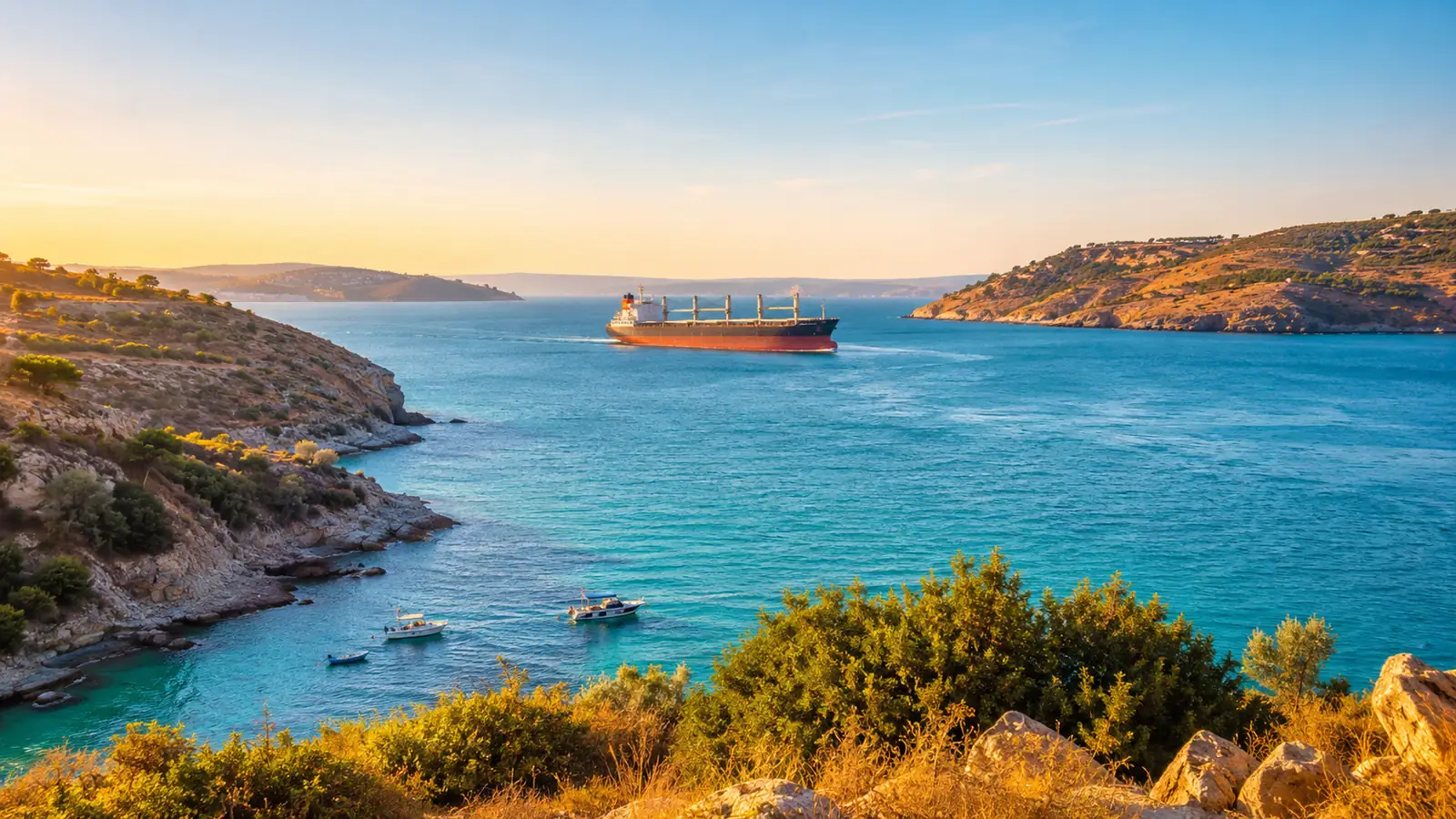
- Unknown. A tanker caught fire off Khasab, on Oman's Musandam Peninsula, overnight between August 9 and 10. Iranian media, citing local sources, reported the vessel was struck by an unidentified projectile near the mouth of the strait. Crew and rescue vessels put the fire out; no oil spill or fatalities have been reported. No party has claimed responsibility.
- Why does this strait matter so much to Asia
- Because the crude that moves through it is priced and consumed largely in Asia. Korea imports 70–80% of its crude from the Middle East, and the grades it buys are priced off the Dubai/Oman benchmark rather than Brent or WTI. For refiners in Seoul, Tokyo and Delhi, a Hormuz headline is not foreign news — it is an input cost.
A week ago Iran published its price for reopening the Strait of Hormuz: reparations, full sanctions relief, and the withdrawal of US forces from its periphery. Halfway through the week that followed, the negotiation has moved — backward.
Bettors now put the odds of an agreement by August 15 at 9%, down 39 percentage points. And while that number was falling, a ship burned at the mouth of the strait.
1. The two sides are not describing the same negotiation
The most accurate summary of the current state is not either party's claim. It is the distance between them.
| Party | Public position |
|---|---|
| Iran | Troop withdrawal, full sanctions relief and war reparations are preconditions |
| Iran | Talks via Oman are "close to agreement" — but direct US negotiations are denied |
| United States | A deal is close |
| Prediction market | 9% chance of a deal by Aug 15 (−39pp) |
Both accounts can be true at once if Oman is carrying each side's position to the other. The problem is that in that structure neither party has signed anything the other wrote. The 39-point repricing is that gap converted into a number.
2. A ship burned during the talks
Overnight between August 9 and 10, a tanker caught fire off Khasab, on Oman's Musandam Peninsula. Iranian media, citing local sources, reported the vessel had been hit by an unidentified projectile near the entrance to the strait. Crew and responding rescue vessels extinguished the blaze. No spill and no fatalities have been reported, and no one has claimed the attack.
The significance is location and timing rather than damage. Musandam is the narrowest point of the waterway, and Khasab sits on its Omani edge. A vessel struck there, during a period both governments describe as active negotiation, indicates that the table and the water are not controlled by the same hand. Vessels were also reported struck in the same waters on August 1 and August 4.
3. Oil went quietly higher
Crude rose again on August 10 — Brent in the mid-$80s, WTI in the low $80s. US equities closed mixed under that bid: the S&P 500 essentially flat, the Dow and Nasdaq slightly lower, and the small-cap Russell 2000 up over 1%.
One point worth spelling out for readers outside Asia. The prices in the headlines — Brent and WTI — are not the barrels Korea and much of Asia actually buy. Middle Eastern grades bound for Asian refiners are priced off the Dubai/Oman benchmark, and Korea sources 70–80% of its crude from the region. That is why a Hormuz story lands one step closer to Seoul than to New York. The three benchmarks are compared in today's companion reference, "Dubai, Brent, WTI".
4. What remains unverified
The 9% is a betting price, not a negotiating status. It reflects what people expect, not what is on the table. Cause, attribution and casualties in the Khasab fire are all unconfirmed; the Iranian "unidentified projectile" report is the only account available. Quoted oil levels are as of August 10 and move continuously.
Three things to watch this week: whether the substance of the Omani channel becomes public around the 15th; whether maritime strikes continue, which would reframe them as background noise to the talks rather than a signal about them; and how far the Dubai benchmark separates from Brent. The earlier article in this thread is "Iran names its price for reopening Hormuz."
Sources
- VOA Korean — US-Iran Hormuz talks falter, oil rises again
- MBC News — Iran: reparations before reopening
- Benzinga Korea — Prediction markets cut Hormuz deal odds
- Haesa News — UKMTO reports projectile attack near Khasab, Oman
- TheStreet — Stock Market Today, Aug 10 2026: oil prices rise
- Wikipedia — List of ships attacked during the 2026 Iran war