Korea's ballot recount is stuck on one question — who gets to do the counting
At the third hearing of the parliamentary inquiry into the June ballot-paper shortage in South Korea, the parties deadlocked over an August 18 recount at a Seoul counting center, with the opposition arguing that election officials under criminal investigation should not handle the ballots
The three lines
- Democratic Party and Rebuilding Korea Party: proceed on Aug 18. People Power Party: tie it to the special counsel
- The opposition's argument is integrity of custody — officials under investigation should not re-handle evidence
- Aug 18 was a provisional date, not a fixed one; the committee chair sent it back for renegotiation within August
Key questions
- What is being recounted, and why
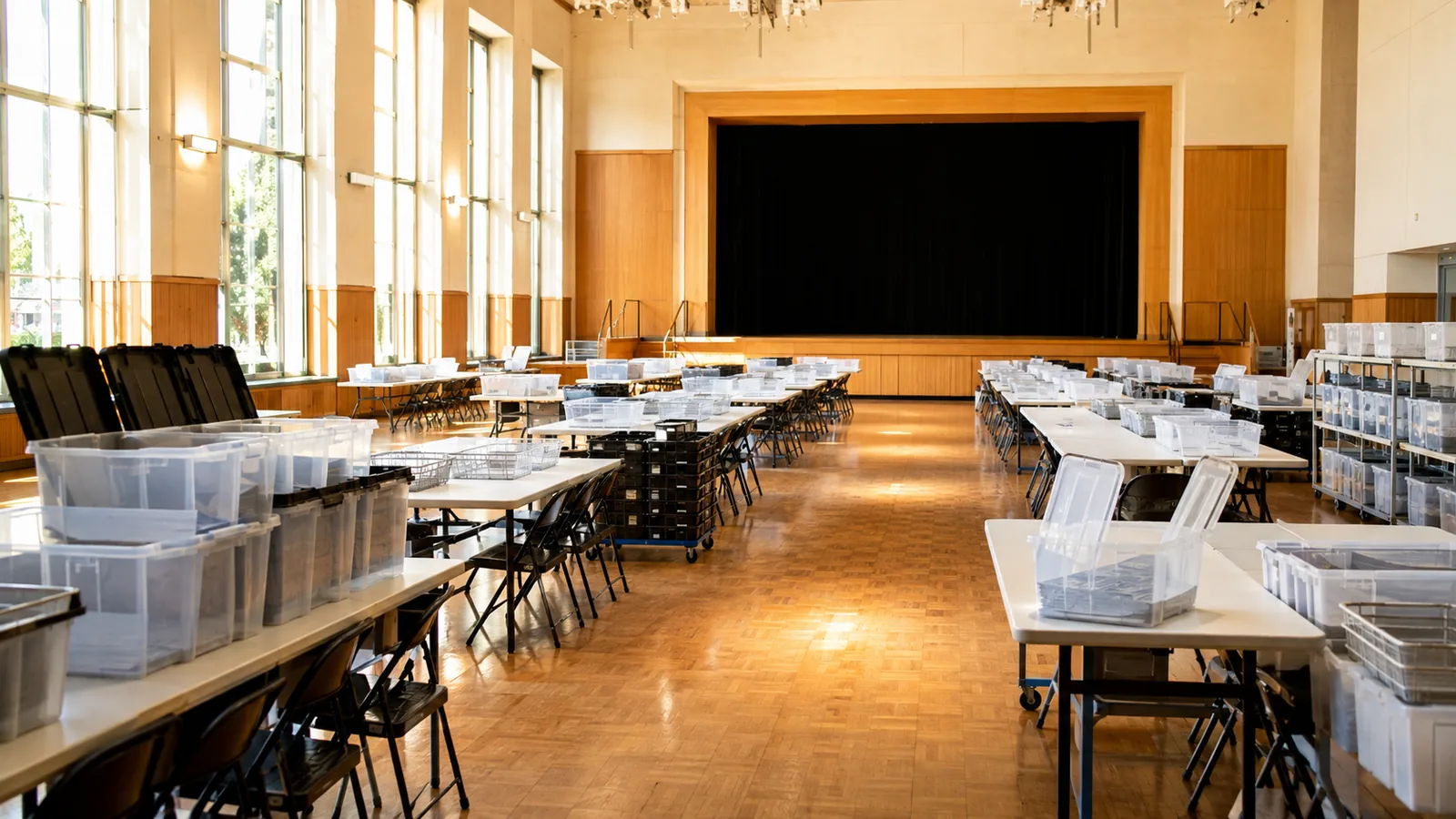
- Ballots from the June 3 local elections, after some polling stations ran short of ballot papers and allegations followed that turnout figures had been entered inaccurately. The provisional target is the counting center at Olympic Park in Songpa-gu, Seoul. The purpose is to test whether the reported tallies match the physical ballots.
- If both sides want accuracy, what is the fight about
- Custody, not counting. The People Power Party argues that with National Election Commission staff themselves under investigation, having those staff handle the ballots again would taint whatever result emerges, and wants the process tied to the special counsel. The Democratic Party and Rebuilding Korea Party say a jointly agreed date cannot be reopened with new conditions, and that delay is functionally cancellation.
- Why does the calendar decide this
- The parliamentary inquiry committee's mandate was extended only through the end of August. A recount conducted under that committee has to happen within August. The special counsel, by contrast, has up to 170 days. So 'tie it to the special counsel' also means 'move it out of this committee' — which is why the other side reads it as refusal.
No party in Korea's National Assembly opposes recounting the ballots. That is what makes the day-long standoff on August 10 worth reading closely. The dispute was never about whether to count. It was about who counts, and when.
The special committee investigating June's ballot-paper shortage held its third hearing. The agenda item was a recount of ballots at the Olympic Park counting center in Songpa-gu, Seoul, provisionally set for August 18. The hearing ended without confirming the date.
1. An argument built on procedure, on both sides
| Issue | Democratic Party / Rebuilding Korea | People Power Party |
|---|---|---|
| Timing | Proceed as scheduled on Aug 18 | Tie to the special counsel |
| Rationale | An agreed date must hold | Election staff under investigation handling ballots taints the result |
| Charge against the other | "Their real intent is not to do it" | "We are saying do it alongside the investigation" |
| Outcome | Chair referred it to floor-leader negotiation within August | Same |
The opposition's position is not "do not recount." It is "the current custodian cannot be trusted to execute it" — that having staff of an agency under investigation re-handle what may be evidence is structurally unsound. That is not an unfamiliar procedural objection.
The governing side's reply is also procedural: if a jointly agreed schedule can be deferred by one side's later conditions, agreement means nothing, and since the committee's mandate expires at the end of August, deferral is cancellation by other means.
Both are arguing in the name of counting accurately, which is why neither can win the argument outright.
2. Three clocks, one case
The inquiry. The National Assembly voted on July 30 to extend the special committee's mandate by 30 days, to the end of August. A recount inside that framework cannot slip past August.
The special counsel. The election-commission special counsel act is a time-limited statute covering the June 3 ballot shortage, alleged mismanagement, suspected manipulation of statistics, hiring and contracting irregularities, and IT-system security. It takes over from a joint police-prosecution task force and may run up to 170 days.
The investigation. That task force has already executed simultaneous searches at the National Election Commission and district offices including Seocho-gu in Seoul, centered on allegations that turnout entries were inaccurate.
Three procedures, three different clocks, one subject. Because the inquiry ends in three weeks and the special counsel has months, "attach the recount to the special counsel" is in practice "move it outside this committee" — hence the accusation of bad faith.
3. What determines the outcome
Three things. Whether floor-leader negotiations produce a date within August — if not, a recount under the inquiry disappears. When the special counsel actually launches; a start after August 31 leaves a gap between the two processes. And whether the custody question finds an answer: if a third party other than election-commission staff could conduct the count, the opposition's objection dissolves — but no legal basis for such an arrangement has been put forward.
4. What remains unverified
The scope and target of the recount are still provisional. The special counsel's launch date and lead prosecutor are unconfirmed; only the 170-day ceiling is fixed in statute. Allegations raised at the hearing regarding voter counts in Incheon remain claims.
How Korea's special counsel differs from ordinary prosecution is covered in "What is a special counsel"; the spread of this investigation in "Turnout figures that didn't add up". The mechanics and limits of recounts generally are in today's companion reference, "What is a recount".
Sources
- Financial News — Parliamentary inquiry clashes over recount (roundup)
- Hankook Ilbo — Will the Olympic Park recount collapse?
- Seoul Economic Daily — Parties clash over recount
- Asia Today — Hearings, special counsel, recount: the 'super week'
- MBC News — Turnout entries erratic; sweeping searches of election offices