What Korea's Overseas Emergency Relief Team is — why 37 of the 44 sent to Nepal were firefighters
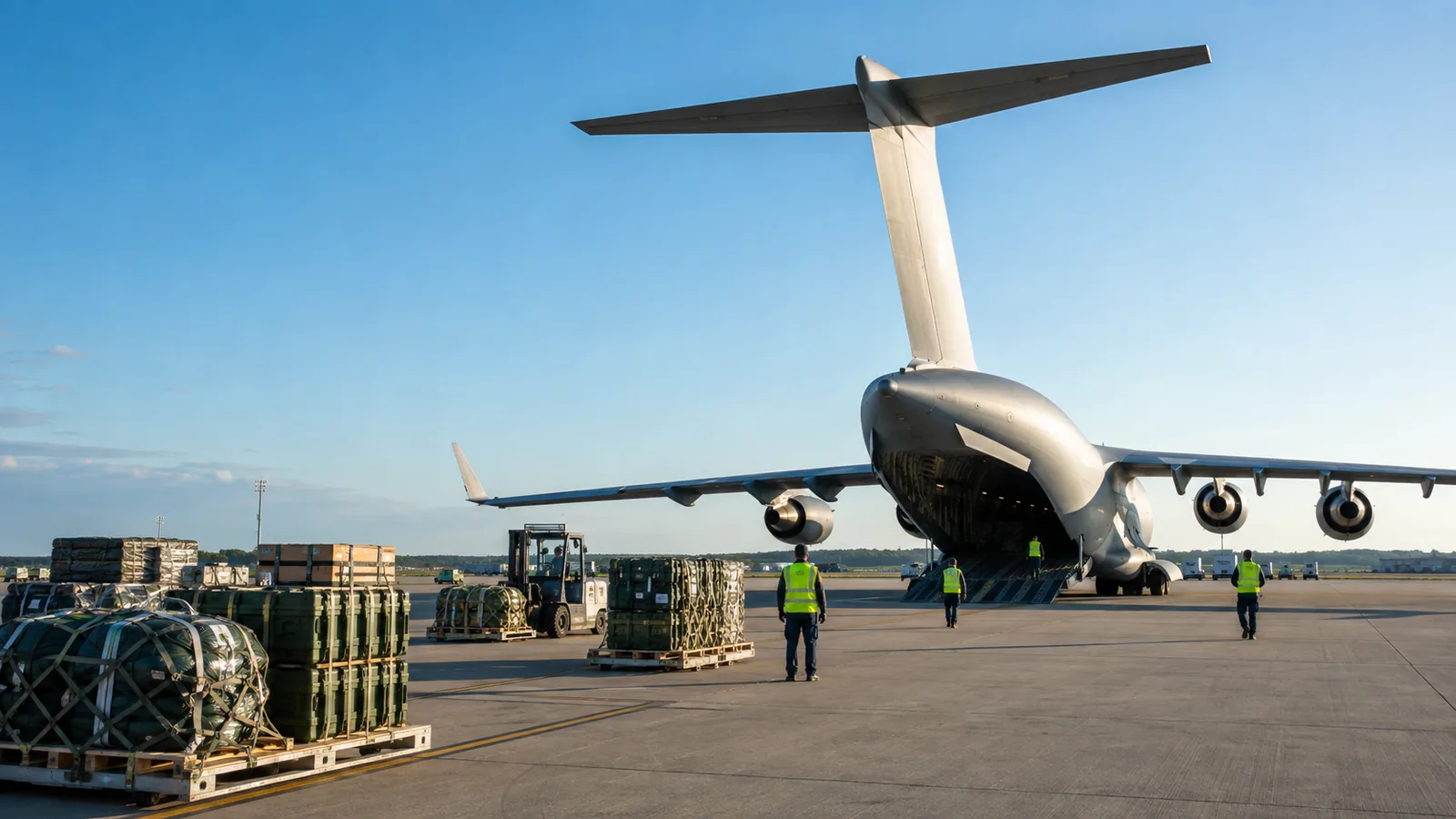
The Overseas Emergency Relief Team of South Korea, known internationally as KDRT, is the standing government mechanism for sending help abroad after a disaster, established by the Act on Overseas Emergency Relief enacted in 2007. It is not a single unit housed in one building but a roster drawn on when a deployment is authorised: the Ministry of Foreign Affairs leads through its multilateral and humanitarian assistance division, the National Fire Agency supplies search-and-rescue crews from the Central 119 Rescue Headquarters, the Ministry of Health and Welfare supplies medical personnel through the National Medical Center and the Korea Foundation for International Healthcare, and KOICA handles field logistics and coordination. Deployment starts with a formal request from the affected state and is authorised by a public-private Overseas Emergency Relief Council. For the 2026 Nepal floods, 44 people flew out on a military transport and landed in Kathmandu at 6:25 a.m. local time on September 2 for a ten-day mission
The three lines
- Basis — created by Korea's 2007 Act on Overseas Emergency Relief
- Composition — foreign ministry leads, fire agency searches, health ministry treats, KOICA runs logistics
- Process — the affected state requests, a public-private council authorises, then the team is called up
Key questions
- What is Korea's Overseas Emergency Relief Team?
- **It is the government's standing mechanism for disaster response abroad, created by law.** The **Act on Overseas Emergency Relief and its enforcement decree, enacted in 2007**, established it. Before that, each overseas disaster was handled by improvised inter-ministerial arrangement; the law fixed in advance **who leads and how a deployment is authorised**. It is known internationally as KDRT, the Korea Disaster Relief Team. The most useful way to describe it is that it is **a roster, not a standing brigade** — its members work in their home agencies and are called up when a deployment is approved. That is why the size and shape change every time: a collapse or landslide produces a team dominated by firefighters, while an epidemic or a hospital failure produces one dominated by medical staff.
- Who actually goes?
- **Four institutions divide the work.** ① The **Ministry of Foreign Affairs**, through its multilateral cooperation and humanitarian assistance division, leads and handles dealings with the affected government and Korean missions abroad. ② The **National Fire Agency**, through the Central 119 Rescue Headquarters, provides search-and-rescue crews and their equipment — the people doing the physical work at a collapse site. ③ The **Ministry of Health and Welfare** provides medical personnel through the National Medical Center and the Korea Foundation for International Healthcare. ④ **KOICA** handles field operations, supplies and coordination with local institutions. For the September 2026 Nepal deployment the split was **three from the foreign ministry, four from KOICA and 37 from the fire agency**, 44 in total. The 84 percent firefighting share reflects the mission: this was a **search for missing people**, not a medical relief operation.
- How is a deployment decided?
- **Korea cannot simply send a team because it wants to. The affected country asks first.** Three steps follow. **① Request** — the affected government asks Korea for search-and-rescue support. Respect for sovereignty is the organising principle of international disaster response; rescue teams do not enter another state's territory uninvited. **② Authorisation** — under the Act, a **public-private Overseas Emergency Relief Council** decides whether to deploy and at what scale. Private members are included so that the field experience and resources of NGOs and medical organisations can be used alongside government capacity. **③ Deployment** — personnel are called up and transport is arranged. Nepal was flown by **military transport** rather than commercial aircraft, which is common when the equipment is heavy or the destination airport is unreliable after a disaster. In this case a week passed between the loss of contact on August 26 and the team's arrival on September 2, with an **11-person joint rapid response team** on the ground in the interval.
When a Korean national goes missing abroad in a disaster, who does the government actually send?
The answer is the Overseas Emergency Relief Team — and it is built differently from what the name suggests.
1. A roster, not a brigade
| Common assumption | Reality |
|---|---|
| A dedicated unit on standby in one building | Personnel in their home agencies, called up per deployment |
| The same team every time | Composition changes with the disaster |
| Korea decides to send it | The affected country must request it |
The legal basis is the Act on Overseas Emergency Relief and its enforcement decree, enacted in 2007. Before the law, each overseas disaster was handled by ad hoc negotiation between ministries. What the law adds is a pre-agreed lead agency and authorisation route, which is what turns days of coordination into hours.
2. Four institutions
| Institution | Role |
|---|---|
| Ministry of Foreign Affairs | Overall lead; affected government and Korean missions |
| National Fire Agency (Central 119 Rescue HQ) | Search and rescue crews and equipment |
| Ministry of Health and Welfare (National Medical Center · KOFIH) | Medical personnel |
| KOICA | Field operations, supplies, local coordination |
The September 2026 Nepal deployment:
| Agency | People |
|---|---|
| National Fire Agency | 37 |
| KOICA | 4 |
| Ministry of Foreign Affairs | 3 |
| Total | 44 |
Firefighters were 84 percent of the team because the mission was searching for missing workers. After an earthquake with a collapsed health system, the same 44 slots would skew toward the health ministry. The number is fixed by the mission, not by the roster.
3. From request to takeoff
| Step | Content | Why it exists |
|---|---|---|
| ① Request | The affected government asks for support | Sovereignty — teams do not enter uninvited |
| ② Authorisation | A public-private Overseas Emergency Relief Council approves scale and scope | To draw on NGO and medical-sector capacity alongside government |
| ③ Deployment | Call-up and transport | Military transport is used when equipment is heavy or the airport is degraded |
The Nepal timeline:
| Date | Action |
|---|---|
| August 26 | Nine Koreans lose contact at a Rasuwa hydro construction site |
| August 27 | Presidential emergency review; 11-person rapid response team (4 foreign ministry, 5 fire, 2 police) |
| Night of September 1 | 44-person relief team departs by military transport |
| September 2, 06:25 local | Arrives in Kathmandu for a ten-day mission |
The rapid response team and the relief team are different things. The first 11 handle consular work and situation assessment; the 44 carry the search equipment.
4. What the equipment reveals
| Equipment | Purpose |
|---|---|
| Five search dogs | Narrow down what instruments miss |
| High-resolution drones | Sweep valleys cut off by road damage |
| Acoustic and imaging detectors | Detect sound and voids beneath debris |
| Thermal imaging | Use body heat as the remaining signal |
| Debris-clearing gear | Open access routes |
Almost none of this is medical. A manifest weighted toward detection rather than treatment tells you the mission was framed around finding people, not treating the injured.
5. What is still open
- Council mechanics — membership and voting rules could not be confirmed.
- Track record — annual deployment counts and cumulative history were not verified here.
- Cost — which budget line pays, and who bears it, is not published.
- Extensions — whether a ten-day mission can be extended, and who decides, is not published.
The disaster behind this deployment is covered in "Nepal flood toll reaches 1,114."
Sources
- KOICA — Korea Disaster Relief Team (KDRT) overview
- KOFIH — Overseas emergency relief health and medical support programme
- Korea NGO News — Government dispatches 44-member Korea Disaster Relief Team to Nepal
- Edaily — Government sends 44-member relief team to Nepal by military transport
- Herald Business — Government dispatches overseas emergency relief team to Nepal flood zone
- Herald Business — Relief team arrives in Nepal, begins search for nine missing Koreans