Google TPU 8tx and 8i Max explained — one adds confidential computing to the 8t, the other packs two 8i chips together
Google added two systems to its eighth-generation TPU family on November 9, 2026 (US time): TPU 8tx and TPU 8i Max, following the 8t (training) and 8i (inference) from April. The 8tx pairs the same silicon as the 8t with 5th Gen AMD EPYC hosts for confidential computing, isolating data and model weights while in use, and Google claims up to 2x lower latency than the 8t. The 8i Max combines two 8i chips in one package, doubling compute, on-chip SRAM and HBM bandwidth. Google has not disclosed pricing, availability or its HBM supplier.
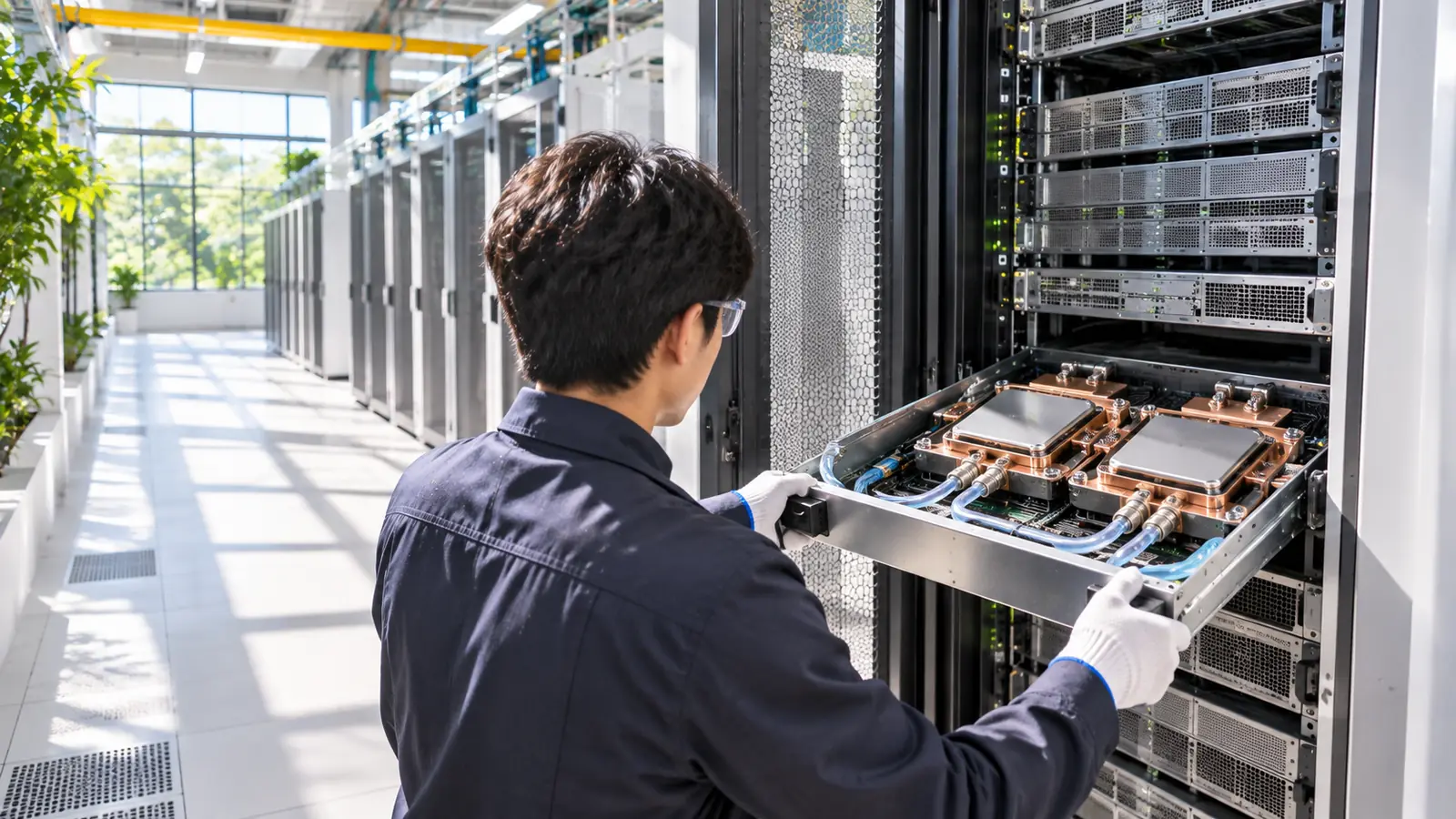
The three lines
- 8tx — same silicon as the 8t plus 5th Gen AMD EPYC hosts, built for confidential computing
- 8i Max — two 8i chips in one package; 2x compute, SRAM and HBM bandwidth (Google)
- Undisclosed — price, launch date, HBM supplier, and the attestation design and audits for the 8tx
Key questions
- difference between TPU 8t 8i 8tx and 8i Max
- **The 8t trains, the 8i serves, the 8tx is the 8t with confidential computing, and the 8i Max is two 8i chips in one package.** | System | Announced | Role | Headline claim (Google) | |---|---|---|---| | TPU 8t | April 2026 | Large-model training | Up to 2.7x training performance vs prior generation | | TPU 8i | April 2026 | Inference, agents | 80% better inference price-performance vs prior generation | | TPU 8tx | November 9, 2026 | Confidential inference, small-scale training | Up to 2x lower latency than the 8t | | TPU 8i Max | November 9, 2026 | Very large context inference | 2x compute, SRAM and HBM bandwidth vs the 8i |
- what is confidential computing on Google TPU 8tx
- **Confidential computing protects data while it is being processed, not just when stored or sent, and the 8tx extends that protection to the AI accelerator.** | Data state | Usual protection | Gap | |---|---|---| | At rest | Disk encryption | Widely solved | | In transit | TLS | Widely solved | | In use | Hardware-isolated execution | Data must be decrypted in memory to compute — the gap the 8tx targets |
- TPU 8i Max HBM specs
- **Google says the 8i Max has double the HBM bandwidth of the 8i; it has not named a memory supplier.** | Spec | TPU 8i | TPU 8i Max | Source | |---|---|---|---| | Compute | Baseline | 2x | Google | | On-chip SRAM | 384 MB | 768 MB | Google, ServeTheHome | | HBM bandwidth | ~8.6 TB/s | ~17.2 TB/s | Google, ServeTheHome | | HBM capacity | 288 GB | 384 GB (~33% more) | ServeTheHome only | | HBM supplier | Undisclosed | Undisclosed | — |
Google added two systems to its eighth-generation TPU family on November 9, 2026 (US time): TPU 8tx and TPU 8i Max. They follow the TPU 8t (training) and TPU 8i (inference) introduced at Google Cloud Next in April. Amin Vahdat, Google's chief technologist for AI and infrastructure, wrote that it is the first time the company has introduced four TPU systems in a single year.
Neither is a new chip. The 8tx is 8t silicon paired with security-capable hosts; the 8i Max is two 8i chips in one package. Google is recombining existing silicon to reach two distinct markets: regulated industries, and workloads with enormous context windows. It says nearly 100 customers now use TPUs, including frontier labs, trading firms, retailers and universities, without naming any.
1. The four eighth-generation TPUs at a glance
| System | Announced | Role | Build | Google's claim |
|---|---|---|---|---|
| TPU 8t | April 2026 | Large-model training | Training chip, torus network | Up to 2.7x training performance vs prior generation |
| TPU 8i | April 2026 | Inference, agents | Inference chip, Boardfly network | 80% better inference price-performance; inter-chip delays cut by up to half |
| TPU 8tx | November 9, 2026 | Confidential inference, small-scale training | 8t silicon + 5th Gen AMD EPYC hosts + Boardfly | Up to 2x lower latency than the 8t, near-zero security penalty |
| TPU 8i Max | November 9, 2026 | Very large context inference | Two 8i chips in one package | 2x compute, SRAM and HBM bandwidth vs the 8i; twice the silicon per rack footprint |
Every figure here is Google's own. No independent benchmarks exist yet.
The naming is simple: t for training, i for inference. The 8tx is a variant of the 8t, but despite the name it is not a large-scale training system. Google positions it for secure, confidential inference and small-scale training — a hybrid that uses training silicon with the inference chip's network.
2. TPU 8tx — what confidential computing is and why AI chips need it
Data exists in three states: stored, in transit, and in use. Encryption for the first two is routine. The third is the weak point, because data has to be decrypted in memory before a processor can compute on it.
| Data state | Protection | Protects against |
|---|---|---|
| At rest | Disk and storage encryption | Someone taking the storage |
| In transit | TLS and similar | Someone intercepting traffic |
| In use | Confidential computing — a hardware-isolated execution environment | Other tenants, the operating system and hypervisor, the cloud operator |
Confidential computing closes that third gap in hardware. The processor carves out an encrypted, isolated region of memory and only decrypts data inside it, so that even the cloud provider's administrators and system software cannot inspect it. Google says the 8tx keeps "data and model weights" isolated while in use.
On CPUs this is not new; confidential virtual machines built on AMD's Secure Encrypted Virtualization (SEV) have been sold by cloud providers for years. The hole was the accelerator. In AI workloads, data leaves CPU memory and is processed on a GPU or TPU, so isolating the CPU alone leaves the actual computation exposed. According to eWeek's account of AMD's November 9 announcement, SEV on the 5th Gen EPYC host extends protection from the host CPU to connected accelerators and verifies each accelerator's identity and security configuration in hardware. ServeTheHome reports the hosts are dual-socket EPYC "Turin" processors.
The buyers are organizations that cannot put sensitive data on shared AI hardware otherwise: banks, hospitals and governments, plus companies protecting proprietary model weights. Google lists private fine-tuning, distillation and reinforcement learning for agents as uses.
The "2x" claim is about latency, not speed
Coverage has rendered the 8tx performance claim in different directions.
| Source | Wording | Compared with |
|---|---|---|
| Google blog (original) | Up to 2x lower latency | TPU 8t |
| The Next Web | Latency reduced by up to 50% | TPU 8t |
| FinanceFeeds | Latency cut by up to half | TPU 8t |
| CoinCentral | Runs up to twice as fast as the previous version | "The previous version" |
Google's text says "up to 2x lower latency compared to TPU 8t." Latency is the wait for a response; throughput is the total work done per unit of time. Halving latency does not mean doubling throughput, so "twice as fast" reads more into the claim than Google wrote. The baseline is also the 8t in the same generation, not an older TPU.
The gain does not come from the security features either. Google attributes it to the Boardfly network borrowed from the 8i. ServeTheHome notes Boardfly has a maximum hop diameter of 7, against 16 for the training torus. Google has not said which workload was measured or given absolute numbers, and the "near-zero performance penalty" for security is likewise its own description.
3. TPU 8i Max — two chips, double the HBM bandwidth
The 8i Max puts two TPU 8i chips on a single package. Google says it delivers double the compute, double the SRAM and double the HBM bandwidth of the 8i, and fits twice the silicon in the existing rack footprint.
| Spec | TPU 8i (one chip) | TPU 8i Max (two chips) | Confidence |
|---|---|---|---|
| Compute | Baseline | 2x | Google; no absolute figure |
| On-chip SRAM | 384 MB | 768 MB | Google "2x" plus figures from MLQ.ai and ServeTheHome |
| HBM bandwidth | ~8.6 TB/s | ~17.2 TB/s | Google "2x" plus figures from MLQ.ai and ServeTheHome |
| HBM capacity | 288 GB | 384 GB (~33% more) | 8i from MLQ.ai; Max from ServeTheHome only |
The target is the "memory wall." When many agents read a large codebase at once, or a model works through long video, the bottleneck is less raw compute than how fast data can be pulled from memory — bandwidth. HBM, or high-bandwidth memory, is the stacked DRAM that sits beside AI chips for this purpose.
One detail stands out: if ServeTheHome's figure is right, bandwidth doubles while capacity rises only about a third. Bandwidth is how much data moves per second; capacity is how much can be held. The 384 GB number comes from a single outlet and is not in Google's post, so treat it as provisional.
What it means for memory makers — confirmed versus speculation
HBM is made by three companies: South Korea's SK hynix and Samsung Electronics, and Micron of the United States. The Korean pair's HBM sales are closely watched because memory chips are a major share of the country's exports.
| Status | Point |
|---|---|
| Confirmed | Each 8i Max package carries two 8i chips and their HBM; Google states 2x HBM bandwidth |
| Confirmed | Google cites nearly 100 TPU customers; Oracle plans to offer TPUs on its cloud from 2027 (Invezz, CoinCentral) |
| Not confirmed | Which vendor supplies the HBM, which generation (HBM3E or HBM4), and volumes |
| Speculation | If TPU sales grow as Bloomberg Intelligence projects, HBM demand outside Nvidia would widen, helping memory makers diversify customers |
| Speculation | If the 384 GB figure holds, an 8i Max carries less HBM than two separate 8i chips (576 GB), so "Max" may not mean double the memory demand |
With no supplier named, there is no basis for calling the launch a win for any particular memory maker.
4. Market reaction and what is still unknown
Bloomberg framed the launch as Google escalating its rivalry with Nvidia. Bloomberg Intelligence, as cited by Invezz, estimates TPU sales could exceed $135 billion in 2028, from about $12 billion in 2026.
| Stock | Move on November 9, 2026 (US time) | Source |
|---|---|---|
| Alphabet (GOOGL) | $293.52 premarket at 8:08 a.m. ET, up about 3.07% from the prior close of $284.78 | FinanceFeeds |
| Alphabet (GOOGL) | Up 1.7% to 1.93% intraday ($289.50 to $290.27) | CoinCentral, Invezz |
| Nvidia | Down 5.3% to 5.8% ($175.83 to $176.75) | Invezz, CoinCentral |
The Alphabet figures differ by time of report. Nvidia's fall cannot be pinned on the TPU news alone: reports of an independent board investigation involving its chief executive landed the same day.
Still undisclosed:
| Item | Why it matters |
|---|---|
| Price, launch date, regions | Absent from the Google post; buyers cannot plan |
| Attestation design for the 8tx | Attestation is how a customer verifies a job really ran inside the isolated environment — the core of trust in confidential computing |
| Third-party audits or certifications | Regulated buyers need independent validation; eWeek notes customers must weigh attestation evidence and independent testing |
| Conditions behind "2x lower latency" | No workload or absolute numbers |
| HBM supplier and generation | No basis to judge memory-market impact |
FAQ
Is the TPU 8tx a new chip? No. Google says it uses the same silicon as the TPU 8t, with AMD EPYC hosts, confidential computing and the Boardfly network added.
Is the TPU 8i Max twice as fast as the 8i? Google says it has twice the compute, SRAM and HBM bandwidth — twice the resources. It has not published measured workload speedups.
Does confidential computing mean the cloud provider cannot see my data? That is the design goal. Whether it holds depends on attestation and outside verification, which have not been published for the 8tx.
Our explainers on custom AI chips (ASICs), on AI inference chips and on HBM cover why Google builds its own silicon, why training and inference chips diverge, and why memory bandwidth is the bottleneck.
Sources
- Google blog — TPU 8i Max and TPU 8tx (Amin Vahdat, 2026-11-09)
- The Next Web — Google reportedly adds two TPU variants (2026-11-09)
- ServeTheHome — Google TPU 8tx Pairs AMD EPYC Turin Hosts with Confidential Computing while TPU 8i Max Doubles Memory Bandwidth (2026-11-09)
- eWeek — Google's New AI Chips Take On the Memory Wall — and the Risk of Exposing Enterprise Data (2026-11-09)
- MLQ.ai — Google adds TPU 8tx for confidential AI and a two-chip TPU 8i Max (2026-11-09)
- Invezz via TradingView — Alphabet stock rises as Google expands AI chip lineup to challenge Nvidia (2026-11-09)
- FinanceFeeds — Alphabet (GOOGL) Stock: $293 Monday After Two New TPU Systems Take Aim at Nvidia (2026-11-09)
- CoinCentral — Alphabet (GOOGL) Stock Rises 2% as Google Adds Two TPU Chips to Rival Nvidia (2026-11-10)
- DIGITIMES — Google expands eighth-generation TPU portfolio (2026-11-10, lead paragraph only)