Kuwait downs drones as Iran warns US base hosts
Kuwait intercepted drones over its airspace as Iran threatened Gulf hosts of US bases
The three lines
- Kuwait's military intercepted drone threats over its airspace early Saturday
- An Iranian general warned that states cooperating with the US would face war
- The State Department renewed its warnings to Americans across the Middle East
Key questions
- What happened in Kuwait
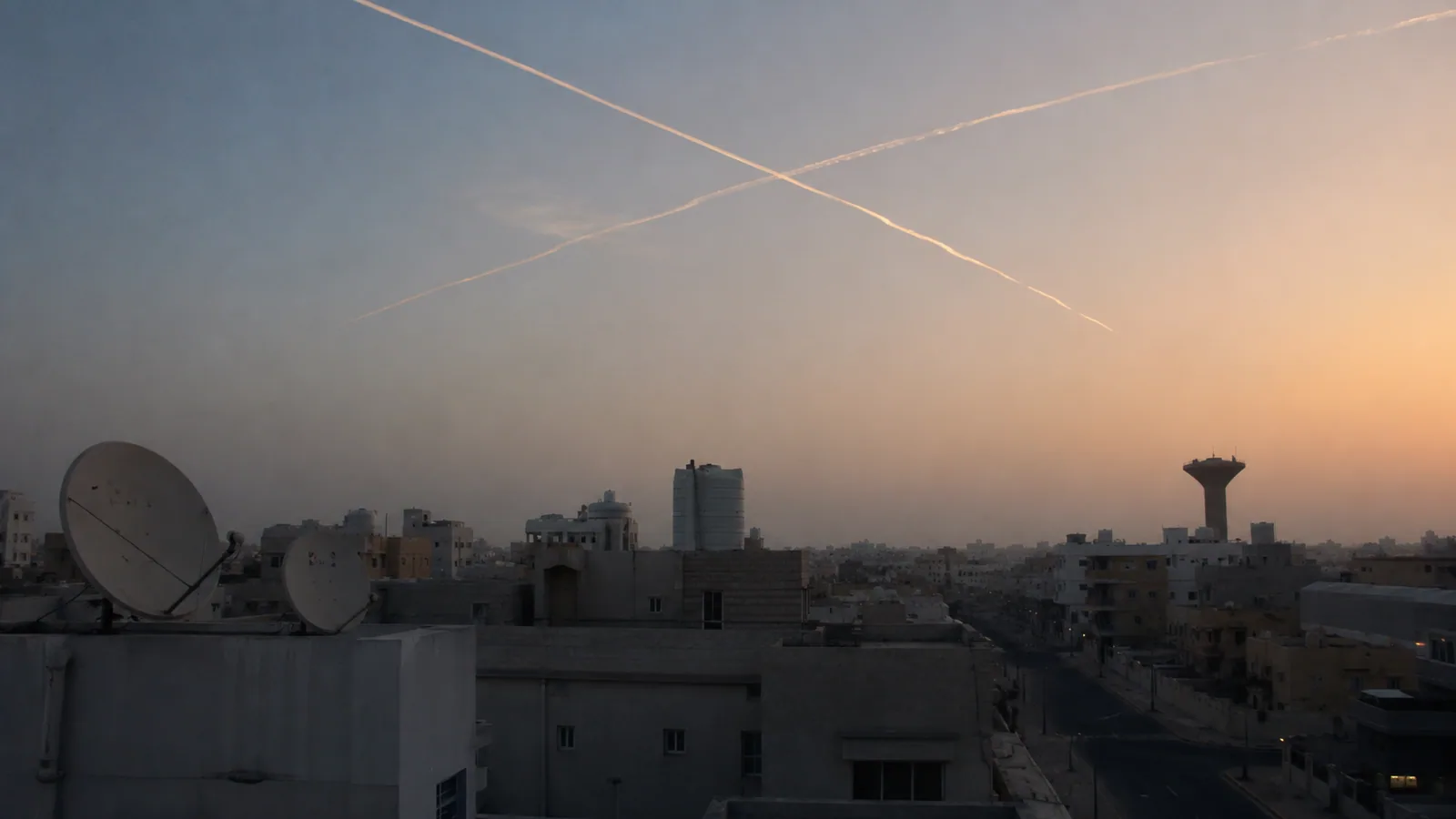
- Kuwaiti forces intercepted drones over their airspace early Saturday, in what authorities called Iranian aggression. Falling debris damaged a government facility in the north and civilian vehicles; no casualties were reported.
- Why is Iran threatening Gulf countries
- Because they host US bases or support US operations. Qatar, Bahrain, Kuwait and Jordan have all been targeted in recent weeks, and an Iranian general warned cooperating states would 'burn in the fires of war.'
- Will the US strike Iran again
- Two sources told reporters fresh US strikes were planned as soon as the weekend. That is sourced reporting, not an official announcement, and is flagged accordingly.
The war that a single US Senate vote failed to constrain last week spent the weekend widening sideways. Kuwait — not a belligerent — intercepted drones over its own airspace, and Tehran raised its threats against the Gulf states whose territory hosts American forces. The front line is increasingly defined not by who is fighting but by who is hosting.
1. What happened
Kuwait's armed forces said they intercepted drone threats in their airspace early Saturday local time, describing the attack as Iranian aggression. Debris damaged a government facility in the country's north and several civilian vehicles; no casualties were reported.
The rhetoric matched the trajectory. Major General Ali Abdollahi warned that nations cooperating with the United States would "burn in the fires of war." The list of countries struck by Iranian missiles and drones in recent weeks — Qatar, Bahrain, Kuwait, Jordan — maps precisely onto the list of US basing arrangements in the region. The State Department renewed its call for American citizens across the Middle East to exercise vigilance.
2. The numbers
| Item | Detail |
|---|---|
| Interception | early Saturday, Kuwaiti airspace |
| Damage | one government facility, civilian vehicles; no casualties |
| Iranian warning | cooperating states will "burn in the fires of war" |
| States targeted recently | Qatar, Bahrain, Kuwait, Jordan |
| US next move | weekend strikes reported by two sources, unconfirmed |
The structural shift is the story. When the belligerents were Iran and the United States, escalation ran through two capitals. Once host countries become targets, each host's air defence posture and basing policy becomes an independent variable — and the war acquires as many decision-makers as there are bases. Where those bases actually are, and why each matters, is mapped in a companion piece the same day.
3. What is still open
The largest unknown is Washington's next move: the weekend-strikes report rests on two unnamed sources and no official statement. Kuwait has not detailed the drones it downed. And as with every exchange in this war, the two sides' damage accounts diverge — this article carries only what both confirm.