SK hynix lifts capex near 60% for the AI build-out
SK hynix plans high-40-trillion-won capex this year, up about 60% from 2025
The three lines
- SK hynix is expanding this year's capex to the high 40 trillion won range, up about 60%
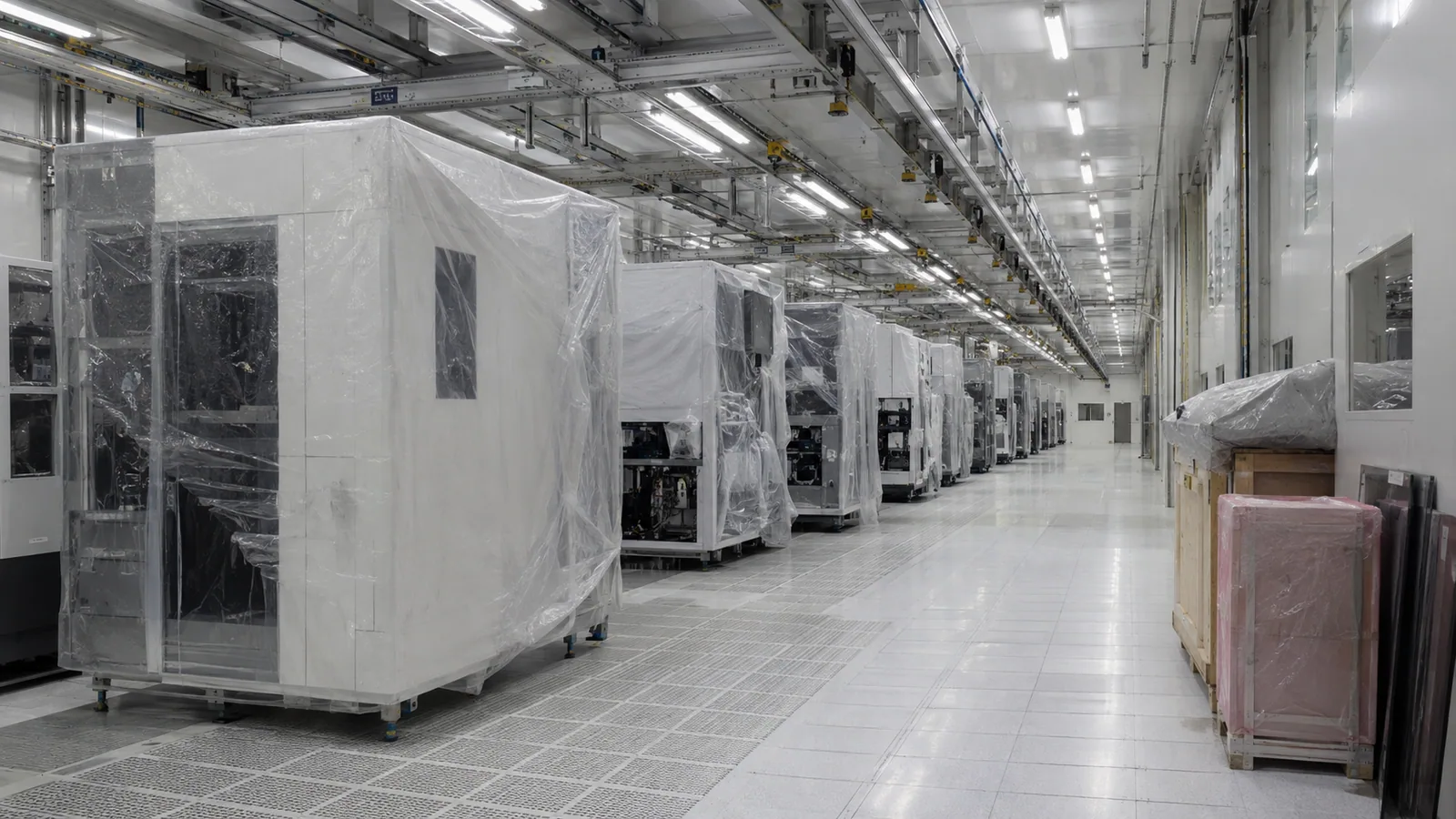
- Equipment is moving into the M15X fab's empty space ahead of schedule to add DRAM capacity
- The stated target is 75,000 to 80,000 wafer starts per month this year
Key questions
- How much is SK hynix spending on fabs this year
- The high 40 trillion won range — roughly $35 billion — up about 60% from last year, aimed at HBM and commodity DRAM demand from the AI infrastructure build-out.
- What is the M15X fab
- A fab in Cheongju whose empty cleanroom space is being fitted with production equipment ahead of schedule. Using a finished shell skips construction time, so capacity arrives faster than a new build.
- Will more memory capex crash prices like past cycles
- Not automatically. Much of this spending serves HBM volumes locked under long-term contracts, unlike the open-market DRAM of past gluts. A reference piece published the same day maps how capex becomes supply.
Last week SK hynix announced HBM4 volume shipments and its stock hit the daily limit. Buried in the same disclosure was a number that says more about the next two years than any single product: capital spending rises to the high 40 trillion won range this year — roughly $35 billion, up about 60% — one of the largest memory capex programmes ever attempted.
1. What was announced
The rationale is demand from both ends of the AI stack: HBM for accelerators, and commodity DRAM for the servers around them. Against that, the company is pulling equipment into the empty cleanroom space of its M15X fab in Cheongju ahead of schedule, with a stated goal of 75,000 to 80,000 wafer starts per month this year.
The M15X detail matters more than it looks. Fitting out an existing shell skips the year-plus of construction that separates most capex announcements from actual output — which makes this spending faster-acting than the headline figure suggests.
2. The numbers
| Item | Detail |
|---|---|
| 2026 capex | high 40 trillion won (~$35bn) |
| Change vs 2025 | up about 60% |
| Focus | M15X fab, Cheongju — early equipment move-in |
| Capacity target | 75,000–80,000 wafers/month this year |
| Demand driver | HBM plus commodity DRAM for AI infrastructure |
| Announced alongside | HBM4 ramp, long-term contracts with ~10 customers |
The historical reflex is to read a 60% capex jump as the top of the cycle — overbuilding that returns as a glut two years later. The structural difference this time is that much of the output is pre-sold: HBM ships against multi-year contracts, closer to build-to-order than to the open-market DRAM that produced past crashes. Contracted supply can still be mispriced, but it cannot flood a spot market.
3. What is still open
The exact figure is undisclosed — "high 40 trillion won" is the company's own width. Line-level allocation between HBM and commodity DRAM is not public, and whether the wafer target covers all DRAM or specific lines is not specified in the announcement's wording, so it is reproduced here as stated.
The larger question — how and when capex becomes supply and then prices — is bigger than one announcement. A reference piece published the same day maps that pipeline, including why contracted HBM breaks the old cycle playbook.