Gyeongnam drought: reservoirs at 34.1%, under half the seasonal norm
Agricultural reservoirs in South Gyeongsang province stood at 34.1% capacity on August 11, 2026 — 47.8% of the 71.3% seasonal norm — with 26 areas on restricted water supply and a national fire-service mobilisation order dispatching 200 water tankers and 400 personnel
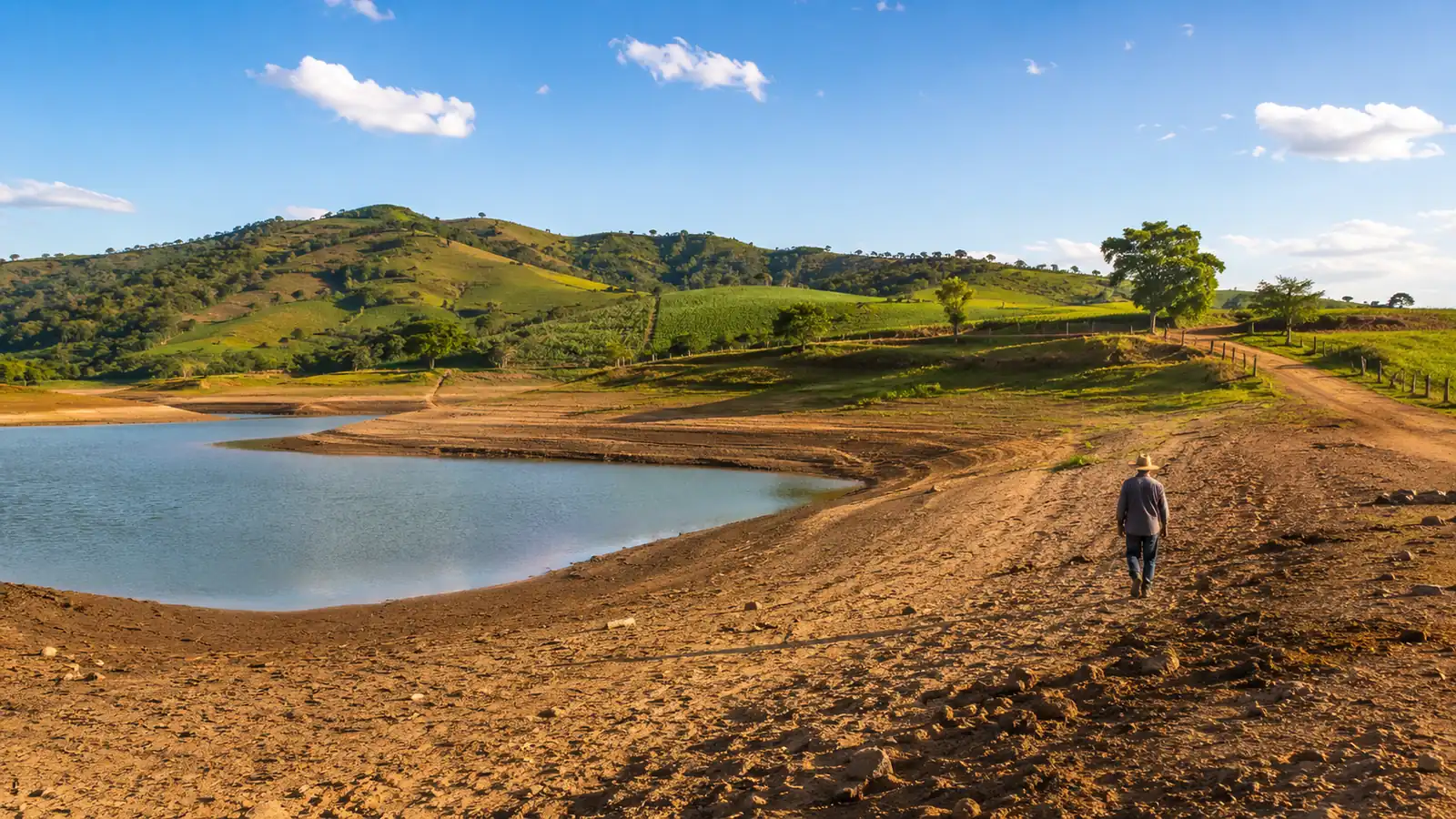
The three lines
- Reservoir level 34.1% against a 71.3% seasonal norm. June and July rainfall came in at 50% and 23% of normal
- 26 areas on restricted supply; 1,955.6 hectares of crop damage, of which 1,225.2ha is sweet persimmon
- A national fire-service mobilisation order brought 200 tankers and 400 personnel from 16 regions, delivering 4,769 tonnes in a day — only the second such order ever issued for a drought
Key questions
- How low are the reservoirs in Gyeongnam?
- 34.1% as of August 11, 2026. The seasonal average for that date is 71.3%, so the province is at 47.8% of normal — under half. The cause is rainfall. Cumulative precipitation over the previous six months was 586.7mm, or 60.3% of normal, and the shortfall concentrated in the months that matter: June came in at 50% of normal and July at 23%. Korean reservoirs are filled during the summer rainy season and drawn down through the rest of the year. That filling window essentially did not happen.
- Where is water actually being restricted?
- In 26 areas: six island communities with no mains water connection, and 20 villages served by small-scale local water systems. Mains supply in urban areas has largely continued normally, because restrictions fall first on places that depend on their own local sources. Municipal water is under pressure too — the Miryang Dam has fallen to 31.8%, entering the 'alert' stage for municipal supply, and is being operated to sustain 117,000 tonnes a day of essential use.
- What is a national fire-service mobilisation order?
- It is an order by the national fire agency directing fire services across the country into one region when local capacity is insufficient. It is normally used for large wildfires or major disasters. This one was issued at 8pm on August 11, 2026, and brought 200 water tankers and 400 personnel from 16 regional fire services to haul irrigation and drinking water; 4,769 tonnes were delivered in the first day, with 40 tankers to hardest-hit Miryang and 20 each to Jinju, Sacheon and Gimhae. It is only the second time such an order has been issued because of drought, after Gangneung in Gangwon province in August 2025.
Two hundred fire-service water tankers converged on one Korean province this week. Not for a fire.
Agricultural reservoirs in South Gyeongsang stand at 34.1%. The seasonal norm for the date is 71.3%. That is under half.
1. How dry
| Item | Value |
|---|---|
| Agricultural reservoir level (Aug 11) | 34.1% |
| Seasonal norm | 71.3% |
| Share of norm | 47.8% |
| Six-month cumulative rainfall | 586.7mm (60.3% of normal) |
| June rainfall | 50% of normal |
| July rainfall | 23% of normal |
Korean reservoirs fill during the summer monsoon and are drawn down through the rest of the year. That filling window is what failed. Half a normal June and under a quarter of a normal July produce 34.1% in August.
Against the national picture: reservoirs nationwide averaged 47% as of August 13. The country as a whole is below normal; Gyeongnam is 13 percentage points below that.
South Gyeongsang, for readers outside Korea, is the southeastern coastal province containing Changwon, Jinju and Gimhae — an agricultural and industrial region of roughly 3.2 million people adjoining Busan.
2. Alert stages across the province
Korea grades agricultural drought in four stages by reservoir level relative to the seasonal norm.
| Stage | Level vs norm | Gyeongnam municipalities |
|---|---|---|
| Attention | 70% or below | — |
| Caution | 60% or below | Tongyeong, Sacheon, Goseong, Namhae, Geochang |
| Alert | 50% or below | Changwon, Jinju, Gimhae, Yangsan, Uiryeong, Changnyeong, Hadong, Sancheong, Hapcheon |
| Severe | 40% or below | Miryang, Geoje, Hamyang |
Miryang, Geoje and Hamyang were reported as the only municipalities nationwide at the severe stage. Other tallies put the severe count at five. The discrepancy appears to be a matter of days between counts; this article could not confirm the figure as of August 14.
Seventeen of the province's municipalities are on emergency drought footing. The full grading system is set out in "How Korea grades a drought."
3. Restricted supply — 26 areas
| Category | Areas |
|---|---|
| Island communities with no mains connection | 6 |
| Villages on small-scale water systems | 20 |
| Total | 26 |
An easy misreading to avoid: mains water in urban areas has largely continued normally. Restrictions fall on places drawing from their own sources — valley streams, groundwater, small local reservoirs. Drought reaches the far end of a distribution network first.
Municipal supply is not safe either. The Miryang Dam has dropped to 31.8%, entering the 'alert' stage for municipal water, and is being run to sustain 117,000 tonnes a day of essential use.
4. Crop damage — persimmons hit hardest
| Crop | Area affected |
|---|---|
| Sweet persimmon | 1,225.2ha |
| Rice | 562.9ha |
| Pear | 40ha |
| Soybean | 28ha |
| Total | 1,955.6ha |
Persimmons account for 62.7% of the total. Gyeongnam is Korea's main sweet-persimmon growing region, and August is when the fruit sizes — the point in the season when water shortage translates directly into yield and grade.
The 562.9ha of rice is not minor either. August is heading and grain-fill for Korean paddy, the stage that requires standing water in the field. The water for that is exactly the 34.1% above.
These are provisional figures as of August 11; no final loss valuation has been made.
5. The mobilisation order — the second ever
| Item | Detail |
|---|---|
| Issued | 8pm, August 11, 2026 |
| Scale | 200 water tankers, 400 personnel |
| Drawn from | 16 regional fire services |
| First-day delivery | 4,769 tonnes |
| Allocation | 40 tankers to Miryang; 20 each to Jinju, Sacheon, Gimhae |
| Stated end of first phase | 6pm, August 13 |
A national fire-service mobilisation order moves fire capability from across the country into one region when local resources are insufficient. It is a wildfire and major-disaster instrument.
This is only the second time one has been issued for a drought, after Gangneung in Gangwon province in August 2025. Two consecutive summers in which fire engines were mobilised to carry water rather than put out fires.
The province committed 4.894bn won in emergency funds, and military vehicles and equipment were also brought into the distribution effort. The president directed a full administrative mobilisation on August 11.
6. What is still open
Whether three municipalities or five are at 'severe' is unresolved. Sources differ and the gap appears to be days between counts, but the August 14 figure could not be confirmed. The provincial average is likewise reported as both 34.1% and 32.8%.
Whether the mobilisation order is still running is unconfirmed. Its stated first phase ended at 6pm on August 13, and no verified extension notice was found.
The rainfall outlook through late August was reported as "no rain expected," but the original forecast text was not examined for this article.
One structural point remains. This page has a standing rule against running consecutive weather stories, because heat waves pass and the search demand disappears with them. Drought does not behave that way. Reservoir levels do not recover the moment rain returns. Rain in August helps this month; the water available for next year's growing season is set by winter and spring precipitation. That a national mobilisation order has now been issued for water in two consecutive years points toward a recurring condition rather than a single bad summer. That is as far as the confirmed evidence goes.
Sources
- Gyeongnam Ilbo — Reservoirs at 34.1%, no rain forecast through end of August
- Newsis — National fire mobilisation for extreme drought in Gyeongnam; 4,769t of water delivered in one day
- Newspim — National fire mobilisation order for Gyeongnam drought; 200 water tankers deployed
- Newspim — Daegu and Gyeongbuk fire services send 20 tankers to Gyeongnam
- Hankook Ilbo — President orders full administrative mobilisation; national fire order for drought-hit Gyeongnam
- Financial News — Agricultural water drought at 'severe'; municipal supply also threatened
- Money Today — National reservoir levels at 47% amid heat; calls for pre-emptive irrigation planning