Why volcanic ash stops aircraft — not visibility, but glass hardening inside the engine
Volcanic ash stops aircraft because of what it does inside an engine, not because of what it does to visibility. Ash is finely fragmented rock and glass; its silicate content begins to melt near 1,100 degrees Celsius, and a jet engine's combustion section is hotter than that. Ingested particles melt there, then resolidify as a glassy coating on the cooler turbine surfaces behind, covering blades and blocking the fine cooling holes that keep the hot section from failing. Because every engine on the aircraft draws the same air, they can fail together. Two accidents proved it. In June 1982 British Airways Flight 9 lost all four engines at 37,000 feet after passing through ash from Mount Galunggung in Indonesia, descended without power to 12,000 feet, restarted three and made an emergency landing at Jakarta. In December 1989 KLM Flight 867 lost all four in ash from Mount Redoubt in Alaska, fell 14,000 feet in about five minutes, restarted and landed with damage assessed at 80 million dollars. In both cases the crew never saw the cloud, because volcanic ash does not show on weather radar
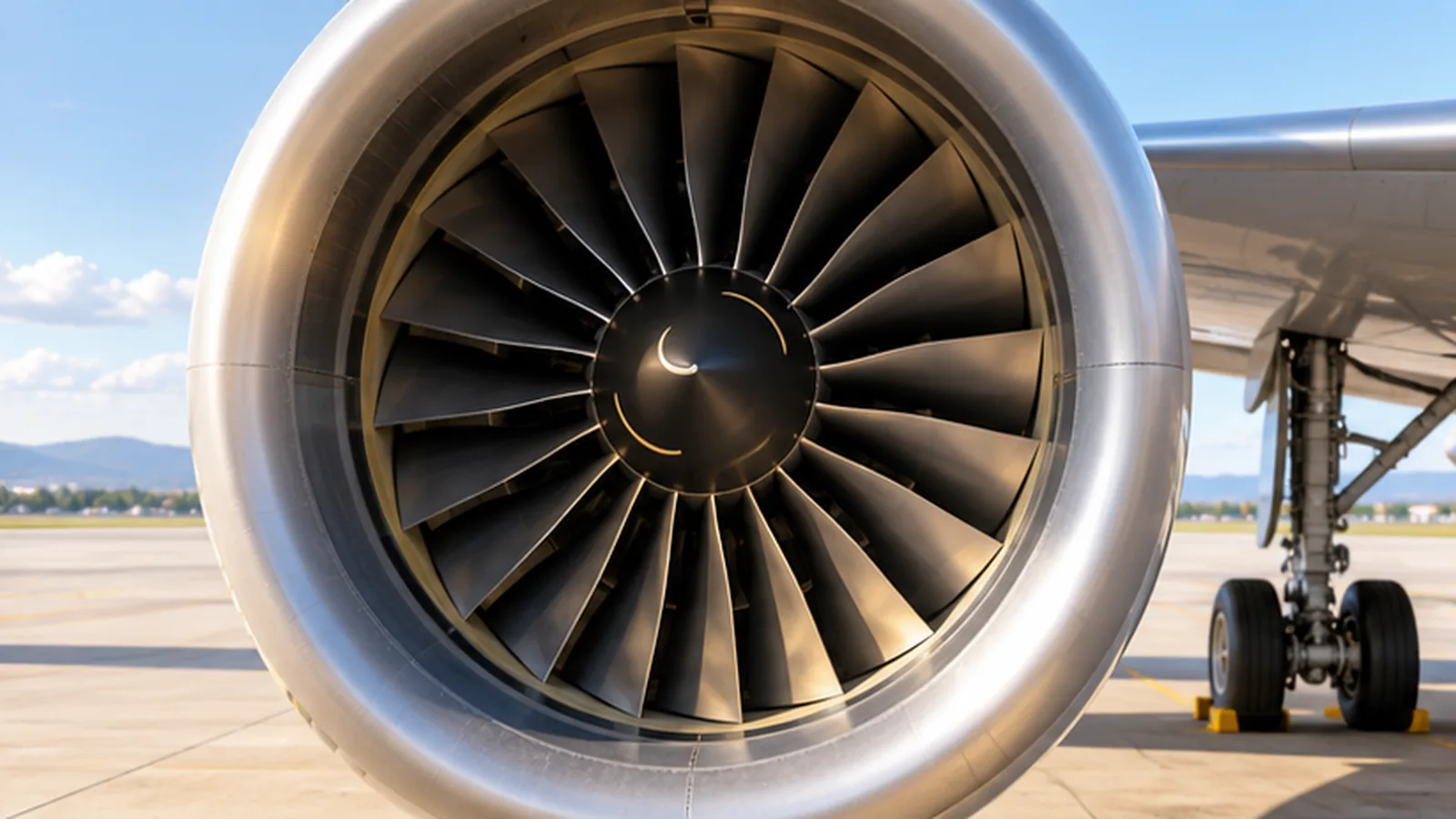
The three lines
- Mechanism — silicate melts in the combustor and resolidifies on turbine surfaces, blocking cooling passages
- Evidence — BA 9 in 1982 (four engines out, diverted to Jakarta) and KLM 867 in 1989 (14,000-foot drop, $80m damage)
- Response — ash is invisible to weather radar, so ICAO's nine VAACs forecast ash areas and aircraft simply avoid them
Key questions
- Why is volcanic ash dangerous to aircraft
- **Because it melts and then hardens again.** Four steps. **① Ash is not ash.** It has nothing in common with wood ash. It is finely fragmented **rock and glass**, mostly silicate. It is hard and abrasive. **② It melts at the front of the engine.** Silicate begins melting around **1,100 degrees Celsius**, and a jet engine's combustion section runs hotter, so ingested particles become liquid there. **③ It hardens at the back.** Carried into the turbine, the liquid meets cooler metal and **resolidifies as glass** — coating blades and plugging the **fine cooling holes** drilled to keep the hot section survivable. **④ The engine fails.** Airflow is obstructed and cooling stops, so combustion cannot be sustained. **And every engine breathes the same air, so they fail at nearly the same moment.** Having four engines is not redundancy against this. Secondary damage is real too: ash sandblasts the windscreen opaque, blocks the pitot tubes that measure airspeed, and produces static discharge across electrical systems.
- Has this actually happened
- **Twice, and in both cases every engine failed, and in both cases the aircraft landed.** **June 24, 1982 — British Airways Flight 9.** A Boeing 747 flying Kuala Lumpur to Perth passed through ash from Indonesia's **Mount Galunggung.** **All four engines failed at 37,000 feet** (about 11,300m). Over roughly 16 minutes the aircraft descended without power to **12,000 feet** (about 3,650m), where the crew restarted three engines and made an **emergency landing at Jakarta.** **December 15, 1989 — KLM Flight 867.** A Boeing 747 entered ash from **Mount Redoubt** in Alaska, again **lost all four engines**, fell about **14,000 feet in five minutes**, restarted and landed. Airframe damage was assessed at **80 million dollars.** **The shared detail is the important one: neither crew saw the cloud.** An ash cloud is solid particles rather than water droplets, so it **returns almost nothing on weather radar.** At night, or mixed with ordinary cloud, it is invisible to the eye as well. You find out you are in it after you are in it.
- So how do airlines and regulators handle it
- **They do not measure it. They avoid it. That is the design.** The system built after those accidents is the **Volcanic Ash Advisory Centre (VAAC)** network — **nine centres** worldwide under the International Civil Aviation Organization, each monitoring volcanic activity in its region and issuing **forecast ash areas.** Indonesia falls within the Darwin VAAC's region. **What comes out is a forecast, not an observation.** Satellite imagery and wind data feed a model that projects where ash will be, and airlines and regulators respond by **not entering that airspace.** The cost of that design is enormous. When Iceland's Eyjafjallajökull erupted in 2010, European airspace closed for days: more than **100,000 flights** cancelled and airline losses assessed above **3.1 billion dollars.** Attempts followed to define a concentration below which flight is permitted, but **the problem of measuring real-time concentration accurately has not been solved.** It is also why, during the September 2026 Anak Krakatau eruption, airports hundreds of kilometres away closed while nearer ones stayed open — **wind decides, not distance.**
When an airport closes because of a volcano, most people assume the problem is that pilots cannot see. That is not it. The problem happens inside the engine, not outside the windscreen.
1. Ash is glass, not ash
The name misleads. Volcanic ash has nothing in common with what a fire leaves behind. It is finely fragmented rock and glass, mostly silicate. Held in the hand it feels like grit.
Inside a jet engine it goes through four stages.
| Stage | Where | What happens |
|---|---|---|
| ① Ingestion | Engine inlet | Drawn in with the air, unfiltered |
| ② Melting | Combustor | Silicate melts near 1,100°C; the combustor is hotter |
| ③ Resolidification | Turbine | Meets cooler metal and hardens into glass |
| ④ Failure | Whole engine | Coats blades, blocks cooling holes; combustion cannot be sustained |
Stage three is the whole story. If it only melted, it would pass through. It hardens again, so it accumulates.
And the arrangement has one especially unpleasant property. Four engines breathe the same air. They do not fail one after another; they fail together. The margin that multiple engines normally provide does not apply here.
2. The two accidents that established it
| Accident | Date | Volcano | Outcome |
|---|---|---|---|
| British Airways 9 | June 24, 1982 | Galunggung, Indonesia | All four engines out at 37,000 ft → descended to 12,000 ft → three restarted, emergency landing at Jakarta |
| KLM 867 | December 1989 | Redoubt, Alaska | All four engines out, fell 14,000 ft in ~5 minutes → restarted and landed. Damage $80 million |
Neither accident killed anyone. And in neither case did the crew see the ash cloud.
The reason is physical. Ash does not show on weather radar. Airborne weather radar reads returns from water droplets; dry solid particles reflect almost nothing. At night, or mixed into ordinary cloud, ash is invisible to the eye as well.
You learn you are inside it after you are inside it — that single sentence is the premise of every rule built since.
3. The system is avoidance, not measurement
After those accidents, ICAO established the Volcanic Ash Advisory Centre network: nine centres worldwide, each monitoring volcanoes in its region and issuing forecast ash areas. Indonesia sits in the Darwin centre's region.
Knowing what kind of product that is changes how the news reads.
- It is a forecast, not an observation. Satellite imagery and wind data feed a dispersion model.
- It does not state concentration. There is no accurate way to measure, in real time, how much ash is at a given altitude.
- There is one response — do not go in.
The cost is large. In 2010, Iceland's Eyjafjallajökull closed European airspace for days: more than 100,000 flights cancelled, airline losses assessed above 3.1 billion dollars. Efforts followed to set a concentration below which flight is allowed, but it is hard to draw a threshold on a quantity you cannot measure.
4. Applying this to Anak Krakatau, September 2026
The structure explains what otherwise looks arbitrary in the coverage.
- Why Jakarta closed although it is far from the volcano — ash reached 6,000 metres on the Java side and the wind carried it there. Wind decides, not distance.
- Why some airports closed first and others later — the forecast area moves with time. Bandung and Lampung went first; Jakarta followed.
- Why closure times look oddly precise, like 8:59 am — they are cut to the validity period of a forecast. Reopening moves forward the same way when the forecast changes.
- Why 150,000 to 170,000 people were stranded with zero casualties — which is, read properly, the system working (「Anak Krakatau erupts (September 6)」).
5. What remains unresolved
- 1,100°C is a representative value. Melting onset varies with ash composition; it is not a single number.
- The KLM 867 damage figure was not traced to its basis. Whether $80 million covers only airframe and engine repair, or operational losses too, is unclear.
- The 2010 totals vary by citation. Both flight counts and loss estimates differ by agency and by period measured.
- Which VAAC issued advisories in September 2026 was not confirmed. Darwin is stated here on the basis of ICAO's regional allocation.
- Passenger compensation is a separate question. An ash cancellation is not the carrier's fault, so the rules differ — not covered here.
Sources
- UK Civil Aviation Authority — Why ash and aviation don't mix
- USGS — Volcanic ash clouds and air routes: effects on aircraft
- WMO — Aviation hazards: Volcanic Ash Clouds and Gases
- Bulletin of Volcanology — Volcanic jets to commercial jets: synopsis and diagnosis
- NASA Technical Reports — Engine Damage to a NASA DC-8-72 Airplane From a High-Altitude Encounter With a Diffuse Volcanic Ash Cloud