What is transshipment? Why AI chips reach China via Malaysia, Singapore and Thailand
Transshipment is unloading cargo in an intermediate country and reloading it onto another ship or plane for a different destination. Routine in logistics, it has become the main detour for restricted Nvidia chips that cannot go straight to China: they enter a third country such as Malaysia, Singapore or Thailand legally, then leave under new papers. US rules require a licence for re-export, but enforcement depends on transit countries
The three lines
- Definition — unloading in a middle country and reloading onto another carrier, a daily part of trade
- Problem — controlled AI chips pass through third countries where papers and labels change
- Response — US re-export rules, Malaysian transit permits, Singapore fraud cases, Taiwan criminal law plan
Key questions
- what is transshipment
- **Unloading cargo at an intermediate port or airport and reloading it onto another carrier.** | Term | Meaning | |---|---| | Transshipment | Reloaded at a midpoint for another destination | | Transit | Passes through on the same carrier | | Re-export | Imported, then exported again to another country | | Diversion | Sent somewhere other than the authorized destination |
- how are ai chips smuggled to china
- **Shipped legally to a third country, then redocumented or relabeled and sent on.** | Method | Case | |---|---| | False end-user claims | Singapore, alleged deception of Dell and Super Micro | | False item declarations | Malaysia, servers declared as electronic components | | Rebranding | US, Nvidia chips relabeled under a fake brand | | Serial removal, dummy servers | US, Super Micro co-founder case |
- malaysia ai chip transshipment permit
- **Since July 14, 2025, export, transshipment and transit of high-performance US-origin AI chips require a permit.** | Item | Detail | |---|---| | Basis | Strategic Trade Act 2010, Section 12 | | Advance notice | 30 days | | Company fine | Up to RM20 million | | Individuals | Up to RM10 million or 10 years in prison |
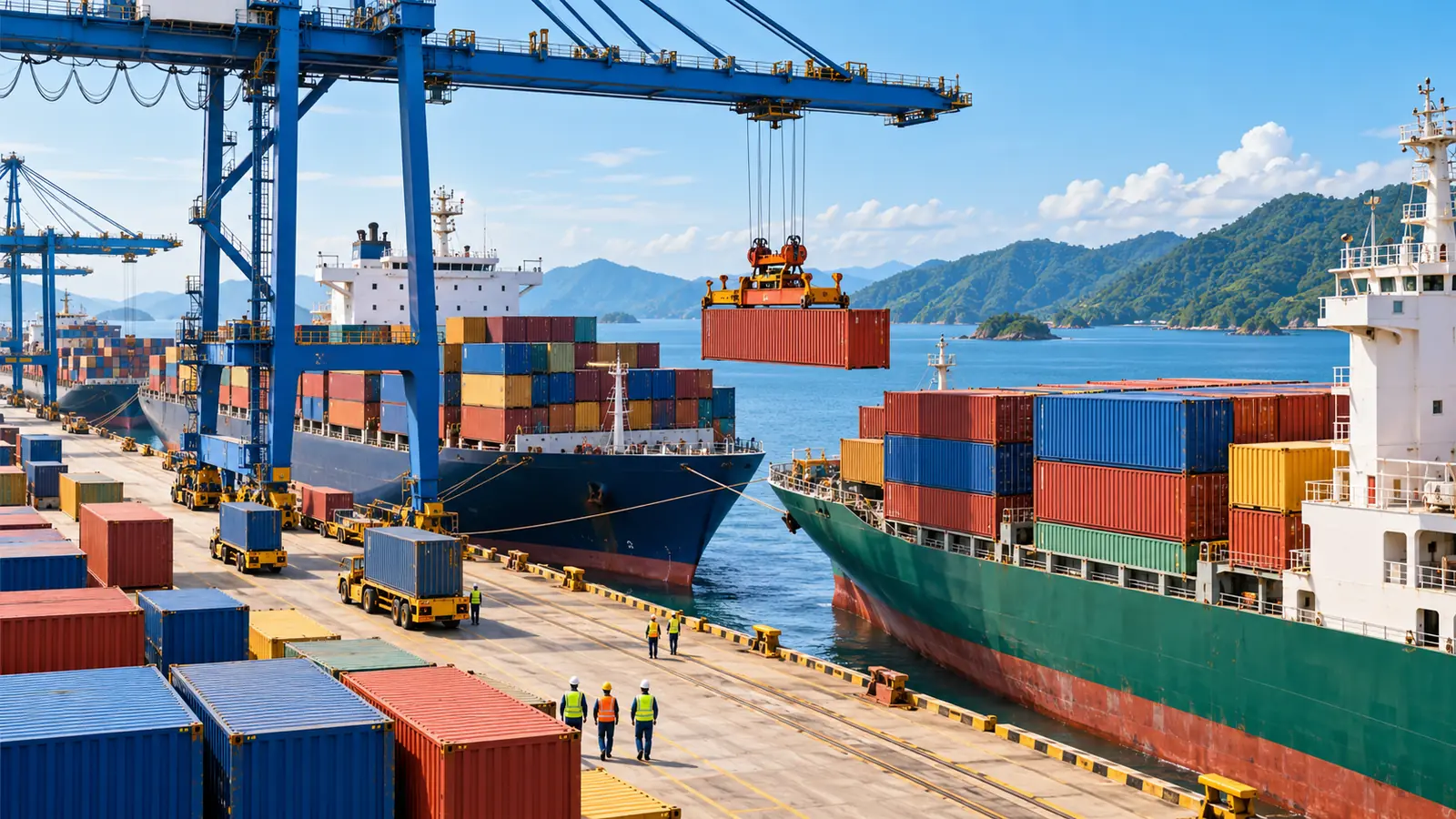
AI chips rarely travel to China in a straight line. They are unloaded and loaded again. Transshipment means taking cargo off a ship or plane at an intermediate port or airport and putting it onto another carrier bound for a different destination. Hubs like Singapore, Hong Kong and Dubai do this every day, and it is entirely legal in itself.
The problem began when the US started restricting exports of advanced AI chips to China in 2022. Nvidia chips that cannot be shipped to China directly are sent legally to a third country such as Malaysia, Singapore or Thailand, where documents and labels change before they move on. The 30 servers Malaysian customs said it seized on October 28, 2026 followed exactly that pattern (see Malaysia seizes 30 AI chip servers). This guide explains what transshipment is, how AI chips are diverted, and how countries are responding.
For Korean readers, the topic is closer than it looks: Korean memory makers supply the high-bandwidth memory inside these Nvidia accelerators, and Korea itself controls the transit and transshipment of strategic goods under its own export rules.
1. Transshipment, transit and re-export — similar words, different things
| Term | Meaning | Does cargo enter the middle country? |
|---|---|---|
| Transshipment | Unloaded at a midpoint and reloaded onto another carrier | Usually only a bonded area or free trade zone |
| Transit | Passes through on the same carrier, or stops briefly | No |
| Re-export | Cleared through customs, then exported again | Yes |
| Diversion | Sent somewhere other than the authorized destination | Depends |
In normal logistics, transshipment saves money. Big ships drop containers at a hub, and smaller ships carry them on to each destination. Air cargo works the same way. A free trade zone lets goods be stored and re-exported without duty, with lighter customs procedures.
In export controls, that lightness becomes a gap. Declare Malaysia as the destination at origin, reload with new papers in a Malaysian free zone, and the final destination disappears from the paperwork.
2. How AI chips are diverted
| Stage | What happens | Methods documented |
|---|---|---|
| 1. Purchase | Bought normally from a US server maker or distributor | Buyer misstates the end user as itself or a third-country data center |
| 2. First shipment | Legal export to a third country | Servers declared as computer or electronic components |
| 3. Midpoint handling | Repacked in a free zone or warehouse | Labels and serial numbers removed, moved into unmarked boxes |
| 4. Second shipment | Re-exported elsewhere | New air waybill, relabeled under a fictitious brand |
| 5. Concealment | Facing audits and checks | Dummy servers left behind to pass inventory checks |
| Method | Real case |
|---|---|
| False end-user claims | Singapore: alleged deception of Dell, Super Micro and Asus about end users |
| False item declarations | Malaysia: 72 servers as computer components (June), 30 as electronic components (October) |
| Relabeling under a nonexistent brand | US Operation Gatekeeper: Nvidia H100 and H200 chips |
| Hair dryers to remove labels, dummy servers | US: Super Micro co-founder case |
| Pass-through company to hide customers | US: same case |
There is no single route. In the case charged in March 2026, US prosecutors said servers went through Taiwan to Southeast Asia, were moved into unmarked boxes, and then went on to China. The Malaysian cases ran from one Asian country, through Malaysia, to another Asian country. Origin is not always the US either; servers assembled in Taiwan can enter a diversion route from the start.
3. Enforcement cases by country
| When | Country | Case | Size | Law used |
|---|---|---|---|---|
| February 2025 | Singapore | Three charged; Dell and Super Micro servers sent to Malaysia | $390 million in transactions (per prosecutors, as reported) | Fraud |
| December 2025 | US | Operation Gatekeeper, H100/H200 network dismantled | At least $160 million | Export Control Reform Act, smuggling |
| March 2026 | US | Super Micro co-founder and two others charged | At least $2.5 billion | Export control violations |
| April 2026 | Singapore | One more person charged over false end-user claims to Dell | — | Conspiracy to defraud |
| May 2026 | Thailand (reported) | Bangkok firm named as intermediary in March case | — | Not charged |
| June 2026 | Malaysia | 72 servers seized at KLIA | RM52.92 million | Strategic Trade Act, Sec. 12 |
| July 2026 | Singapore | Four companies, four people charged with fraud and money laundering; $42.4 million home frozen | — | Fraud, money laundering |
| August 2026 | Taiwan | Nine indicted over 130 AI servers | 130 servers | Existing laws |
| October 2026 | Malaysia | 30 servers seized at KLIA, fifth case for one syndicate | About RM49.5 million | Strategic Trade Act, Sec. 12 |
Singapore does not enforce US export controls directly. It prosecutes misleading US server suppliers about end users as fraud, and the proceeds as money laundering. The case first charged in February 2025 widened with new charges in April and July 2026. Singapore is a large billing location for Nvidia revenue, but the government has said only a small share of chips physically arrive there. The gap between billing address and delivery address has itself become a focus.
Malaysia has required permits for transit and transshipment since July 2025 and made two public airport seizures in 2026. Thailand has no chip-specific transshipment rule. In May 2026, reports named a Bangkok company as the intermediary in the 2.5 billion dollar US case. Taiwan said in October 2026 it will add AI servers and advanced chips to controlled items under its Foreign Trade Act, making unauthorized shipments a crime (see Taiwan moves to criminalize AI chip smuggling to China).
4. US rules — control follows the chip
| Rule | What it does | Link to transshipment |
|---|---|---|
| EAR advanced computing controls | From October 2022, licence needed to export high-end AI chips to China | Re-export from a third country also needs a licence |
| Foreign direct product rule | Covers foreign items made with US technology or tools | Chips made in Taiwan or Korea can be covered |
| May 13, 2025 guidance | Published red flags for diversion | Ignoring them can show a party had reason to know |
| AI diffusion rule | Issued January 2025, rescinded May 2025 | Country tiers replaced by targeted controls |
| Chip Security Act (bill) | Would require location verification on exported chips | Pending in Congress |
The heart of US policy is that US control travels with the chip. A chip shipped legally to Malaysia still needs a US licence to go on to China. But Washington cannot police what happens inside a Malaysian warehouse, so real enforcement depends on transit-country law and customs.
The Commerce Department's May 2025 red flags include customers who never bought advanced chips before October 2022, sudden order spikes, residential addresses, buyers without data-center infrastructure, and companies with little online presence. Sellers who ignore such signs can be treated as having known about a violation. The broader US regime is covered in What AI chip export controls are.
5. Transit-country rules compared
| Country | Chip-specific transshipment rule | Legal basis | Notes |
|---|---|---|---|
| Malaysia | Yes (July 2025) | Strategic Trade Act Sec. 12; companies up to RM20 million, individuals up to 10 years | 30-day notice, transit covered |
| Singapore | Does not enforce US controls directly | Penal fraud, money laundering | Prosecutes false end-user claims |
| Taiwan | In progress (announced October 2026) | Foreign Trade Act amendment planned | All of China, not a company list |
| Thailand | None (as reported) | — | US considered controls several times |
| United States | Origin country | Export Control Reform Act; up to 20 years on lead count | Claims reach over re-exports |
Malaysia stands out because it covers chips that only pass through. Moving them between planes in the free zone requires notice 30 days in advance; customs cited that provision in the October 2026 seizure. Countries without chip-specific rules become places where routes can shift. The balloon effect, where squeezing one route pushes traffic to another, is the main limit on enforcement.
6. Frequently asked questions
Is transshipment illegal? No. A large share of world trade moves through hub ports and airports this way. The problem is moving controlled goods without a permit or with false documents.
Why move whole servers? Loose chips are conspicuous and must be reassembled. Complete servers look like ordinary data-center gear, are easier to declare, and work on arrival.
What happens to seized chips? The Malaysian cases are under investigation. Penalties and forfeiture are decided in court.
Does this affect Korea? Korea controls transit and transshipment of strategic goods under its own rules, and Korean HBM sits inside Nvidia accelerators, so tighter or looser diversion routes feed back into chip demand.
7. What remains open
- Final destinations: Neither Malaysian case disclosed the destination country; China has not been officially confirmed.
- Thai intermediary: The Bangkok company link rests on anonymous-source reporting; the company has not been charged.
- Chip Security Act: Reports conflict on how far the location-verification bill has advanced.
- Balloon effect: There are no public statistics on where routes moved after enforcement tightened.
Sources
- Bernama — KLIA Customs foils transit of AI chip servers (2026-10-28)
- AP via News4JAX — Malaysia seizes servers with advanced AI chips suspected of violating export controls (2026-10-28)
- The Star — Miti imposes permit requirement on US-origin AI chip exports (2025-07-14)
- The Star — Customs Dept seizes 72 servers with AI chips worth RM53mil (2026-06-26)
- Free Malaysia Today — Singapore charges one more individual with AI chip fraud (2026-04-02)
- RANE Worldview — Singapore enforcement action highlights AI chip transshipment risk (2026-07-01)
- Al Jazeera — Three charged in the US with smuggling AI chips into China (2026-03-20)
- The Next Web — US prosecutors, Thailand OBON Corp, Supermicro, Nvidia, Alibaba smuggling (2026-05-08)
- Arnold & Porter — DOJ Shutdown of Major China-Linked AI Tech Smuggling Network (2025-12)
- Mayer Brown — US Commerce Department Announces New Export Compliance Expectations Related to AI (2025-05-16)