Why the Nasdaq plunged on November 5 — a Democratic sweep and promises to halt AI data centers
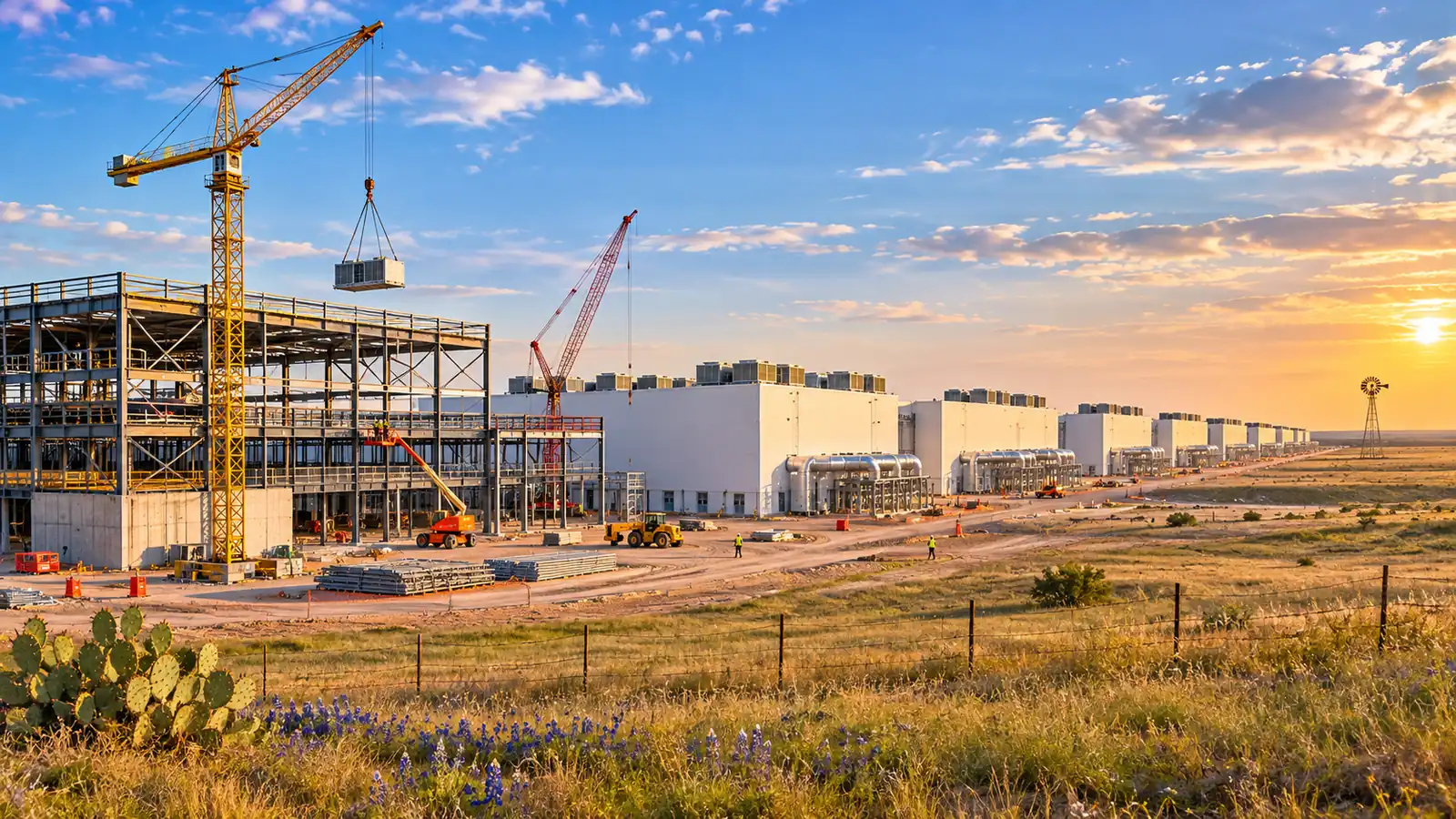
US tech stocks had their worst day since April 2025 on November 5, 2026: the Nasdaq 100 fell 6.3%, the S&P 500 4.4% and the Philadelphia Semiconductor Index 12.3%. The trigger was the November 3 midterm elections. Democrats won both the House and Senate, and many winners campaigned on slowing or stopping AI data center construction, most importantly Texas governor-elect Gina Hinojosa, who promised to halt all data center approvals in a state that holds about 27% of planned US data center capacity. Investors sold the chip and memory makers that depend on that buildout.
The three lines
- Scale — Nasdaq 100 -6.3% ($2.3 trillion), S&P 500 -4.4%, chip index -12.3%
- Cause — Democratic sweep; governors-elect in Texas, Ohio and Georgia pledged data center limits
- Spillover — Korea's KOSPI fell 6.02% the next day after a trading halt; Nasdaq rebounded 1.1% Friday
Key questions
- why did the nasdaq drop november 5 2026
- **Because of the midterm results. A Democratic Congress and newly elected officials promising data center restrictions raised fears that AI infrastructure spending would slow.** | Index (Nov 5) | Change | Note | |---|---|---| | Nasdaq 100 | -6.3% | About $2.3 trillion erased | | Nasdaq Composite | More than -5.5% | Worst since April 2025 | | S&P 500 | -4.4% | About $2.8 trillion erased | | Dow | -1,833 points (-3.4%) | Nvidia the biggest drag | | Philadelphia Semiconductor | -12.3% | Worst since March 2020 |
- which governors promised data center moratorium
- **Three governors-elect campaigned on restricting data centers, in states holding roughly a third of planned US capacity.** | State | Governor-elect | Pledge | Share of planned US capacity (Wells Fargo) | |---|---|---|---| | Texas | Gina Hinojosa | Halt all approvals until the Legislature passes protections; end subsidies | About 27% | | Georgia | Keisha Lance Bottoms | Temporary statewide pause to study bills and environment | About 7% | | Ohio | Amy Acton | Conditional moratorium unless developers pay utility costs, use union labor | About 5% |
- nvidia micron stock drop midterms
- **Memory and storage stocks fell hardest because their demand depends most directly on new data centers.** | Stock | Nov 5 change | |---|---| | SanDisk | -22% | | Micron, Western Digital, AMD | -17% each | | Seagate | -16% | | Arm | -13% | | Qualcomm | -9.5% | | Nvidia | -9.2% | | Alphabet, Meta, Amazon, Microsoft | Fell less than the market |
The worst day for AI stocks in a year and a half was set off not by an earnings report but by ballots. On Thursday, November 5, 2026, the Nasdaq 100 fell 6.3%, wiping out about $2.3 trillion in market value. The S&P 500 lost 4.4% and the Dow 1,833 points. The Philadelphia Semiconductor Index fell 12.3%, its worst day since the pandemic panic of March 2020.
Two days earlier, Democrats won sweeping victories in the midterms. NBC News projected a 54–44 Democratic Senate, and Democrats took the House comfortably. Markets had priced in a Democratic House. What they had not priced in was candidates opposed to AI data centers winning even in Texas.
1. Why chips fell hardest — fewer data centers, fewer chip orders
NBC reported that numerous Democrats who won races for governor, attorney general, Senate and House pledged to slow or halt AI data center construction — hundreds of candidates in all. The biggest shock was Texas, where Democrat Gina Hinojosa unseated Republican Governor Greg Abbott after promising a moratorium on all data center approvals "until laws can be passed by the Legislature to protect Texans."
Texas matters because, according to Wells Fargo, it holds about 27% of planned US data center capacity in gigawatts. Fortune noted that the governors-elect of Texas, Ohio and Georgia all campaigned on restricting data center development.
| Segment | Example | Nov 5 change |
|---|---|---|
| Storage | SanDisk / Seagate | -22% / -16% |
| Memory | Micron, Western Digital | -17% each |
| Compute | AMD / Nvidia | -17% / -9.2% |
| Design and mobile | Arm / Qualcomm | -13% / -9.5% (mixed earnings the night before) |
| Data center builders | SpaceX, Tesla | About -10% each |
| Cloud giants | Alphabet, Meta, Amazon, Microsoft | Fell less than the market |
| Index | Philadelphia Semiconductor | -12.3% |
The cloud giants falling less is telling. Markets were not betting that Big Tech would stop spending on AI, but that it would spend later and at higher cost. That delays chipmakers' revenue while easing some of the hyperscalers' capital burden. Ed Yardeni of Yardeni Research told NBC this was not "an AI bubble bursting" but "an AI bubble losing some air very, very rapidly."
2. A two-day chain reaction — from the Texas count to a halt in Seoul
| When | What happened |
|---|---|
| Nov 3 (Tue) | Midterms: Democrats take the House, then the Senate |
| Nov 4 (Wed) morning | Texas result priced in; SpaceX down about 4%, Tesla about 5% (CNBC) |
| Nov 4 (Wed) close | Chip index down 3.13% while the major indexes rise |
| Nov 5 (Thu) Korea | KOSPI down 5.28%, sell sidecar triggered |
| Nov 5 (Thu) US | Nasdaq 100 -6.3%, chip index -12.3% |
| Nov 6 (Fri) Korea | KOSPI down more than 8% early, 20-minute halt, closes -6.02% |
| Nov 6 (Fri) US | October payrolls +165,000; Nasdaq rebounds 1.1% |
Wells Fargo's Ohsung Kwon had warned before the vote that "a Dem win could potentially be a left-tail event to the AI trade." Elon Musk, who CNBC said spent at least $474 million on the midterms, $224 million of it in Texas, responded on X that "data centers in space" were looking appealing. President Trump wrote that the market "suffered one of the Worst Days in History based on the results of the Election."
For Korean investors the shock was outsized, because Samsung Electronics and SK hynix — two of the world's biggest memory makers — make up a large share of the KOSPI. That week is covered day by day in our KOSPI weekly report.
3. What remains — pledges are not laws, and rates still matter
| Variable | What is known | What is not |
|---|---|---|
| Texas moratorium | Pledge: halt approvals, end subsidies | How and how long after inauguration |
| Federal rules | Democratic Senate (NBC projection: 54 seats) | Legislation, presidential veto |
| Interest rates | October payrolls +165,000, unemployment 4.1% | December 8–9 Fed decision |
| Big Tech spending | Hyperscaler 2026 capex up to $828 billion (Fortune) | Any change to 2027 plans |
Fortune noted that governors can influence permitting, state regulation and tax incentives, but some steps need legislative approval, and federal restrictions would require an act of Congress that President Trump could veto. Texas already had a de facto pause: Abbott halted new grid-connection approvals for data centers in August pending an audit, a move Hinojosa called "an election year stunt."
Rates add a second layer. NBC said December hike odds fell to about 60% on the day of the crash, but the next day's October jobs report showed 165,000 new jobs against forecasts of roughly 65,000–70,000, with unemployment down to 4.1% and August–September revised up by a combined 84,000. Doubts about the pace of AI spending and the risk of another rate hike landed in the same week. For what a data center moratorium actually stops, see our explainer on data center moratoriums.
Sources
- NBC News — Stocks plunge as election outcome and AI worries crush tech shares (2026-11-05)
- CNBC — AI data center stocks and Musk's SpaceX decline as Texas governor result raises risks of a slowdown (2026-11-04)
- Fortune — Democrat wins will slow data center construction and force tech to the negotiating table (2026-11-04)
- The Hill — Data centers emerge as major midterms loser (2026-11)
- US Bureau of Labor Statistics — Employment Situation Summary, October 2026