Iran puts a price on reopening Hormuz — reparations, and about a week left
Iran set conditions for reopening the Strait of Hormuz — US war reparations, an end to the blockade of its ports, release of frozen funds — as the 60-day negotiating window narrows
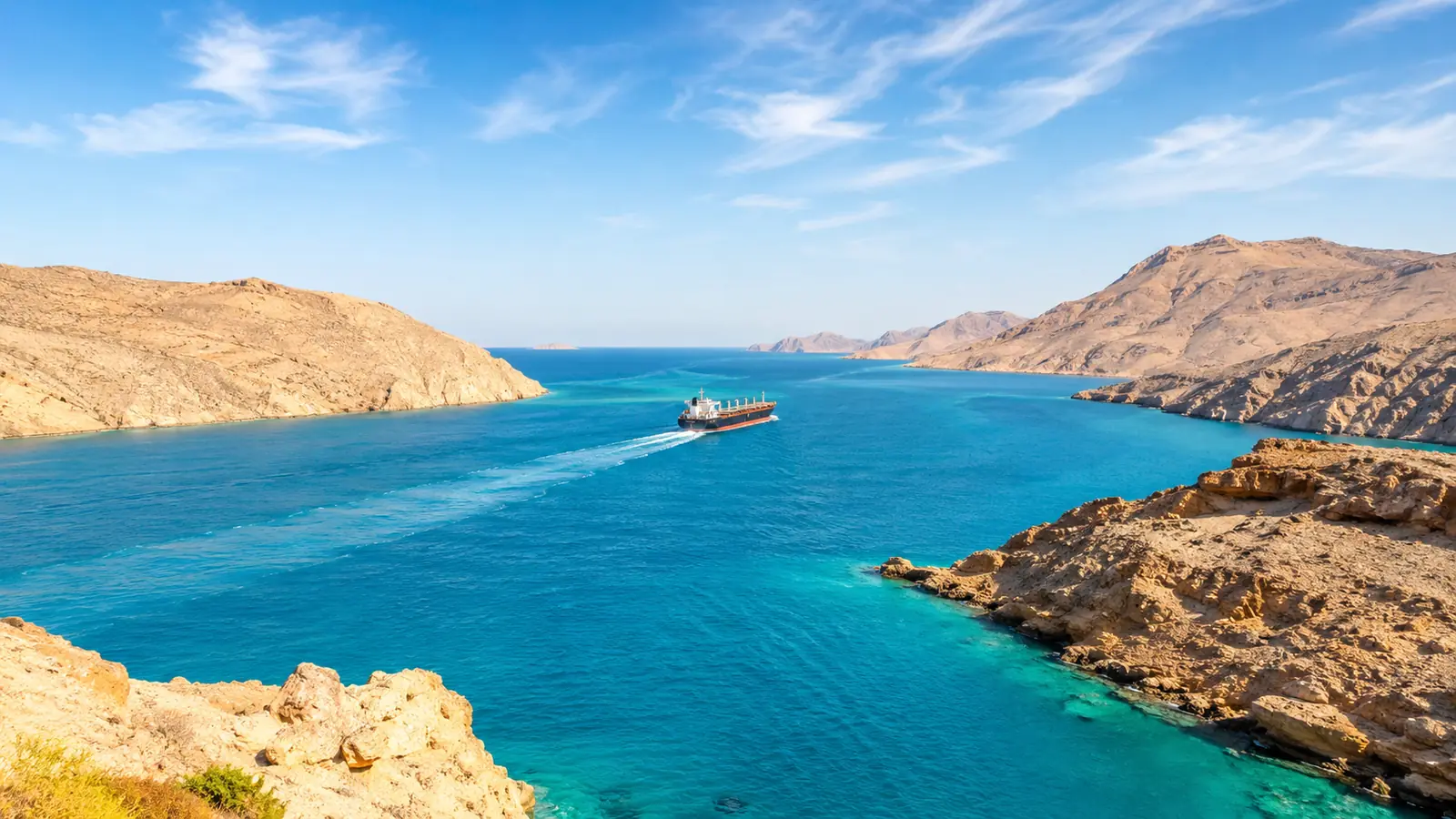
The three lines
- Foreign Minister Araghchi says Iran and Oman are "very close" on a new maritime routing through the strait
- Reopening itself is conditioned on US reparations, an end to regional threats, lifting the port blockade and unfreezing assets
- Roughly a week remains of the 60-day negotiating period set in the memorandum; Washington's response was notably cautious
Key questions
- What is Iran demanding
- Items attributed to Iran's Supreme National Security Council include US war reparations, an end to threats in the region, lifting the naval blockade of Iranian ports, and release of frozen Iranian funds. Some outlets counted six conditions, adding a US troop withdrawal and an apology for breaching the memorandum. Araghchi said reopening requires conditions to be met, including compensation for what Iran calls US violations of the agreement.
- What is the Oman routing
- A separate, technical track that has actually progressed. Iran and Oman have agreed on the core of a draft creating an inbound lane in Iranian waters and an outbound lane near Oman, with an interim corridor while the legal and technical questions around a permanent route are settled. The plumbing for resumed traffic is close to done; the politics of opening the tap are not.
- What happens when the clock runs out
- Nothing automatic is known to trigger. But markets treat the deadline as a signal: if the negotiating framework wobbles, risk premiums return to crude and shipping rates. That matters well beyond the Gulf — the overwhelming majority of the crude South Korea imports transits this strait, and refined product from those barrels is re-exported across Asia.
Last week this page covered Qatar's confirmation that a US-Iran text was circulating. Over the weekend, Iran attached a price to it.
Foreign Minister Abbas Araghchi said Iran and Oman are "very close" to agreement on a new maritime routing through the Strait of Hormuz — while making clear that reopening the strait itself carries separate conditions. Items attributed to Iran's Supreme National Security Council include US war reparations, an end to threats in the region, lifting the naval blockade of Iranian ports, and the release of frozen funds. Several outlets counted six conditions, adding a troop withdrawal and an apology.
Washington, which days earlier sounded close to a deal, stepped back — the talks, US officials indicated, are not finished.
1. Two tracks moving at different speeds
The most useful thing in this weekend's news is the separation between the technical and the political.
The technical track, between Iran and Oman, has advanced. The two have agreed on the core of a draft that creates an inbound lane in Iranian waters and an outbound lane near Oman, with an interim corridor to be used while the legal and technical questions around a permanent route are resolved. Where ships would actually sail once traffic resumes is nearly settled.
The political track, between Tehran and Washington, is where it stops. Iran's price for opening that route is not a shipping matter — it is a post-war settlement. Accepting reparations would carry an implicit admission of responsibility, which turns the question from cost into legitimacy.
2. The demands, ranked by difficulty
| Iranian demand | Nature | Why it is hard for Washington |
|---|---|---|
| War reparations | Post-war settlement | Implies acceptance of fault |
| End to regional threats | Military posture | Alters Gulf deterrence strategy |
| Lift blockade of Iranian ports | Sanctions / operations | Surrenders leverage first |
| Release frozen funds | Financial sanctions | Requires congressional and allied coordination |
| (Some reports) Troop withdrawal, apology | Political symbolism | Highest domestic cost |
The top rows admit negotiation; the bottom rows require a decision rather than a deal. Listing many demands at once may itself be technique — open high, trade down, keep the substance. That technique fails when the clock is short.
3. Why a week matters
The memorandum set a 60-day period to reach final agreement, and press accounts put roughly a week of it left. No automatic consequence of expiry has been made public, but markets read deadlines as signals.
The chain is short: the framework wobbles → the timing of resumed transit becomes unclear → risk premiums return to crude and freight → import prices feed into consumer inflation weeks later. Crude traded in the $78 range for WTI and the $83 range for Brent on August 7. As this page has documented, oil takes weeks to reach household budgets — and for South Korea, which sends the great majority of its crude imports through this strait, the exposure is unusually direct.
4. What remains unverified
No full text of Iran's conditions has been published, and outlets count between four and six items. The start and end dates of the 60-day window are press estimates. Whether Washington might accept any single item, and whether the Iran-Oman routing could take effect without US consent, are both unknown.
The geography and volumes are in "The Strait of Hormuz: 34 kilometres carrying a fifth of the world's seaborne oil." Oman's role as intermediary is in "Why Oman sits between Washington and Tehran." The lag from crude prices to consumer costs is in "How many days until oil reaches your wallet."