US strikes three Iranian oil tankers (September 5, 2026) — Seoul still won't call it a deployment
US Central Command announced on September 5, 2026 that it had struck three Iranian crude oil carriers in response to the Islamic Revolutionary Guard Corps firing ballistic missiles at two US Navy warships. The named vessels were the M/T Downy off Kharg Island inside the Persian Gulf, the M/T Stark 1 near Jask on Iran's Gulf of Oman coast, and the M/T Kylo, also referred to as the Noxen, which was transiting the Gulf of Oman without cargo. Two ships were disabled and one destroyed. The warships targeted by Iran, an aircraft carrier and a guided missile destroyer, evaded the missiles and the US reported no casualties among its personnel. CENTCOM commander Admiral Brad Cooper described the response in economic terms, saying that shooting at two American ships would cost Iran three of its own. Washington says the tankers belong to a network financing the IRGC and its regional proxies. In South Korea, President Lee Jae-myung said the same week that there had been no progress on a Hormuz deployment and that the word deployment was not yet appropriate
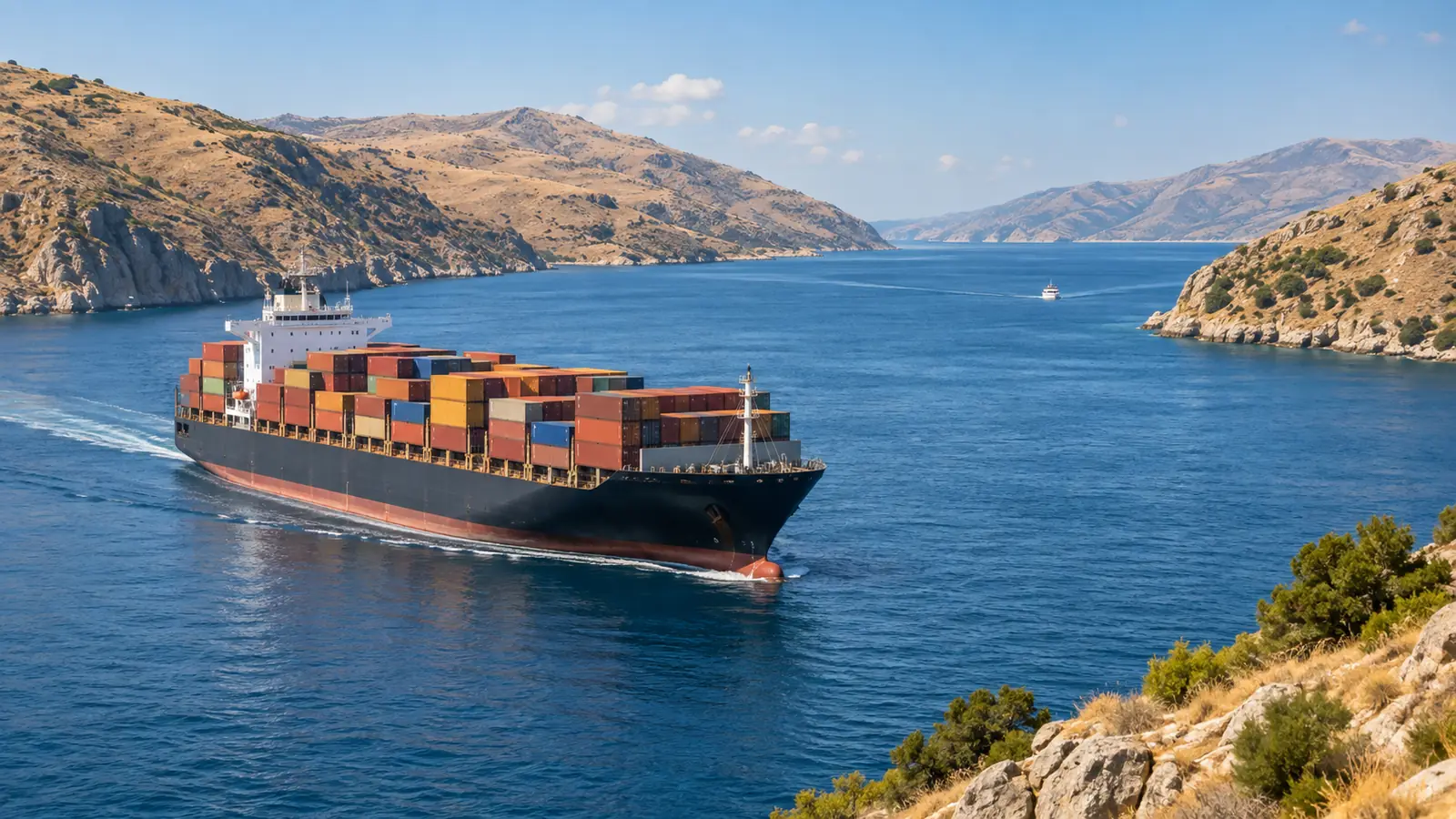
The three lines
- Strikes — CENTCOM hit three Iranian crude carriers on September 5. Two disabled, one destroyed, no US casualties
- Framing — the IRGC fired at two US warships first. CENTCOM called the response an economic cost, not a military one
- Korea — Lee Jae-myung: no progress on Hormuz, 'deployment' is not the right word. State visit to France September 6-9
Key questions
- Why did the US strike Iranian oil tankers
- **The US military says Iran fired first, at two of its warships.** The targets were an **aircraft carrier and a guided missile destroyer**, both of which evaded the incoming ballistic missiles, and the US reported **no casualties among its personnel**. CENTCOM then struck three crude oil carriers in response. What is notable is that **the US characterised the response itself as economic.** CENTCOM commander Admiral Brad Cooper said that firing at two American ships would cost Iran three of its own. Washington's stated justification is that the vessels form part of a **multibillion-dollar network** that funds the IRGC and its regional proxies. In other words the targets were not warships or missile sites but **export capacity.** This sits on the same axis as the sanctions package Washington announced on August 24, covering 60 entities across five sectors. **Where sanctions block transactions, this removed the means of carriage.**
- Where were the ships when they were hit
- **In three separate places, and the geography is the point.** The **M/T Downy** was off **Kharg Island**, Iran's principal crude export terminal, inside the Persian Gulf. The **M/T Stark 1** was near **Jask**, a port on the Gulf of Oman — that is, **outside** the Strait of Hormuz. The **M/T Kylo** was transiting the Gulf of Oman **without cargo**. So the strikes covered **both sides of the strait at once.** Jask matters specifically because it allows Iranian crude to be loaded without passing through Hormuz, which is the chokepoint Iran has been using as leverage. Hitting inside and outside the strait in one operation suggests the bypass route was included in the target set — though **CENTCOM did not state that intention**, and it did not explain why an empty vessel was on the list. Both points are inference rather than confirmed reasoning.
- Is South Korea sending forces to Hormuz
- **Nothing has been decided, and the president is avoiding the word itself.** Asked about Hormuz, President Lee Jae-myung said **there has been no progress** and indicated that 'deployment' is not currently the appropriate term. The government has set out three considerations. **Dependence** — Korea takes roughly **70 percent** of its crude imports via Middle East routes including Hormuz. **Priority** — the first consideration is stated to be the safety of Korean resources and merchant shipping, not a US request. **Separation** — direct involvement in a war and securing safe passage for commercial vessels are described as distinct questions. The consultations are not only with Washington: the president said Korea is discussing safe-passage arrangements with **the United Kingdom, France and other European states** as well. On September 3 the presidential office denied reports that a deployment decision was taking shape, saying nothing had been decided. Lee begins a **state visit to France on September 6, running to September 9**, with a summit with President Macron on September 8.
US Central Command said on September 5 that it had struck three Iranian crude oil carriers, in response to the Islamic Revolutionary Guard Corps firing ballistic missiles at two US Navy warships.
The detail worth pausing on is the target set. Not warships, not missile sites — tankers.
1. Where the three ships were
| Vessel | Location | Reported state |
|---|---|---|
| M/T Downy | Off Kharg Island (inside the Persian Gulf) | Disabled or destroyed |
| M/T Stark 1 | Near Jask (outside the Strait of Hormuz) | Disabled or destroyed |
| M/T Kylo (Noxen) | Gulf of Oman, no cargo aboard | Disabled or destroyed |
| Total | — | 2 disabled, 1 destroyed |
The spread matters. Kharg Island is Iran's principal crude export terminal, inside the Gulf. Jask is a port on the Gulf of Oman from which crude can be loaded without passing through the Strait of Hormuz.
The operation therefore reached both sides of the chokepoint. CENTCOM did not say that was the intent, and did not explain why a vessel carrying no cargo was included.
2. "An economic cost, not a military one"
The US military defined the character of the response itself. Admiral Brad Cooper said that shooting at two American ships would cost Iran three of its own.
Two things follow from that sentence.
The arithmetic is stated openly. Publishing a two-for-three ratio effectively announces the price of the next exchange in advance.
The target is revenue. Washington says the vessels belong to a multibillion-dollar network funding the IRGC and its regional proxies. That is the same logic as the August 24 sanctions package covering 60 entities across five sectors — but where sanctions block transactions, this removed the carriage.
The US aircraft carrier and guided missile destroyer evaded the incoming missiles and Washington reported no American casualties. Any casualties among the tanker crews are unconfirmed.
3. Markets had been pricing this all week
The strikes close out a week-long sequence rather than arriving from nowhere.
- September 1 — US strikes Iranian targets, resuming fighting after roughly a month. Brent clears $95
- September 2 — Iran's Revolutionary Guard says two tankers hit naval mines in the Strait. The KOSPI falls 3.99 percent
- September 4 — Brent settles at $96.28, up close to 9 percent for the week
- September 5 — CENTCOM strikes three Iranian crude carriers
Over those five sessions US equity indexes moved 0.09 percent and oil moved about 9 percent. The market is expressing this crisis through the crude price, not through stocks.
4. Where Korea stands
The deployment question resurfaced in Seoul during the same week.
President Lee Jae-myung said there has been "no progress," and indicated that 'deployment' is not currently the right word for what is being discussed. On September 3 the presidential office denied reports that a decision was taking shape.
The government's stated framework has three parts.
- Dependence — roughly 70 percent of Korea's crude imports arrive via Middle East routes including Hormuz.
- Priority — the first consideration is the safety of Korean resources and merchant shipping, not a request from Washington.
- Separation — direct participation in a war and securing safe passage for commercial vessels are treated as distinct questions.
The consultations are not bilateral. The president said Korea is discussing safe-passage arrangements with the United Kingdom, France and other European states. That context gives weight to his state visit to France from September 6 to 9, which includes a summit with President Macron on September 8.
5. What is still open
- The account is the US military's. Per-vessel damage, weapons used and exact timing have not been independently confirmed, and Iran's official response is unestablished.
- The financing claim is an assertion. No documentation supporting the multibillion-dollar network characterisation has been released.
- The bypass reading is inference. CENTCOM never stated a rationale for hitting Kharg and Jask in the same operation.
- Korea has set no timeline. Whether to participate, and in what form, are both described by the president as undecided. Whether anything on this surfaces during the France visit is the next thing to check.
Sources
- Al Jazeera — US says it hit Iran oil tankers helping finance 'regional proxies'
- NBC News — U.S. strikes 3 Iranian oil tankers after Iran targets Navy warships, military says
- Stars and Stripes — US strikes 3 Iranian oil tankers after Navy warships evaded missiles, CENTCOM says
- CNBC — U.S. strikes 3 Iranian oil tankers after missile attacks on Navy ships
- MBC — [Exclusive] President Lee: 'No progress on a Hormuz deployment; our own needs come first'
- Asiae — Presidential office: reports of a Hormuz deployment taking shape are 'not true; nothing decided'
- Asiae — President Lee to make a state visit to France September 6-9, with AI and nuclear cooperation on the agenda