Evergrande's Hui Ka Yan gets life on August 20 — 15.8bn yuan in corporate fines
Hui Ka Yan, founder of China Evergrande, was sentenced to life imprisonment by a Shenzhen court on August 20, 2026. The sentence came with confiscation of all personal property and lifetime deprivation of political rights. Corporate fines were imposed separately: 8.82 billion yuan on China Evergrande Group and 7 billion yuan on its onshore unit Hengda Real Estate, or 15.82 billion yuan combined
The three lines
- Sentence — life imprisonment, confiscation of all personal property, lifetime loss of political rights, August 20
- Charges — misuse of funds, illegal deposit-taking, fundraising fraud, fraudulent issuance of securities, illegal disclosure, bribery
- Fines — 8.82bn yuan on China Evergrande Group, 7bn yuan on Hengda Real Estate; 15.82bn yuan in total
Key questions
- What sentence did Hui Ka Yan receive?
- **Life imprisonment**, handed down by the Shenzhen Intermediate People's Court on **August 20, 2026**. Two additional penalties came with it: **confiscation of all personal property** and **deprivation of political rights for life**. The second is a supplementary penalty under Chinese criminal law that removes the right to vote and stand for office, to hold posts in state organs, and to certain rights of speech, publication and assembly. The court described the conduct as sustained, large-scale financial fraud — inflated assets and concealed liabilities. Hui had already pleaded guilty in April 2026 to eight charges.
- What were the fines?
- They fell on two corporate entities. **China Evergrande Group**, the holding company, was fined **8.82 billion yuan** (about $1.31 billion). **Hengda Real Estate**, the onshore operating unit, was fined **7 billion yuan** (about $1.04 billion). Together that is **15.82 billion yuan**, roughly $2.35 billion. Hui's personal property forfeiture is separate. What the judgment does not establish is how much of this is actually collected, or in what order any recovery reaches unfinished-apartment buyers and creditors — fines are paid to the state, which is a different ledger from compensation.
- What was the Evergrande collapse, briefly?
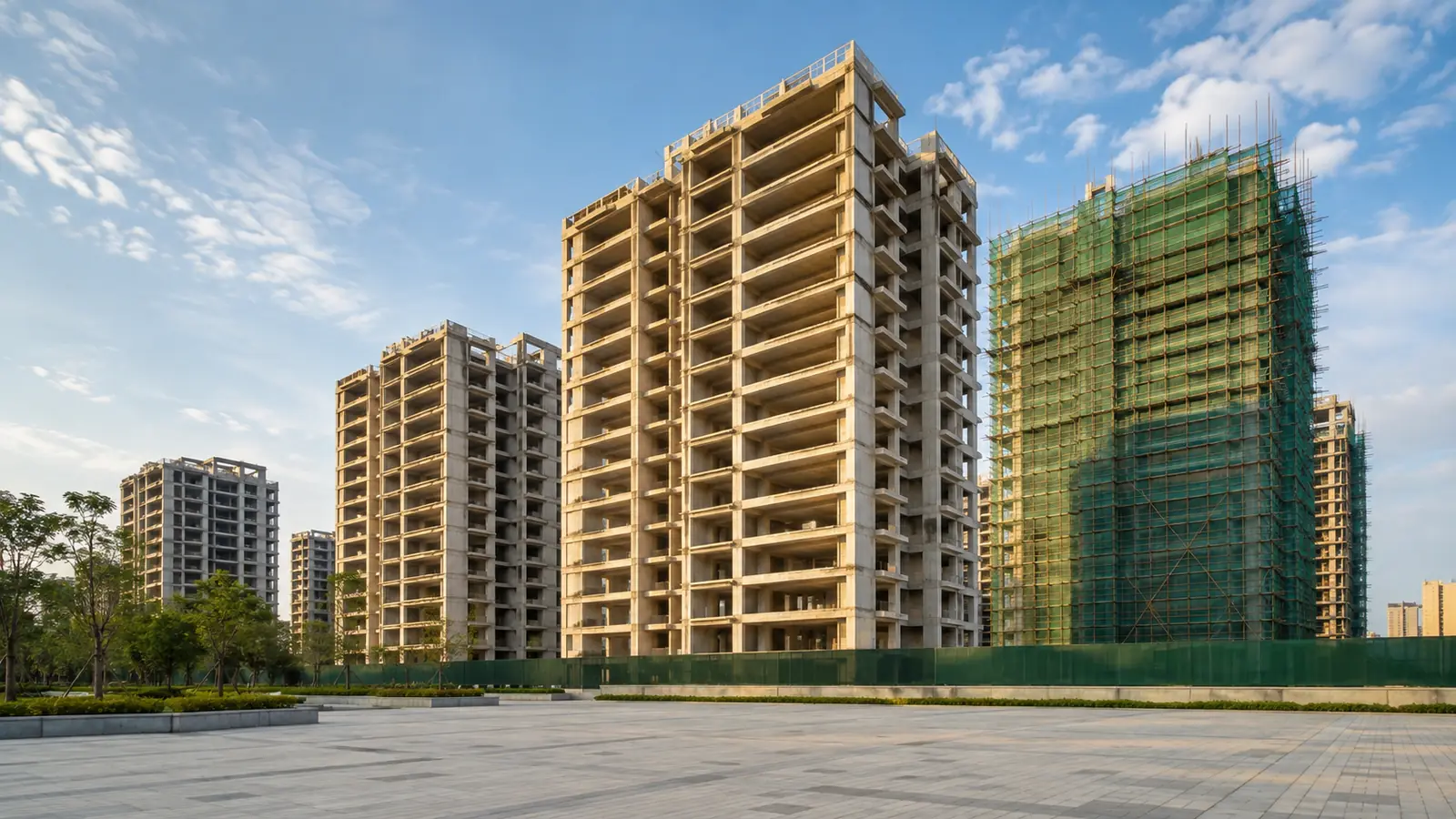
- Evergrande was once China's largest property developer and Hui was China's richest man. The business ran on a loop: **sell apartments before building them, and use the pre-sale proceeds plus borrowing to buy the next site**. The loop needs two conditions — rising prices and continued credit. When Chinese authorities moved against excessive borrowing in the property sector in 2020, the credit condition broke. Construction stopped, unsold inventory built up, and the company failed with **more than $300 billion in liabilities**. A Hong Kong court ordered its liquidation in January 2024. This August judgment closes the criminal chapter; the liquidation and creditor recovery run separately and continue.
A man who was once China's richest has been sentenced to life in prison.
On August 20, 2026, the Shenzhen Intermediate People's Court sentenced Evergrande founder Hui Ka Yan — Xu Jiayin in Mandarin — to life imprisonment, with confiscation of all personal property and lifetime deprivation of political rights.
A collapse that began in 2021 has been closed, criminally, five years later.
1. What the sentence contains
| Item | Detail |
|---|---|
| Date | August 20, 2026 |
| Court | Shenzhen Intermediate People's Court |
| Principal sentence | Life imprisonment |
| Supplementary | Confiscation of all personal property; political rights removed for life |
| Guilty plea | April 2026, eight charges |
The charges were tried together. Those confirmed in coverage include misuse of corporate funds, illegal absorption of public deposits, fundraising fraud, fraudulent issuance of securities, illegal disclosure of key information, and bribery.
The court's own phrase was sustained, large-scale financial fraud — specifically, inflated assets and concealed liabilities.
Deprivation of political rights has no direct equivalent in many legal systems. Under Chinese criminal law it removes the right to vote and stand for election, to hold posts in state organs, and certain rights of speech, publication and assembly. Attached for life, it normally accompanies a life sentence.
2. The corporate numbers
Separate from the personal sentence, two entities were fined.
| Entity | Fine | USD |
|---|---|---|
| China Evergrande Group (holding company) | 8.82bn yuan | about $1.31bn |
| Hengda Real Estate (onshore operating unit) | 7bn yuan | about $1.04bn |
| Total | 15.82bn yuan | about $2.35bn |
The figures are large, but they are not recovery. A fine is paid to the state. Compensation to unfinished-apartment buyers and to creditors runs on a different ledger.
How the two connect, and how much of the fine is actually collected, is not established by the judgment. This page leaves it unconfirmed.
3. Where the loop broke
Evergrande's model was simple.
Sell apartments before building them → use pre-sale proceeds and borrowing to buy the next site → pre-sell again
The loop turns only while prices rise and credit continues. Break either condition and it stops.
In 2020 Chinese authorities moved against borrowing in the property sector, and the second condition broke. With no new money, construction funded by earlier pre-sales stalled; with construction stalled, new units stopped selling.
| When | What |
|---|---|
| 2020 | Beijing tightens property-sector borrowing |
| 2021 | Evergrande's defaults surface |
| Jan 2024 | Hong Kong court orders liquidation |
| Apr 2026 | Hui pleads guilty to eight charges |
| Aug 20, 2026 | Life sentence |
Liabilities have been reported at more than $300 billion. That figure has circulated since 2021 and is not a final number established by the liquidation.
4. What the judgment signals
A criminal verdict does not change the value of a company that has already failed. Two things still make this one worth reading.
First, the severity. China has imposed death sentences in major financial-crime cases, so life is not the maximum. But attaching confiscation of all property and lifetime loss of political rights signals that authorities are treating this as systematic fraud rather than individual excess.
Second, the timing. Five years into the property sector's adjustment, closing the criminal proceeding is a way of moving the episode into a clean-up phase. That is not the same as recovery — the judgment settles responsibility for the past and touches neither unsold inventory nor local-government finances.
For markets outside China the link is indirect. Chinese property demand is a major sink for steel, non-ferrous metals and construction machinery, and its multi-year contraction feeds through to suppliers in Korea, Japan and Australia. This verdict does not change that demand; it dates it.
5. What is not confirmed
- The court's city — outlets split between Shenzhen and Guangzhou. This page follows the majority and did not obtain the official judgment text.
- Associated sentences — reports of more than 50 people receiving 22 months to 18 years were not checked individually against the Xinhua original.
- Collection and distribution — how much of the 15.82bn yuan is collected, and in what order it reaches buyers and creditors, is not established.
- Liability total — $300bn is a repeated figure, not a liquidation-confirmed one.
- Next checkpoint — the Hong Kong liquidation, which continues independently of the criminal case.
Sources
- South China Morning Post — Saga of China Evergrande founder Hui Ka-yan ends with life sentence
- NPR — Chinese court sentences founder of property developer Evergrande to life in prison
- CNN Business — Evergrande founder Hui Ka Yan sentenced to life in prison in China
- ABC News (Australia) — Evergrande property founder Hui Ka Yan sentenced to life in prison by Chinese court
- Fox Business — Hui Ka Yan sentenced to life in prison for Evergrande fraud and bribery
- UPI — Former chairman of real estate giant China Evergrande sentenced to life
- The Jakarta Post — China Evergrande founder sentenced to life in prison