Iceland's EU referendum, August 29, 2026 — polls split by 3.2 points
Iceland held a referendum on Saturday, August 29, 2026 asking whether to restart EU accession talks that have been frozen since 2013. It is not a vote on membership, and under Icelandic election law the result is advisory rather than binding. Polling was inside the margin of error: a Gallup survey published the day before had No at 51.6 percent to Yes at 48.4, while Maskina had the exact reverse at 51.3 to 48.7. More than 63,000 advance ballots had been cast by late Friday, August 28. Mortgage rates around 9 percent power the Yes campaign; the 200-nautical-mile fishing zone powers the No campaign
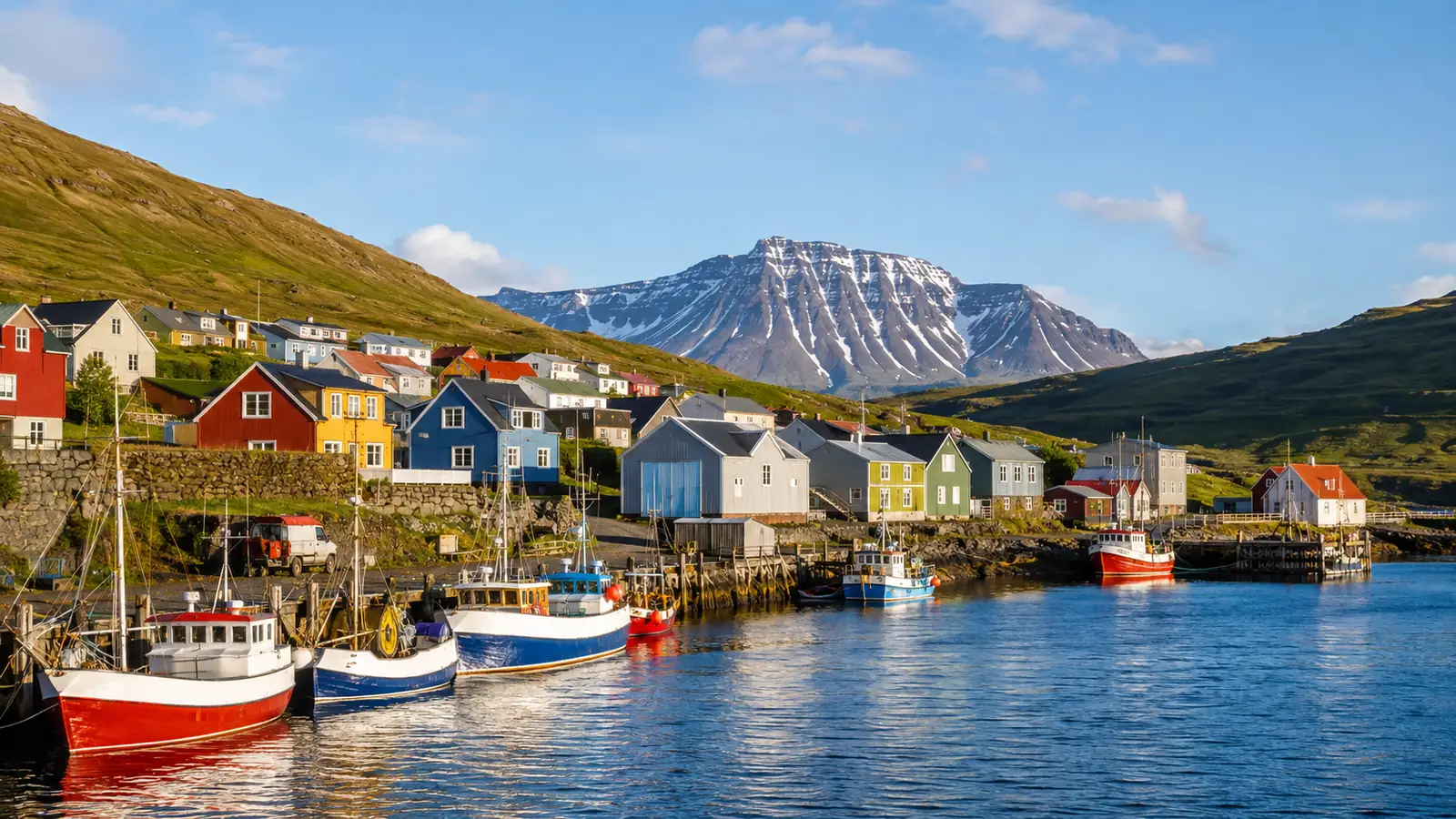
The three lines
- The question — not whether to join, but whether to restart talks frozen since 2013
- The split — Gallup had No 51.6 to 48.4; Maskina had Yes 51.3 to 48.7. Both inside the error margin
- The stakes — Yes runs on 9 percent mortgages and the euro; No runs on the 200-mile fishing zone
Key questions
- What exactly was on the Iceland ballot?
- **One sentence: should Iceland begin accession negotiations with the European Union again?** This is **not a vote on joining**. Iceland applied in 2009 and opened talks, but the process was suspended in 2013 when a government hostile to membership took office. Even a Yes leaves a long road: negotiations would have to conclude, the **final accession treaty would go to a second referendum**, and **parliament would have to approve** it. And under Icelandic election law this vote is **advisory** — politically heavy, legally non-binding. Voting was on **Saturday, August 29, 2026** local time, and with no exit polls, the first reliable numbers only come once counting is under way.
- What did the Iceland EU polls say?
- **Close enough that the leader changed with the pollster.** **Gallup**, published the day before the vote, had **No at 51.6 percent and Yes at 48.4** — a 3.2-point gap. **Maskína** had the mirror image: **Yes 51.3, No 48.7**. An earlier August Gallup had both camps at **46 percent with 8 percent undecided**. All three gaps sit inside the margin of error. Advance voting was heavy: **more than 63,000 ballots** had been cast by late Friday, August 28 (an earlier count put it near 57,000). Roughly 270,000 voters were eligible, and election officials expected high turnout.
- Why are Icelanders divided on the EU?
- **Money argues for Yes; fish argues for No.** The Yes case starts with **interest rates**. Icelandic mortgage rates run around **9 percent**, and campaigners argue adopting the euro could cut that by **3 to 5 percentage points** — which is why support is strongest among younger voters trying to buy homes. Trump-era tariff threats and Arctic resource competition added a security argument for binding closer to Europe. The No case starts with **fisheries**. Iceland controls a **200-nautical-mile exclusive fishing zone** and requires catch to be processed domestically; the EU's **Common Fisheries Policy** would put resource management under shared rules. An industry figure warned that "big companies in Europe will swallow up all these small companies." The Yes campaign says exemptions are negotiable; former President Ólafur Ragnar Grímsson answers that EU rules apply uniformly to every member. Sovereignty runs underneath both — a country of under 400,000 people asking how much voice it would have in Brussels.
Iceland voted on Saturday, August 29, 2026.
The ballot asked one thing: should Iceland begin accession negotiations with the European Union again?
Not whether to join. Whether to restart talks that were switched off in 2013.
1. A thirteen-year gap
| Year | Event |
|---|---|
| 2009 | Iceland applies; accession talks open |
| 2013 | A government opposed to membership takes office — talks suspended |
| Aug 29, 2026 | Referendum on whether to resume them |
A Yes does not produce membership. What remains is long.
| Step | What happens |
|---|---|
| 1 | This vote — resume talks? (advisory, not legally binding) |
| 2 | Negotiations with the EU |
| 3 | Second referendum on the final accession treaty |
| 4 | Parliamentary approval |
That the vote is advisory under Icelandic election law matters. It carries political weight; it does not carry a legal instruction.
2. The pollster decided the leader
| Poll | Timing | Yes | No | Undecided |
|---|---|---|---|---|
| Gallup | published Aug 28 | 48.4% | 51.6% | — |
| Maskína | shortly before the vote | 51.3% | 48.7% | — |
| Gallup | earlier in August | 46% | 46% | 8% |
Every gap sits inside the margin of error, and the two final polls disagreed on which side was ahead. With no exit polls, the first credible number arrives only once counting has moved.
Advance voting was heavy: more than 63,000 ballots by late Friday, August 28. Around 270,000 voters were eligible.
3. The Yes case — a 9 percent mortgage
| Item | Figure |
|---|---|
| Icelandic mortgage rate | around 9% |
| Claimed cut under the euro | 3–5 percentage points |
That is why Yes runs strongest among younger voters trying to buy a home: the argument is that the euro caps both the krona's volatility and the cost of borrowing.
A security argument layered on top. Tariff threats from the Trump administration, Arctic resource competition and confused public remarks about Greenland pushed Icelandic policymakers toward deeper European integration.
4. The No case — 200 nautical miles
| Iceland today | Under the EU's Common Fisheries Policy |
|---|---|
| 200-nautical-mile exclusive fishing zone under national control | Stock management moves to shared EU policy |
| Catch processed domestically only | Single-market rules apply |
The industry warning is blunt: "big companies in Europe will swallow up all these small companies."
The Yes campaign says exemptions can be negotiated. The rebuttal comes from former President Ólafur Ragnar Grímsson: EU rules apply uniformly to all members.
Sovereignty sits underneath. A country of fewer than 400,000 people asks how much voice it would actually have in Brussels — and answers itself with a slogan about decisions being made in Iceland by Icelanders.
5. Why Brussels watched a small vote
By population Iceland barely moves EU enlargement. Brussels watched for direction.
- Since 2016 the referendums have mostly been about leaving. A vote about coming closer is rare.
- Iceland is already inside the European Economic Area and Schengen, so much of the accession work is effectively done. If talks restart, they can move fast.
- Its position on Arctic shipping routes and resources gives it weight the population figure hides.
6. What we could not confirm
- The result — this article covers only up to the vote being held on August 29.
- Advance ballots — reported as roughly 57,000 and as more than 63,000; apparently a timing difference we could not reconcile.
- Eligible voters — about 270,000 per press reports, not checked against the electoral commission.
- The rate claim — 3 to 5 percentage points is a Yes-campaign estimate, not an independent finding.
- Timing — poll closing time and expected completion of the count are unconfirmed.
Sources
- Iceland Review — Iceland Votes Today on Restarting EU Accession Talks
- ABC News (Australia) — Interest rates, fish and Donald Trump on Icelanders' minds as nation goes to referendum on EU
- Euronews — Polls too close to call in Iceland's pivotal EU membership referendum
- France 24 — Icelanders vote in referendum on whether to resume EU membership talks
- RTE — Icelanders go to polls in EU membership talks referendum
- CNN — A tiny Nordic nation weighs moving closer to Europe under the shadow of Trump