Iceland rejects EU talks on August 30, 2026 — 52.8% against, 82.5% turnout
Iceland voted on August 30, 2026 against resuming European Union accession negotiations, with 52.8 percent opposed and 47.2 percent in favour once all six constituencies had reported. About 225,000 people voted, a turnout of 82.5 percent. The Yes side led early in the count before rural constituencies moved No ahead and widened the gap; the capital Reykjavik voted Yes. In a country where fisheries account for roughly 40 percent of exports, the decisive argument was that EU membership would place Icelandic waters under the bloc's Common Fisheries Policy. Iceland applied for membership in 2009, opened talks in 2010, reached agreement on 11 of 35 negotiating chapters, and froze the process in 2013
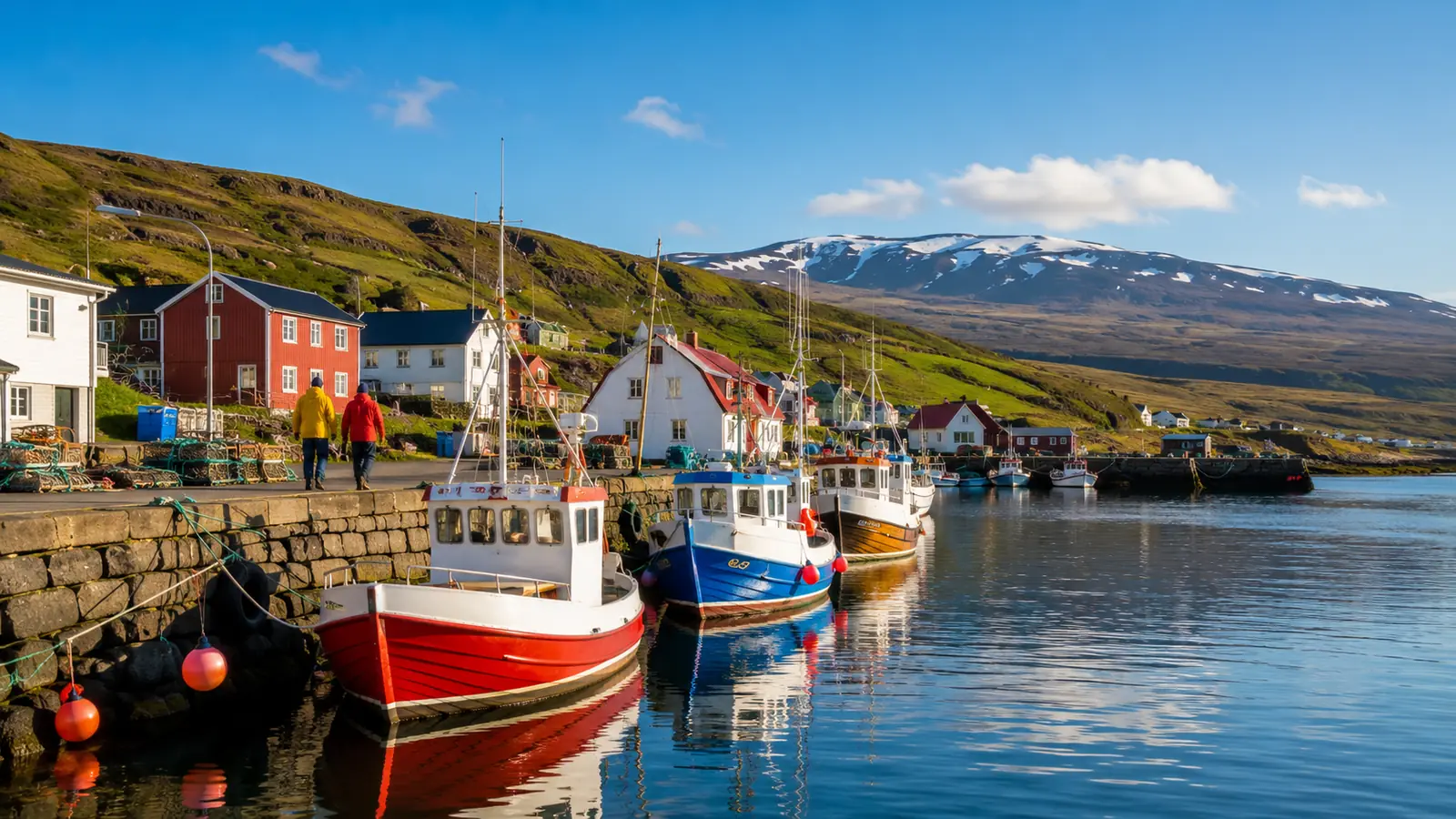
The three lines
- Result — 52.8% No to 47.2% Yes across all six constituencies; a 13-year reopening fails
- Turnout — about 225,000 voters, 82.5 percent, with an early Yes lead reversed
- Issue — fisheries, roughly 40 percent of exports, and who sets the catch
Key questions
- What was the result of Iceland's EU referendum?
- **52.8 percent against, 47.2 percent in favour — the proposal failed.** All six constituencies had reported by August 30 local time. About **225,000** ballots were cast for a turnout of **82.5 percent**. The question was not whether to join the EU but whether to **reopen accession talks that were frozen in 2013** — so the result is not a rejection of membership so much as a refusal to sit back down at the table. The margin was 5.6 points. Polling on the eve of the vote had shown a 3.2-point gap, which we covered the day before; the actual result was slightly wider than that.
- Why did the No side win?
- **Fisheries.** The sector accounts for roughly **40 percent of Iceland's exports**. EU membership would bring Icelandic waters under the **Common Fisheries Policy**, which sets catch quotas for member states' waters at the EU level — meaning Brussels would have a hand in deciding how much Iceland can take from its own seas. The count mirrored that divide exactly: **Reykjavik voted Yes**, while **rural and coastal constituencies delivered the No vote**. The early Yes lead that later reversed is consistent with urban ballots being counted first. We could not obtain constituency-level percentages.
- How far had Iceland's EU bid actually gone?
- **Applied in 2009, opened talks in 2010, agreed 11 of 35 chapters, frozen in 2013.** The application followed the 2008 financial crisis, when three Icelandic banks collapsed and the currency fell sharply — the euro looked like a shelter. Negotiations proceeded until a government sceptical of membership took office in 2013 and the process stopped. **Thirteen years** later this referendum asked whether to restart it. How EU accession actually works, step by step, is covered separately in our piece on the accession process. Note that Iceland is not an EU member but is part of the **European Economic Area**, so it already participates in the single market — which weakens the practical case for joining.
Iceland will not reopen its European Union accession talks. When counting finished on August 30 local time, the result was 52.8 percent against, 47.2 percent in favour.
Our page the day before reported a 3.2-point gap in pre-vote polling. The actual margin came in at 5.6 points.
1. The result in numbers
| Item | Value |
|---|---|
| Against | 52.8% |
| In favour | 47.2% |
| Margin | 5.6 points |
| Ballots cast | about 225,000 |
| Turnout | 82.5% |
| Constituencies counted | all six |
Turnout of 82.5 percent is the figure to sit with. In a country of roughly 400,000 people, more than 225,000 went to a polling station. This was not an abstract foreign-policy question to Icelandic voters.
The count did not move in one direction. Yes led early, No overtook as counting progressed, and the gap then widened.
2. What was actually on the ballot
| Common misreading | What it was |
|---|---|
| "Iceland rejected EU membership" | It declined to reopen negotiations |
| "Iceland broke with the EU" | It stays in the single market via the EEA |
| "A fresh process was starting" | A process frozen in 2013 was up for restart |
Iceland is not an EU member but belongs to the European Economic Area, so it is already inside the core of the single market — free movement of goods, services, capital and people. Membership would add the euro and a seat at the decision-making table. It would subtract control over fisheries.
3. The issue was fish
| Item | Detail |
|---|---|
| Standing of fisheries | roughly 40% of Icelandic exports |
| What membership triggers | the Common Fisheries Policy |
| What the CFP does | sets member-state catch quotas at EU level |
| The No argument | loss of sole control over Icelandic waters |
Deciding the output of an industry worth 40 percent of a country's exports jointly with others reads as an economic question and a sovereignty question at once. The vote map followed that line: Reykjavik Yes, rural and coastal districts No.
For an urban voter the EU is about currency stability and market access. For a fishing town it is about how many boats go out. The same ballot paper carried two different questions.
4. Why the bid started — the memory of 2008
Iceland applied in 2009 in the aftermath of the 2008 financial crisis: three banks collapsed and the currency fell hard. The case for joining was that inside a large currency, that would not happen again.
| Year | Event |
|---|---|
| 2008 | Financial crisis, three banks collapse |
| 2009 | EU membership application |
| 2010 | Accession talks open |
| to 2013 | 11 of 35 chapters agreed |
| 2013 | EU-sceptic government takes office; process frozen |
| August 30, 2026 | Referendum on restarting → rejected |
Over thirteen years the economy recovered and the memory faded. What remained was a concrete calculation about fish.
5. What the result leaves behind
Another brake on EU enlargement. Recent enlargement debate has run mostly toward the Balkans and eastern Europe. A stable northern European democracy turning away at the door is a different kind of problem for that argument.
It also demonstrates the weight of a referendum. An 82.5 percent turnout leaves very little room to contest the outcome politically. A 5.6-point margin is not large, but at that level of participation it is hard to argue for reopening the question.
6. What is unresolved
- Legal status — whether the vote is binding or advisory, and what the government does next, is not confirmed.
- Constituency results — we did not obtain the six district-level figures; the urban-rural split rests on reporting.
- Vote arithmetic — the "190,000-vote contest" framing was not reconciled with roughly 225,000 total ballots.
- The 11 chapters — no list of the chapters agreed before 2013 was obtained.
- EEA and Schengen — any knock-on effect is not covered here.
How EU accession actually works — application, candidate status, 35 chapters, ratification — is set out in "How EU accession works."
Sources
- Edaily — Iceland referendum rejects resuming EU accession talks
- Asiae — Iceland brakes EU renegotiation: 53% say no
- Ajunews — Iceland's EU talks restart fails: 52.8% opposed
- Seoul Economic Daily — Iceland referendum rejects reopening EU talks after 13 years
- Herald Economy — Iceland's EU path blocked: 'No' leads after a 190,000-vote contest
- Kyunghyang Shinmun — Iceland holds referendum on reopening EU talks after 13 years; polls neck and neck