What a strategic petroleum reserve is — and why the US stock hit a 1983 low
A strategic petroleum reserve is crude oil a government stores for release when supply is cut off. The United States holds its reserve in salt caverns along the Gulf Coast in Texas and Louisiana. As of early August 2026, Department of Energy figures put the stock at about 298.7 million barrels — below 300 million for the first time since January 1983 — after a single week in which roughly 6.1 million barrels were drawn down. Behind the decline is an emergency release of 172 million barrels ordered in March 2026 in response to the Hormuz disruption and spread across about 120 days, alongside reports of a coordinated IEA and US release of up to 400 million barrels. Washington says it intends to refill 200 million barrels within a year, and South Korea separately released 22.46 million barrels
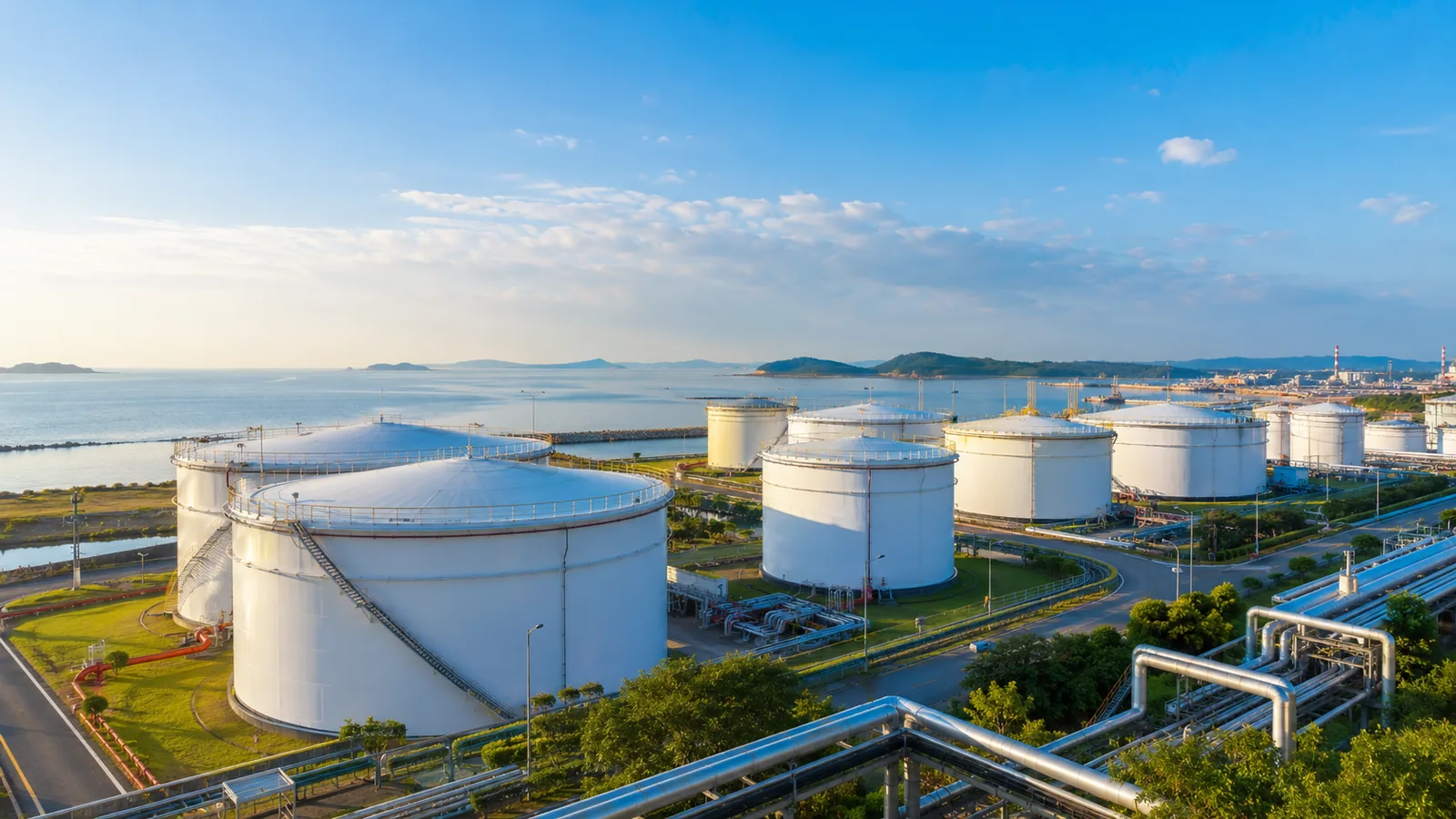
The three lines
- Definition — crude a government stores in salt caverns against a supply shock
- Status — about 298.7 million barrels in early August 2026, the lowest since January 1983
- Cause — a 172 million barrel release ordered in March 2026 drew the stock down fast
Key questions
- What is a strategic petroleum reserve?
- **Crude oil a government stores for emergencies.** What separates it from a company's inventory is purpose: commercial stock exists to run a business, a strategic reserve exists **to be released into the market when supply is cut**. The United States stores its reserve in **salt caverns along the Gulf Coast in Texas and Louisiana** — underground voids created by dissolving salt formations with water, then filled with oil. Three reasons for that method. ① Underground temperatures are stable, so quality holds. ② Salt does not react with oil and seals its own fractures under pressure. ③ It is far cheaper per unit of volume than surface tanks. Release is authorised by the president or the Department of Energy, and in practice the oil reaches the market through sales by tender to refiners or through exchange arrangements.
- Why has the US reserve fallen so far?
- **Successive large releases.** The dominant factor is the **172 million barrel release ordered in March 2026**. When conflict with Iran closed off Hormuz transit and crude prices spiked, the Department of Energy released the volume over roughly **120 days**. Before that, 2022 saw a **180 million barrel** release in response to the war in Ukraine. The result is a stock of about **298.7 million barrels in early August 2026**, the **lowest since January 1983**, including one week in which 6.1 million barrels came out. South Korea released **22.46 million barrels** in the same period. Washington says it will **refill 200 million barrels within a year** — but refilling means buying, and buying pushes prices up.
- What goes wrong when the reserve runs low?
- **Fundamentally, there are fewer cards left for the next shock.** It splits three ways. ① **Response capacity** — a smaller stock means less can be released at once and for less time. ② **Price signalling** — a release works partly as a signal that supply is increasing, and that signal weakens once the market knows the remaining stock is thin, because it reads 'this cannot last.' ③ **Refill cost** — restocking means buying on the market, and large government purchases push prices up by themselves. There is a hardware dimension too: analysts note that repeated large drawdowns strain pumps and pipework. **A strategic reserve is not an infinite buffer — it depletes when used and costs money to rebuild.**
The phrase "strategic reserve release" keeps appearing in oil coverage. And in early August 2026 came the news that the US reserve had fallen below 300 million barrels — the first time since January 1983.
Here is what has been drawn down, and what changes when it is.
1. What a strategic reserve is
| Item | Detail |
|---|---|
| Definition | Crude oil stored by a government against a supply shock |
| Versus commercial stock | Commercial is for operations; this is for emergencies |
| US storage method | Salt caverns on the Texas and Louisiana coasts |
| Release authority | President, Department of Energy |
| Release mechanism | Sale by tender to refiners, or exchange (loan) |
The choice of salt caverns is practical.
| Reason | Explanation |
|---|---|
| Temperature stability | Underground, so seasonal swings are negligible and quality holds |
| Chemical stability | Salt does not react with oil, and fractures close under pressure |
| Cost | Far cheaper to build and maintain per unit volume than surface tanks |
Water is pumped in to dissolve a void in the salt formation, and the void is filled with oil. From the surface, the site looks like an ordinary yard of pipework and a control building.
2. Where the number stands
| Item | Value |
|---|---|
| Early August 2026 stock | about 298.7 million barrels |
| Prior week's drawdown | about 6.1 million barrels |
| Last time at this level | January 1983 |
The 300 million line is symbolic for a simple reason: the United States had not been below it in more than forty years.
3. Why it fell — two large releases
| Date | Volume | Reason |
|---|---|---|
| 2022 | 180 million barrels | War in Ukraine, price spike |
| March 2026 | 172 million barrels | Hormuz transit disruption, price spike |
The March 2026 release was executed over roughly 120 days. In the same episode, the International Energy Agency and the United States were reported to have moved on a coordinated release of up to 400 million barrels. South Korea separately released 22.46 million barrels.
The Hormuz episode has run through our pages repeatedly — Iran's list of vessels in violation of transit rules, the mine-clearance declaration, the tanker struck off Oman. All of it sits on the same thread.
4. What actually changes as the reserve empties
① Response capacity shrinks
| Stock level | Volume releasable at once | Duration it covers |
|---|---|---|
| High | Large | Long |
| Low | Small | Short |
The purpose of a reserve is to buy time until a shock passes. Less stock buys less time.
② The price signal weakens
A release physically adds barrels, but it also functions as a signal that the government is intervening — and that signal pushes prices down.
Once the market knows the remaining stock is thin, the signal loses force, because traders read it as "this cannot last." The same volume released does less to prices than it used to.
③ Refilling costs money
Washington says it will refill 200 million barrels within a year. Here is the structural bind.
| Phase | Government action | Direction on prices |
|---|---|---|
| Releasing | Sells into the market | Pushes down |
| Refilling | Buys from the market | Pushes up |
Buy low and sell high would be ideal, but in practice you sell when it is urgent and buy afterwards. Releases happen when prices are high; refills come later. That ordering is very hard to invert, and it is the fundamental difficulty of running a reserve.
④ The hardware takes a beating
Analysts note that repeated large drawdowns in short periods overload pumps and pipework. This is cited from commentary and not confirmed by an official assessment.
5. Frequently asked
Q. How much oil is a barrel? About 159 litres. 298.7 million barrels is roughly 47.5 billion litres. A more useful comparison is against daily US consumption — dividing the stock by daily use gives the number of days of cover. We did not calculate that here because we did not verify a current consumption figure.
Q. Does a release bring prices down immediately? The direct volume effect is limited; released quantities are small relative to the global market. Much of the effect works through expectations, which is exactly why the knowledge that stocks are low erodes it.
Q. Are private companies required to hold reserves? It varies by country. IEA members carry stockholding obligations, and a mix of government and mandated commercial stocks is the common structure. Korea's specific system is not covered here.
Q. What kind of release was Korea's 22.46 million barrels? It was reported as a release to counter high prices. Whether it was outright or a loan arrangement, and how far execution has progressed, is unconfirmed.
6. Why this number is worth watching
Oil prices feed exchange rates, consumer prices and corporate costs, and eventually reach interest rate decisions. The Bank of Korea's decision to raise its base rate to 3.00 percent on August 27, 2026 rested in part on a judgment about the inflation path (see "Bank of Korea raises base rate to 3.00%").
A strategic reserve level is a gauge of how far oil prices could jump if supply is disrupted. A thinner buffer means the next shock can swing wider than the last.
7. What is unresolved
- Current level — 298.7 million barrels is early-August reporting; the August 30 figure was not confirmed.
- Coordinated release — the national breakdown and actual execution of the reported 400 million barrel figure were not cross-checked.
- Refill plan — start date, budget and purchase price basis are unconfirmed.
- Korea's release — form and execution progress are unconfirmed.
- Days of cover — we did not compute stock divided by daily consumption.
Sources
- Newspim — US strategic reserve breaks below 300 million barrels after Hormuz-driven releases
- Global Economic — US strategic petroleum reserve falls below 300 million barrels, lowest since 1983
- Edaily — US strategic reserve drops under 300 million barrels, a more than 40-year low
- MBC — US to release 172 million barrels from the strategic reserve, starting next week
- KCIF — The US plan to refill the Strategic Petroleum Reserve and its effects
- MS TODAY — Korea to release 22.46 million barrels from reserves to defend against high oil prices