Nepal flood toll reaches 919 on August 31, 2026 — three landslide-dam lakes, collapse risk peaks September 1
As of August 31, 2026 the flood death toll in Nepal stood at 919 with 4,793 people missing, six days after a Himalayan glacier collapsed and swept down the valleys of Bagmati province on August 26. Both figures include 16 dead and 546 missing in Gyirong county, Xigaze, in China's Tibet Autonomous Region. The larger present danger is a second flood. Debris from the first one has dammed the upper Bhote Koshi river, creating landslide-dam lakes that have no engineered spillway. One lake held 2 million tons of water on August 27 and was projected by Chinese water authorities to reach 5 million tons by September 1, which they identified as the peak of the collapse risk. A third lake was found on August 30. Nine South Koreans working on a hydropower project for Korea South-East Power and Doosan Enerbility have been out of contact since the first flood
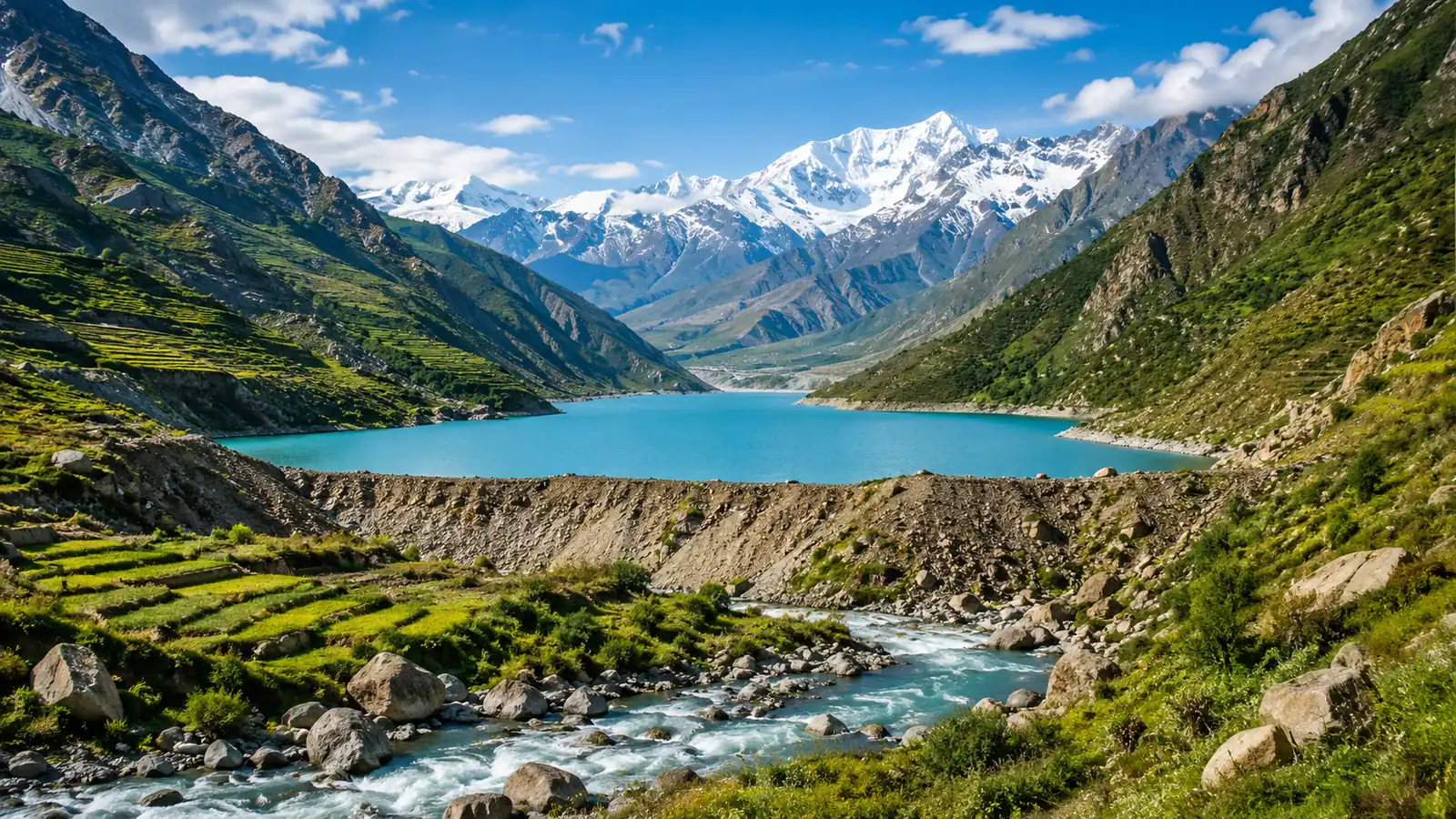
The three lines
- Toll — 919 dead and 4,793 missing as of August 31, including 16 dead and 546 missing on the Chinese side
- Risk — three landslide-dam lakes. Collapse risk peaks around September 1 at a projected 5 million tons
- Koreans — nine remain out of contact, staff of Korea South-East Power and Doosan Enerbility
Key questions
- How many people have died in the Nepal flood?
- **919 dead and 4,793 missing as of August 31, 2026.** Those totals combine Nepal and China, including **16 dead and 546 missing in Gyirong county** in Xigaze, Tibet Autonomous Region. The trajectory over six days shows what kind of disaster this is: roughly 270 dead and 1,400 missing on August 26, then 472 and 1,535 on August 28, 626 on August 29, 804 and 3,048 on August 30, and 919 and 4,793 on August 31. The structural detail that matters most is that **the missing outnumber the dead by more than five to one.** Debris buried villages and roads whole along the valleys, so as searching progresses, a large share of the missing is likely to move into the confirmed column.
- Why is a landslide-dam lake dangerous?
- **Because it is a dam built by accident, and accidents do not come with spillways.** Flood debris blocked the upper Bhote Koshi river, and water pooled behind it. Such a body of water is called a landslide-dam lake, or barrier lake. A concrete dam has a spillway to release water as the level rises. A debris dam has none. Water climbs until it **overtops the crest**, and the overflow then scours the dam body until it fails all at once. Chinese water authorities said a lake holding 2 million tons on **August 27** would take in roughly 3 million more tons over three days and reach about **5 million tons by September 1** — which they named as the peak of the collapse risk. On **August 30** a third lake was identified, at about 3,700 metres elevation and holding roughly 1.4 million cubic metres, bringing the count to **three**.
- What happened to the South Korean workers?
- **Nine remain out of contact, six days on.** They are employees of **Korea South-East Power and Doosan Enerbility**, working on a hydropower construction project in the affected area, and have not been reached since the flood on August 26. Three conditions are slowing the search at once. ① **Access** — valley roads are buried under debris, closing ground routes. ② **Weather** — heavy rain around 2 a.m. on August 31 forced rescue work to pause. ③ **Second-flood risk** — the ground below the landslide-dam lakes is exactly what would be inundated if one fails, so search teams cannot stay there long. None of these three has any reason to improve around September 1.
Six days after a Himalayan glacier came down on August 26, the toll on August 31, 2026 stands at 919 dead and 4,793 missing.
And the disaster is not finished. Water is rising behind the debris that blocked the river.
1. Six days of numbers
| Date | Dead | Missing |
|---|---|---|
| August 26 | ~270 | ~1,400 |
| August 28 | 472 | 1,535 |
| August 29 | 626 | — |
| August 30 | 804 | 3,048 |
| August 31 | 919 | 4,793 |
These totals include 16 dead and 546 missing in Gyirong county, Xigaze, in China's Tibet Autonomous Region. The disaster sits across a border.
The detail to read carefully is the ratio: the missing outnumber the dead more than five to one. That means the search is still early, and it means the final death toll is likely to be substantially higher than today's figure.
2. The larger danger now — three barrier lakes
Debris carried by the flood dammed the upper Bhote Koshi river. The water pooling behind it forms what is called a landslide-dam lake, or barrier lake.
| Item | Concrete dam | Landslide-dam lake |
|---|---|---|
| Built by | Design and construction | Landslide and debris |
| Spillway | Yes | None |
| Failure mode | Controlled release | Overtopping → sudden collapse |
| Predictability | Level can be managed | Depends on inflow estimates |
The absence of a spillway is the whole problem. There is no way to let water out ahead of time, so the level climbs until it spills over the top. The overflow cuts into the debris, the breach widens in moments, and the rest of the water leaves at once.
The timetable authorities described:
| Point in time | Stored water |
|---|---|
| August 27 | 2 million tons |
| September 1 (projected) | 5 million tons |
Chinese water authorities expected roughly 3 million additional tons of inflow over three days and named September 1 as the peak of the collapse risk. On August 30 a third lake was identified at about 3,700 metres elevation, holding roughly 1.4 million cubic metres.
The glacial lake outburst flood that started all of this is covered in "What a GLOF is — 388 times in the Himalaya, and why they arrive without warning." A barrier lake is different in one important way: it is a second hazard created where the first flood stopped.
3. Nine South Koreans
The nine who remain out of contact are employees of Korea South-East Power and Doosan Enerbility, working on a hydropower construction project in the affected area. They have not been reached since August 26.
The search is constrained on three sides at once.
- Access — valley roads are buried; ground routes are closed.
- Weather — heavy rain around 2 a.m. on August 31 paused rescue operations.
- Second-flood risk — the terrain downstream of the lakes is exactly what floods if one fails, so teams cannot remain there.
None of the three has a reason to improve around September 1.
4. What is still unresolved
- The tally — 919 and 4,793 are August 31 figures and will keep changing.
- The projection — 5 million tons rests on inflow estimates made on August 27. Actual inflow depends on rainfall.
- Evacuation — No inundation map or evacuation figure has been published for a lake failure.
- The third lake — Its elevation and volume come from reporting, not measurements this page verified.
- The nine Koreans — Their last known location and the state of the search were not disclosed as of August 31.
Sources
- Kyunghyang Shinmun — Nepal flood deaths rise to 919, missing to 4,793
- Asiae — Nepal authorities: flood deaths pass 900, missing about 4,250
- YTN — 5 million tons: landslide-dam lake, alert for a second disaster on September 1
- MBC News Desk — Landslide-dam lakes now number three, raising second-flood risk
- Kyunghyang Shinmun — At least 919 dead, with fears of a second flood