Nepal flood: 626 dead as of August 29, 2026 — and a reversal on foreign help
Nepal disaster authorities counted 626 dead on Saturday, August 29, 2026 from the glacier-collapse flood of August 26, up from 469 the day before, with more than 2,400 still missing. Nine South Koreans have been out of contact for four days: six Doosan Enerbility staff and three from Korea South-East Power, who worked at the 216 MW Upper Trishuli-1 hydropower site roughly 70 kilometres northwest of Kathmandu. Nepal, which said on Friday it would not accept international search teams, reversed that on Saturday and agreed to help from India, China, Australia and South Korea in three areas only
The three lines
- Toll — 626 dead and more than 2,400 missing in Nepal as of August 29; Tibet reports 7 dead, 554 missing
- Koreans — Nine out of contact for four days at the Upper Trishuli-1 hydropower construction site
- Reversal — Nepal took one day to go from refusing foreign search teams to accepting four countries
Key questions
- How many people have died in the Nepal flood?
- **Nepal's disaster authority counted 626 deaths as of Saturday, August 29, 2026** — 157 more than the 469 confirmed the previous day. The number missing rose from 977 to **more than 2,400**. The jump does not mean the disaster grew; it means search teams finally reached valley communities that had been cut off since August 26. China separately reported **7 dead and 554 missing** on the Tibet side. Foreign nationals make up a large share: roughly **90 Americans** and **41 Australians** are on missing lists, along with **9 South Koreans**. Some Korean outlets reported 633 dead later the same day, a difference of counting time. These figures keep moving as the search continues.
- Who are the nine South Koreans missing in Nepal?
- **Six employees of Doosan Enerbility and three from Korea South-East Power.** They were working at the **Upper Trishuli-1 (UT-1) hydropower construction site**, a **216 MW** project in the Trishuli river valley about **70 kilometres northwest of Kathmandu**. On the morning of Wednesday, August 26 a glacier collapse sent ice, water, rock and mud straight down that valley, and the nine have been unreachable since — four days by August 29. South Korea's joint rapid response team arrived on August 27: **11 people**, led by the foreign ministry's consular representative for overseas citizens, with 4 from the foreign ministry, 5 firefighters and 2 police officers.
- Why did Nepal first refuse international help?
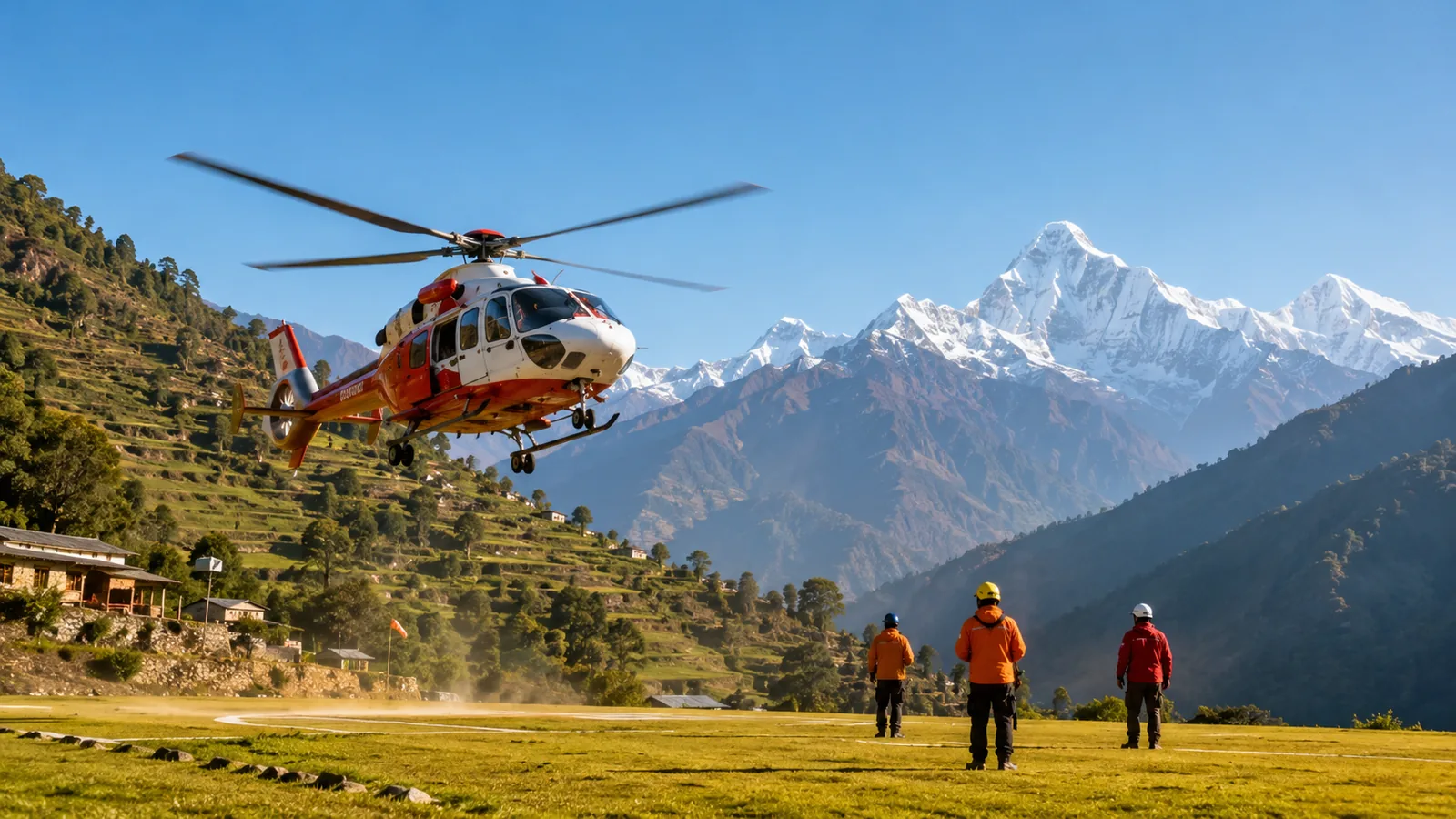
- **Nepal's foreign ministry said on Friday, August 28 that it would not immediately accept international search-and-rescue assistance — then reversed itself the next day.** On Saturday, August 29 Nepal agreed to accept government assistance from **India, China, Australia and South Korea**, but limited it to **three areas**: rescue work **inside the hydropower tunnels**, **DNA testing**, and **forensic identification**. This was not a general opening; it was access to three technical capabilities Nepal lacks. The Kathmandu Post attributed the shift to diplomatic pressure from countries with citizens among the missing. The constraint had been real: South Korea's government, Doosan Enerbility and Korea South-East Power had chartered **six helicopters** that sat grounded in Kathmandu because Nepal restricted foreign helicopter flights, citing weather and the risk of further collapse. At **11:45 am local time on August 29**, a helicopter carrying four Korean fire agency personnel finally left Kathmandu for the site.
Nepal's disaster authority counted 626 dead on Saturday, August 29, 2026.
That is 157 more than the 469 confirmed a day earlier. The missing rose from 977 to more than 2,400.
The jump is not a bigger disaster. It is search teams finally reaching valleys that had been unreachable since August 26.
1. Three days of moving numbers
| Date | Dead | Missing |
|---|---|---|
| Thu, Aug 27 | ~160 | still counting |
| Fri, Aug 28 | 472 (Nepal 469 · Tibet 3) | 1,535 |
| Sat, Aug 29 | 626 (Nepal) | 2,400+ |
China separately reported 7 dead and 554 missing in Tibet.
Foreign nationals are heavily represented among the missing.
| Nationality | Missing |
|---|---|
| United States | ~90 |
| Australia | 41 |
| South Korea | 9 |
How this started is covered in "Nepal-Tibet glacier collapse flood (August 26, 2026)": a glacier gave way and ice, water, rock and mud came down the valleys together, with the Trishuli river rising as much as 9 metres in 30 minutes.
2. Where the nine South Koreans were
| Item | Detail |
|---|---|
| People | 9 |
| Employers | Doosan Enerbility 6 · Korea South-East Power 3 |
| Site | Upper Trishuli-1 (UT-1) hydropower construction |
| Capacity | 216 MW |
| Location | ~70 km northwest of Kathmandu, Trishuli river valley |
| Out of contact | Since the morning of August 26 — four days by August 29 |
The Trishuli is the valley the flood ran down. A hydropower project is built along a river by definition, and that fact became the exposure.
South Korea's joint rapid response team arrived on August 27.
| Component | People |
|---|---|
| Foreign ministry | 4 (led by the consular representative for overseas citizens) |
| Fire agency | 5 |
| Police | 2 |
| Total | 11 |
3. Six helicopters, grounded
The bottleneck was not equipment. It was permission.
The Korean government, Doosan Enerbility and Korea South-East Power chartered six helicopters. Nepali authorities, citing bad weather and the risk of further collapse, restricted foreign helicopter flights — and all six sat in Kathmandu.
At 11:45 am local time on August 29, a helicopter carrying four Korean fire agency personnel finally departed for the site. Four days after the flood.
4. A position reversed in a day
| Date | Nepal's position |
|---|---|
| Fri, Aug 28 | Foreign ministry: will not immediately accept international search and rescue |
| Sat, Aug 29 | Accepts India, China, Australia, South Korea — three areas only |
The three permitted areas:
| Area | Scope |
|---|---|
| Tunnel rescue | Rescue work inside hydropower tunnels |
| DNA | Genetic testing |
| Forensics | Forensic identification of remains |
This was not a general opening of the operation. Nepal opened the three technical capabilities it does not have. The Kathmandu Post attributed the shift to diplomatic pressure from countries with citizens among the missing.
5. Why the count is still rising
Three things compound.
- Access is slow. About 42 km of road was destroyed, so helicopters are the main route in. On a day helicopters cannot fly, the search effectively stops.
- A second hazard remains. A barrier lake formed at the border by debris damming a river. If it fails, a second flood runs onto ground already destroyed — and that risk has suspended work near the border on some days.
- The season overlapped. The flood hit during Himalayan trekking season, when the valleys held an unusual number of foreign visitors.
6. What we could not confirm
- Totals — 626 is Nepal's figure for Saturday, August 29. Some outlets reported 633 the same day, and missing counts range from about 2,400 to nearly 3,000 depending on how Nepal and Tibet figures are combined.
- The nine Koreans — last confirmed location and site conditions are not public.
- Scale of the four-country assistance — personnel numbers and arrival times had not been announced as of August 29.
- Foreign missing counts — the roughly 90 Americans and 41 Australians come from those governments, not from Nepal's register.
- The barrier lake — its water level and failure risk as of August 29 could not be confirmed.
Sources
- NBC News — Nepal floods death toll climbs to 626, with 2,400 still missing
- UPI — Nepal: 626 dead, more than 3,000 missing in flash flood
- Al Jazeera — Nepal and China resume flood rescue as death toll surpasses 600
- ABC News (Australia) — 41 Australians missing in Nepal-Tibet floods, death toll passes 600
- Money Today — Nepal flood deaths surge; Korea among four countries whose aid is accepted
- Herald Business — Nepal to accept foreign government help, limited to four countries
- Kyunghyang Shinmun — Korean rapid response team begins helicopter search for nine missing