Why big tech stocks split after earnings — Alphabet fell 13%, Microsoft held, and the difference was who pays for AI with cash
In third-quarter results released October 28 and 29, 2026 (US time), cloud growth sped up at Microsoft, Alphabet and Amazon, yet their shares split. Microsoft spent $39.4 billion on capital expenditure and still kept $18.6 billion of free cash flow. Alphabet spent $51.4 billion, ran free cash flow of minus $9.1 billion and saw search growth slow to 12%, and fell about 13% on October 29. Amazon reported trailing free cash flow of minus $42.4 billion
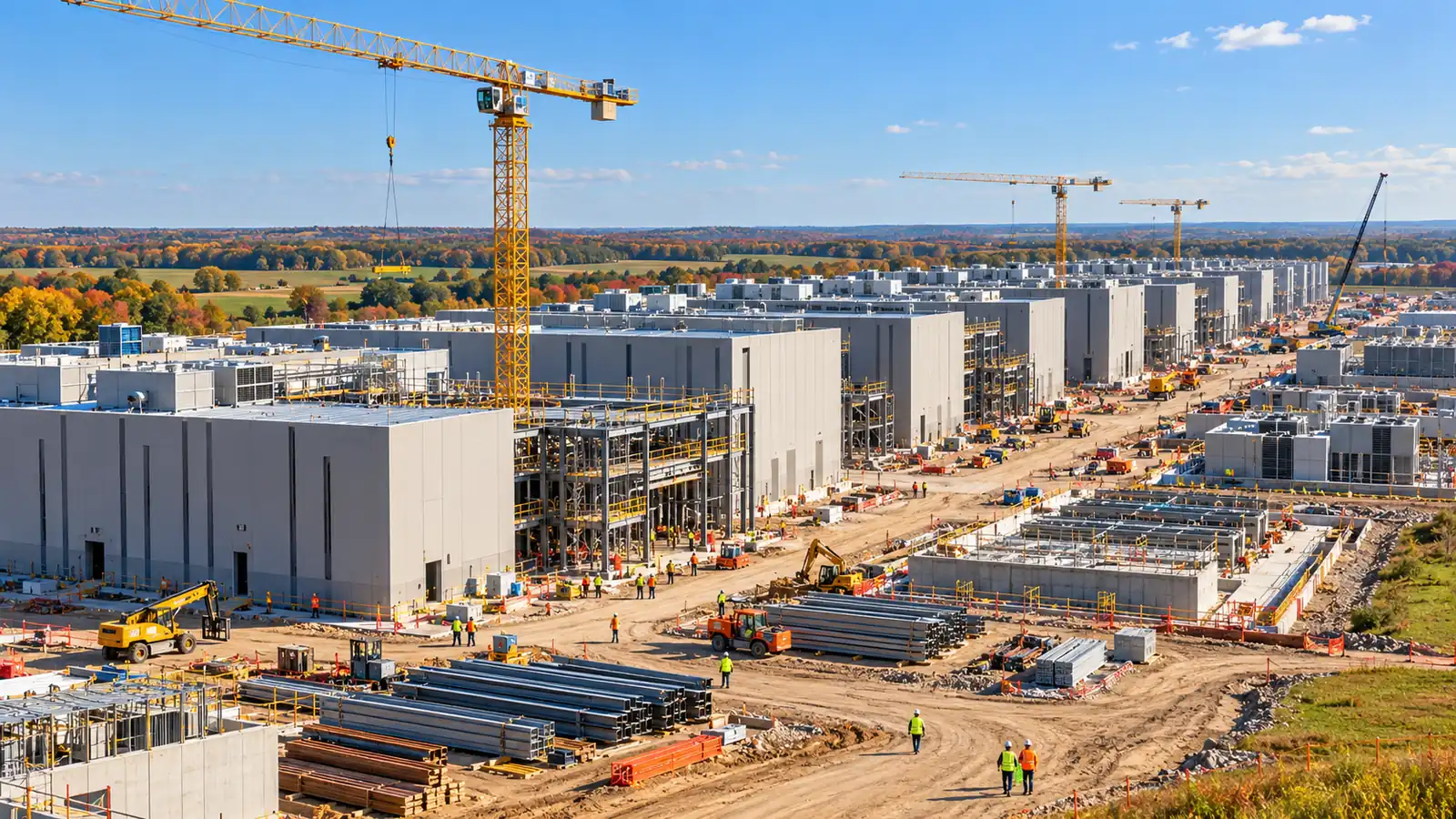
The three lines
- Outcome — Oct 29: Alphabet ~−13%, Microsoft roughly flat, Amazon ~−7% after hours
- Why — only Microsoft funded its AI build-out from operating cash; Alphabet and Amazon ran negative
- Cushion — Google Search growth slowed from 19% to 12%; Amazon ads grew just 12%
Key questions
- why did alphabet stock drop october 29 2026
- **Negative free cash flow, slower search growth and an earnings miss arrived together.** | Reason | Detail | |---|---| | Free cash flow | −$9.1B, second straight negative quarter | | Capex | $51.4B in the quarter, more than double a year earlier | | Search revenue growth | 12%, below the ~15% expected | | EPS | $2.12 vs ~$3.00 expected ($8.7B equity-investment loss) | | 2027 capex | Significant increase signaled |
- amazon free cash flow negative 2026
- **Minus $42.4 billion over the trailing twelve months.** | Item | 12 months to Sept 2025 | 12 months to Sept 2026 | |---|---|---| | Operating cash flow | — | $168.3B (+29%) | | Net capex | — | $210.7B | | Free cash flow | +$14.8B | −$42.4B |
- microsoft earnings october 2026 stock reaction
- **It beat, rose about 4% after hours, then gave most of that back on October 29.** | Item | Value | |---|---| | Revenue | $92.3B (+19%) | | Azure growth | 48% (next quarter guided 49–50%) | | Capex | $39.4B ($45.2B including leases) | | Free cash flow | +$18.6B |
All three report cards were strong. What split the stocks was where the money for that growth came from. Microsoft and Alphabet reported July–September results after the US close on October 28, and Amazon after the close on October 29. All three posted faster cloud growth. Yet on October 29 Alphabet fell about 13%, its biggest one-day drop since its 2004 listing, while Microsoft held roughly flat. Amazon slid about 7% in after-hours trading once its results came out.
The dividing line was free cash flow: cash from operations minus capital spending. Of the three, only Microsoft kept it positive.
1. Third-quarter results — cloud accelerated everywhere
| Item | Microsoft | Alphabet | Amazon |
|---|---|---|---|
| Reported (US Eastern) | Oct 28 | Oct 28 | Oct 29 |
| Revenue | $92.3B (+19%) | $127.6B (+25%) | $201.9B (+12%) |
| Cloud | Azure +48% | Google Cloud $30.7B (+103%) | AWS $46.0B (+39%) |
| EPS vs estimate | $4.89 adj. vs $4.72 | $2.12 vs ~$3.00 | $1.89 vs ~$1.96 |
| Versus expectations | Beat on sales and profit | Slight sales miss, profit miss | Slight miss on both |
On cloud alone, Alphabet had the best quarter: Google Cloud revenue more than doubled and its operating margin rose to 36.2%. AWS growth of 39% was its fastest in nearly five years. Azure beat both company guidance and analyst forecasts. The stocks still went in opposite directions.
2. How much cash the AI build-out is consuming
| Item (Q3, USD) | Microsoft | Alphabet | Amazon |
|---|---|---|---|
| Capital expenditure | $39.4B ($45.2B incl. leases) | $51.4B (year earlier $24.0B) | $77.3B |
| Free cash flow, quarter | +$18.6B | −$9.1B | −$33.5B (The Elec) |
| Free cash flow, trailing 12 months | — | +$19.7B | −$42.4B (year earlier +$14.8B) |
| 2026 capex plan | ~$170–175B (lowered) | $195–205B (kept) | ~$220B (kept) |
| Next year | Expects positive FCF this fiscal year | Significant increase in 2027 | More in 2027 |
Together the three spent about $168 billion on capex in a single quarter. Alphabet generated $42.3 billion of operating cash and spent $51.4 billion, covering the gap with $28.7 billion of bonds and $12.4 billion from at-the-market share sales. Amazon's trailing operating cash flow rose 29% to $168.3 billion, but net capex over the same period was $210.7 billion. Free cash flow swung from plus $14.8 billion a year earlier to minus $42.4 billion, which the company attributed to "investments in artificial intelligence."
Microsoft more than doubled its capex from a year earlier and still produced free cash flow about twice the roughly $8.5 billion analysts expected. Part of that reflects third-party data center capacity arriving late, pushing spending into later quarters. Investors nonetheless rewarded a company paying for AI out of what it earns.
Meta fell 7% the previous week for the same reason, after its free cash flow turned negative (「메타 잉여현금흐름 마이너스 21억 달러」). The market is now judging less the size of AI spending and more whether a company can fund it from its own cash.
3. A thinner cushion — slowing search and ads
| Google Search revenue | Amount | Year-on-year |
|---|---|---|
| Q1 2026 | $60.4B | +19% |
| Q2 2026 | $63.3B | +17% |
| Q3 2026 | $63.4B | +12% (expected ~15%) |
Investors tolerated heavy AI spending because the core businesses were throwing off cash. For Alphabet, that cushion is search, and its growth has slowed from 19% in the first quarter to 12% in the third. The company said search query growth is at a five-year high, but revenue growth ran into a tough comparison with last year. YouTube ads grew only 9%.
Net income fell 25%, mostly because of an $8.7 billion paper loss on equity investments that cut about 55 cents a share. That loss involves no cash, but combined with negative free cash flow it sharpened the question of funding. One analyst told Fortune it was a problem of how to pay for AI, not one of nobody wanting it.
Amazon faced a similar issue. According to The Elec, advertising revenue grew 12% to $19.6 billion, short of the 18% expected; the company pointed to Prime Day shifting into the second quarter.
4. October 29 share moves
| Company | After hours (post-results) | Oct 29 regular session | What the market saw |
|---|---|---|---|
| Alphabet | ~−8% to −11% | ~−13% (worst since listing) | Negative FCF, slower search, earnings miss |
| Microsoft | ~+4% | Roughly flat (gain gave back) | Positive FCF, faster Azure, lower capex plan |
| Amazon | ~−7% (after Oct 29 close) | −4.3% before results, to $243.79 | Deeper cash burn, earnings miss |
| Meta | — | ~+1–2% | Already priced the prior week |
CNBC estimated the Alphabet drop erased about $500 billion of market value. Amazon had already fallen 4.3% in the regular session before its report and slid further after hours. Microsoft guided next-quarter Azure growth to 49–50% and rose 4% after hours, but could not hold the gain in regular trading; it was still the best performer of the three.
5. Where the AI money goes — Korea's two memory makers
For readers outside Korea: SK hynix and Samsung Electronics supply most of the high-bandwidth memory (HBM) that sits inside AI servers, and together account for a large share of the KOSPI index.
| Company (Q3) | Revenue | Operating profit | Note |
|---|---|---|---|
| SK hynix (reported Oct 28) | ₩104.6 trillion | ₩83.3 trillion (80% margin) | First ₩100 trillion quarter; HBM4 shipping in volume |
| Samsung Electronics (reported Oct 29) | ₩195.3 trillion | ₩107.4 trillion | Chip division profit ₩106.5 trillion |
Combined, the two earned about ₩190 trillion (roughly $130 billion) of operating profit in the quarter, almost all from chips. SK hynix expects HBM4 to overtake HBM3E as its main product in the fourth quarter. How big-tech spending turns into Korean exports is covered in 「AI 캐펙스란 — 빅테크가 쓴 돈이 한국 수출로 오기까지」.
The structure is plain: as big tech free cash flow turns negative, that cash shows up as profit at equipment and memory suppliers. Plans to spend even more in 2027 are a demand signal for memory makers. But if investors start pressing big tech to slow spending because of cash flow, this supply chain would be the first to feel it — a worry that already weighed on the KOSPI when it fell below 5,500 on October 26 (「코스피 5,500 무너진 이유」).
6. What remains open and unverified
- Share moves: Alphabet's drop is reported at 11–13%, and Microsoft's October 29 move as slightly up or slightly down, likely reflecting different measurement times.
- Microsoft capex plan: Reports differ on whether the 2026 outlook is about $170 billion or $175 billion.
- Amazon details: Quarterly free cash flow of −$33.5 billion, 12% ad growth and the 2027 capex remark were confirmed by one outlet.
- 2027 size: Alphabet's roughly $300 billion is a reported figure; the company has said only "significant increase," with detail due at fourth-quarter results.
- Amazon regular session: How the ~7% after-hours drop settles in the October 30 session is not reflected here.
Sources
- Amazon — Third quarter results (SEC 8-K Exhibit 99.1, 2026-10-29)
- Alphabet — Third quarter results (SEC 8-K Exhibit 99.1, 2026-10-28)
- Alphabet — First quarter results (SEC 8-K Exhibit 99.1)
- Fortune — Alphabet’s Google Cloud revenue doubles to $31 billion as cash flow stays deep red (2026-10-28)
- 24/7 Wall St. — Alphabet Sinks 11% as AI Spending Pushes Cash Flow Negative Again; Microsoft and Meta Edge Higher, Amazon Slips (2026-10-29)
- XTB — Alphabet disappoints Wall Street despite record results (2026-10-28)
- Invezz — Microsoft stock jumps 4% after earnings (2026-10-28)
- TradingKey — Microsoft Stock Forecast: MSFT Jumps 4% Overnight as Azure Hits 48% (2026-10-29)
- The Elec — Amazon Shares Slide 7% After Hours as Cash Burn Surges Despite 39% AWS Growth (2026-10-30)
- SK hynix — SK hynix Announces 3Q26 Financial Results (PR Newswire)
- LEDinside — Samsung Electronics Announces Third Quarter 2026 Results (2026-10-30)