WTI settles at $84.89 on August 24, 2026 — down as sanctions landed
WTI crude settled at $84.89 a barrel on August 24, 2026, down about 2.5 percent, and Brent at $92.06, also down about 2.5 percent. Both fell on the day the US Treasury formally launched its sanctions campaign against Iran. Friday's settlements had been $87.06 and $94.39 after two weeks of gains. The move reads as profit-taking on a catalyst that had already been announced in outline on August 20, not as a judgement that the sanctions are weak
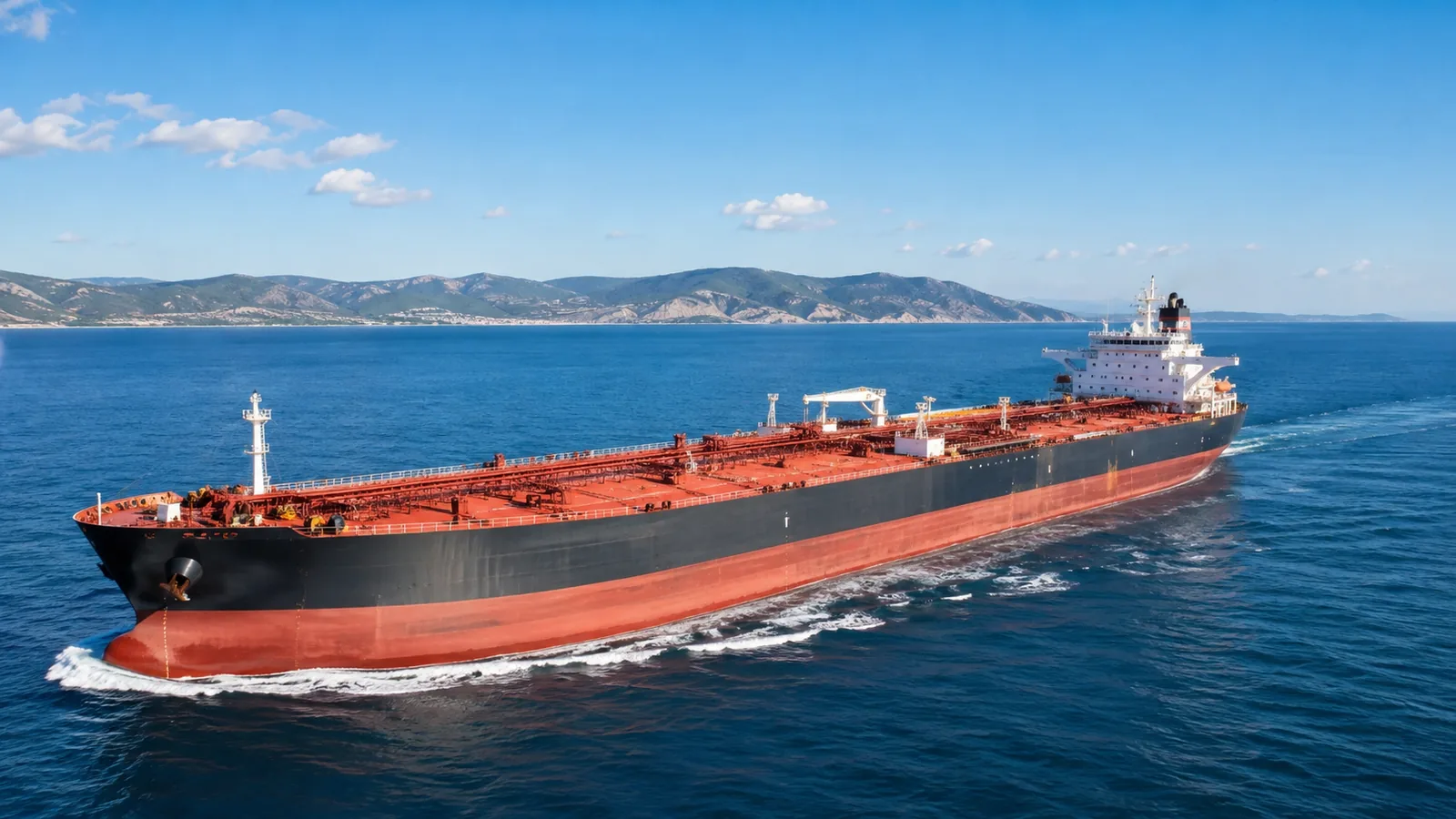
The three lines
- Settlements — WTI $84.89 (-2.5%), Brent $92.06 (-2.5%). Friday's were $87.06 and $94.39
- Paradox — oil fell on the day Iran sanctions were unveiled. The campaign had been signalled four days earlier
- Structure — sanctions block Iran's outlet for its oil. Closing Hormuz would block everyone's. Prices treat those two risks very differently
Key questions
- What did oil settle at on August 24, 2026?
- **WTI at $84.89** and **Brent at $92.06**, both down about **2.5 percent**. The prior settlements, on Friday August 21, were **$87.06** and **$94.39**. Be careful with quoted numbers on this date: intraday reports the same morning carried WTI near $85.29 (-2.0%) and Brent near $92.76 (-1.7%), and the opening prints were higher still. **The figures in this brief are settlement values**, and they check out arithmetically — Friday's settle less 2.5 percent gives $84.88 and $92.03, within pennies of the reported closes.
- Sanctions were announced. Why did oil go down?
- Because the price had already moved. Treasury Secretary Scott Bessent signalled the campaign on **August 20**, and crude rallied that week — its second straight week of gains. What arrived on **August 24** was the **detail**, not the news. Markets have a phrase for this sequence: buy the rumour, sell the news. With two weeks of gains behind it, the market had accumulated positions that a confirmed catalyst is a natural moment to close. The fall is better read as **positioning unwinding on a catalyst that was already priced** than as a verdict that the sanctions will not bite.
- So is oil going up or down from here?
- This brief does not forecast. What is more useful is separating **which risk a given headline belongs to**. Sanctions attack **Iran's outlet** — they try to stop Iranian barrels reaching buyers, which removes Iranian volume from world supply. **Closing the Strait of Hormuz** attacks the **route**, and the route carries barrels from across the Gulf, not just Iran's. The second risk is far larger than the first. On the same August 24, Iran's parliament advanced a bill charging service fees on ships transiting Hormuz and warned that vessels breaching transit rules could face fines, detention or confiscation — **that is news from the second category**, and the price has not yet responded to it in size.
On August 24, 2026, the US Treasury unveiled its sanctions campaign against Iran, named Operation Economic Outcast.
Oil fell.
| Benchmark | Aug 21 settle | Aug 24 settle | Change |
|---|---|---|---|
| WTI | $87.06 | $84.89 | about -2.5% |
| Brent | $94.39 | $92.06 | about -2.5% |
1. Why quoted prices differ on this date
Search for the oil price on August 24 and you will find several numbers.
| Moment | WTI | Brent |
|---|---|---|
| August 24 open | $86.46 | $93.64 |
| August 24 morning (US Eastern) | $85.29 | $92.76 |
| August 24 settle | $84.89 | $92.06 |
Crude trades close to around the clock, so the timestamp behind a quote decides the number. Most of the confusion between a headline price and the price on your own screen comes from this alone.
The settlement figures used here can be checked arithmetically. Friday's $87.06 less 2.5 percent is $84.88; $94.39 less 2.5 percent is $92.03. Both land within a couple of cents of the reported closes.
2. Why prices fell on announcement day
Because the price had already absorbed the news.
| Date | Event | Price |
|---|---|---|
| Aug 20 | Bessent signals economic pressure campaign | up |
| Aug 17–21 | Second straight week of gains | up |
| Aug 24 | Campaign details unveiled | down 2.5% |
The Treasury Secretary had already said publicly, on August 20, that the United States intended to break Iran economically. Crude rallied that week. What landed on the 24th was the list, not the intention.
Markets have a shorthand for this order of events — buy the rumour, sell the news.
One condition amplified it. After two consecutive weeks of gains, there were profits to take, and a confirmed catalyst is a natural moment to take them.
So the drop is not the market grading the sanctions as weak. It is positions closing on a catalyst that was already in the price.
3. Two Iranian risks, priced very differently
Not all "Iran news" belongs to the same category, and the two categories are not close in size.
| Risk | What it blocks | Scale |
|---|---|---|
| Sanctions | Iran's outlet — buyers for Iranian barrels | Iranian export volume |
| Hormuz closure | The route for the whole Gulf | A large share of seaborne crude worldwide |
This brief covered the second in "The Strait of Hormuz: 34 kilometres carrying a fifth of the world's oil."
Sanctions remove one country's barrels from the market. That pushes prices up, but the size of the push is bounded by Iran's export volume. If Hormuz closes, barrels that have nothing to do with Iran stop moving too. The two are not comparable quantities.
On the same August 24, there was news from the second category as well. Iran's parliament advanced a bill charging service fees on ships transiting the strait, on the logic that permitted vessels pay for services Tehran provides. Iran also warned that ships breaching transit rules could face fines, detention or confiscation.
This brief covered the fee concept on August 19 in "Hormuz transit fees: 7 percent for Iran, 3 percent for Oman, 0 for the US." What is new is that the idea has moved into Iranian domestic legislation — practices that become law are harder to reverse.
The price answered the first risk with profit-taking. It has not yet answered the second.
4. What we could not confirm
- Exchange settlement records — the figures here are reported values, verified by arithmetic against Friday's settles.
- The size of the position unwind — commentary, not measurement.
- Iranian volume actually removed — no figure available.
- Dubai crude — the benchmark Asian refiners actually buy could not be confirmed for the date.
- What to watch next — how far Iran's parliament takes the Hormuz fee bill. The sanctions are already in the price. The transit risk is not.
Sources
- CNBC — Oil price today: WTI, Brent, U.S. sanctions, Iran
- EnergyNow — Oil Prices Pull Back as Markets Await New U.S. Sanctions on Iran
- FXEmpire — Natural Gas and Oil Forecast: WTI, Brent Pull Back as Iran Sanctions Intensify
- Investing.com (Reuters) — Oil falls ahead of US announcement of new sanctions on Iran
- CNBC — Oil prices rise after Treasury Secretary says U.S. will collapse Iran with economic pressure
- Al Jazeera — Iran updates: Iranian parliament advances plans for Hormuz service fees