Lumière Summit, September 7 — a film summit whose first agenda item is generative AI
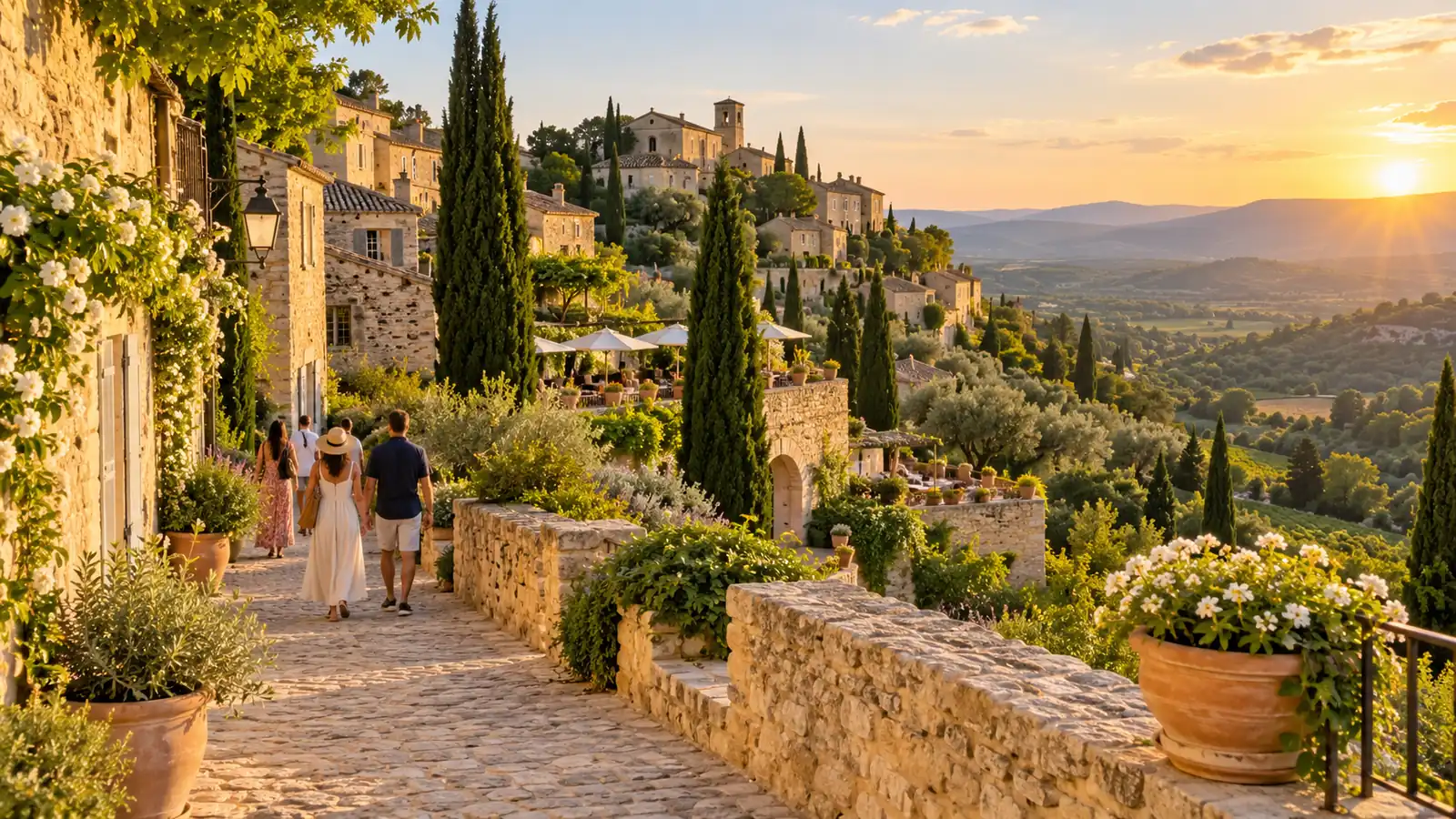
The first Lumière Summit opened on September 7, 2026, in Saint-Paul-de-Vence in the south of France, co-chaired by South Korean President Lee Jae-myung and French President Emmanuel Macron. Reported scale varies between about 200 participants from some 60 countries and roughly 150 from about 30. What defines the event is the agenda order: generative AI and the protection of creator rights come first, followed by the future of cinemas, convergence between broadcasting, streaming and games, the influence of recommendation algorithms, market development in sub-Saharan Africa and South Asia, youth film education, and heritage preservation. The invitation was issued during Macron's April 2026 visit to Seoul, when he also proposed the state visit that runs from September 6 to 9 and includes a bilateral summit and a state dinner at the Élysée Palace. Korea's national security adviser, Wi Sung-lac, described the objective as widening the base for Korean content and Korean companies in European and global markets
The three lines
- Event — September 7 in Saint-Paul-de-Vence, France; first Lumière Summit, co-chaired by Lee and Macron
- Agenda — generative AI and creator rights lead, ahead of cinemas, streaming-game convergence and recommendation algorithms
- Scale — reported as 60-odd countries and 200 people, or about 30 countries and 150; the two have not been reconciled
Key questions
- What is the Lumière Summit
- **A new French-created summit for the film and audiovisual industries, holding its first session on September 7, 2026.** The venue is **Saint-Paul-de-Vence** in southern France and the co-chairs are **President Lee Jae-myung of South Korea and President Emmanuel Macron of France.** The name comes from the Lumière brothers, who staged the first commercial film screening. **The defining design choice is that the scope is not limited to film.** The published agenda runs: ① generative AI and the protection of creator rights, ② the future of cinemas, ③ convergence models between broadcasters, streaming services and games, ④ the influence of recommendation algorithms, ⑤ new markets including sub-Saharan Africa and South Asia, ⑥ youth film education, ⑦ preservation of film heritage. Participants include government officials, company executives, creators, producers and distributors, and figures from games and technology. **Scale is disputed** — Digital Times reports about 200 people from some 60 countries; other outlets report roughly 150 from about 30.
- Why is a Korean president co-chairing a French film summit
- **Because the invitation came first, and the reason behind it is the size of Korean content as an export.** The sequence: **Macron visited Seoul in April 2026**, invited Lee to co-chair the Lumière Summit, and proposed a French state visit at the same time. The September 6 to 9 state visit is the result. **France's calculation is legible.** It has long protected its film industry with quotas, production obligations on broadcasters and strong creator rights, and generative AI cuts directly across that system. **To hold a serious conversation opposite American platforms and American AI companies, France needs a large content-producing partner that is not American.** Korea's calculation is equally legible: Wi Sung-lac set the goal as expanding the base for Korean content and Korean companies in European and global markets, with the state visit's broader cooperation agenda covering AI, space, nuclear power and biotechnology. The weight carried by the state-visit format itself is covered separately in「What a state visit is」.
- Why does generative AI leading the agenda matter
- **Because it moves AI from a future concern to an accounting problem the industry has to settle now.** Two currents run underneath. **① Production costs have collapsed.** A science-fiction feature reportedly made in two weeks for roughly 700 million won drew attention at Cannes in 2026. At that cost level, financing, distribution and staffing structures all change. **② Training data is in court.** On August 28, Sony, Warner and 33 others sued Anthropic with claims of up to 150,000 dollars per work. In the same week, the US government filed a brief in an OpenAI copyright case supporting the position that AI training is fair use. **The two jurisdictions are separating.** Placing creator rights in the same agenda item as AI is best read as the European response to that divergence. **But this is not a treaty-making body.** Whether the first session produces anything binding was not established at the time of writing, and the substantive rules live in the EU AI Act and in national copyright law, not in a summit communiqué.
A new summit for the film industry exists as of September 7. The first item on its published agenda is not cinemas or distribution. It is generative AI.
1. What convened
| Item | Detail |
|---|---|
| Name | First Lumière Summit |
| Date and place | September 7, 2026, Saint-Paul-de-Vence, southern France |
| Co-chairs | President Lee Jae-myung (Korea) · President Emmanuel Macron (France) |
| Scale | 60-odd countries, ~200 people (Digital Times) / ~30 countries, 150 (other outlets) |
| Composition | Government officials, executives, creators, producers and distributors, games and technology |
The seven published agenda items: generative AI and creator rights, the future of cinemas, convergence between broadcasters and streaming and games, the influence of recommendation algorithms, market development in sub-Saharan Africa and South Asia, youth film education, film heritage preservation.
Note that AI and algorithms appear as separate items. The design separates the making side from the showing side, and treats each as its own problem.
2. The invitation is four months old
| Date | Event |
|---|---|
| April 2026 | Macron visits Seoul; invites Lee to co-chair, proposes a state visit |
| September 6 | Lee arrives in France; state visit begins (through September 9) |
| September 7 | Lumière Summit co-chaired in Saint-Paul-de-Vence; state dinner at the Élysée in the evening |
A state visit is the highest-protocol form of bilateral visit, and the invitation itself is often the substance rather than any deliverable — a point covered in「What a state visit is」. The stated cooperation agenda for this visit spans AI, space, nuclear power and biotechnology.
3. Why France built this
France has defended its film industry through policy for decades: screen quotas, investment obligations on broadcasters, strong creator rights. That system is now under pressure from two directions at once.
| Pressure | Detail |
|---|---|
| Production | Generative AI collapsing costs. A two-week, ~700-million-won science-fiction feature drew attention at Cannes in 2026 |
| Rights | August 28: Sony, Warner and 33 others sue Anthropic, claiming up to $150,000 per work. Same week: US government files in an OpenAI case supporting fair use for AI training |
| Distribution | Boundaries between streaming and games dissolving; recommendation algorithms deciding what gets watched |
The second row is the one that produced this summit. On whether creative work may be used as training data, the United States is moving toward fair use while Europe is moving toward creator rights — see「What AI training opt-out is」and「What fair use for AI training data means」.
At that fork, France needed a large content-producing partner that is not American. Korea's stated goal, from Wi Sung-lac, is expanding the base for Korean content and Korean companies in Europe and globally.
4. What remains unresolved
- Even the headcount is unsettled. Two figures describe the same meeting; organiser numbers are needed.
- The output is unknown. Whether a declaration emerges, and whether it binds anyone, was not established. For a first session, agenda-setting alone is a plausible outcome.
- The Korean participant list is incomplete. Individual attendances have been reported exclusively by single outlets.
- State-visit deliverables come later. Agreements and their values were not public at the time of writing.
- The distance between talking and legislating is the real question. Putting creator rights on a summit agenda and writing enforceable rules for training data are different tasks, and the second belongs to the EU AI Act and national copyright law — not to a summit.
Sources
- Digital Times — Film, OTT and games in one room: Lee co-chairs the first Lumière Summit
- Office of the President of the Republic of Korea — Briefing by National Security Adviser Wi Sung-lac on the France state visit
- Asiae — President Lee departs for France state visit, expanding cooperation in AI and nuclear power
- Financial News — Lee to make a September 6-9 state visit to France at Macron's invitation
- Kukmin Ilbo — Lee to chair a film and audiovisual summit in France, selling K-content
- Newsis — Lee and Macron to co-chair the first Lumière Summit in September