Korea-France summit in Paris on September 8 — AI, nuclear and space, with Hormuz added
President Lee Jae-myung meets Emmanuel Macron in Paris on September 8, 2026, the third day of a state visit that runs September 6 to 9 in the 140th year of Korea-France relations. The day begins with a wreath at the Tomb of the Unknown Soldier under the Arc de Triomphe and an official welcoming ceremony, then a one-on-one lunch at the Elysee Palace, then expanded talks with both delegations. The published agenda has five strands: security cooperation; advanced industry covering artificial intelligence, space, nuclear power and biotechnology; joint entry into third-country nuclear markets; wider European distribution for Korean cultural content; and stability in the Strait of Hormuz. The last is the odd one — a Gulf shipping crisis inside a bilateral summit between two non-parties. Lee spent September 6 and 7 in Nice at the Lumiere Summit. A business roundtable, a state dinner and a meeting with the National Assembly president follow. A state visit is the highest of four grades of leader-level visit, and France hosts only a few each year
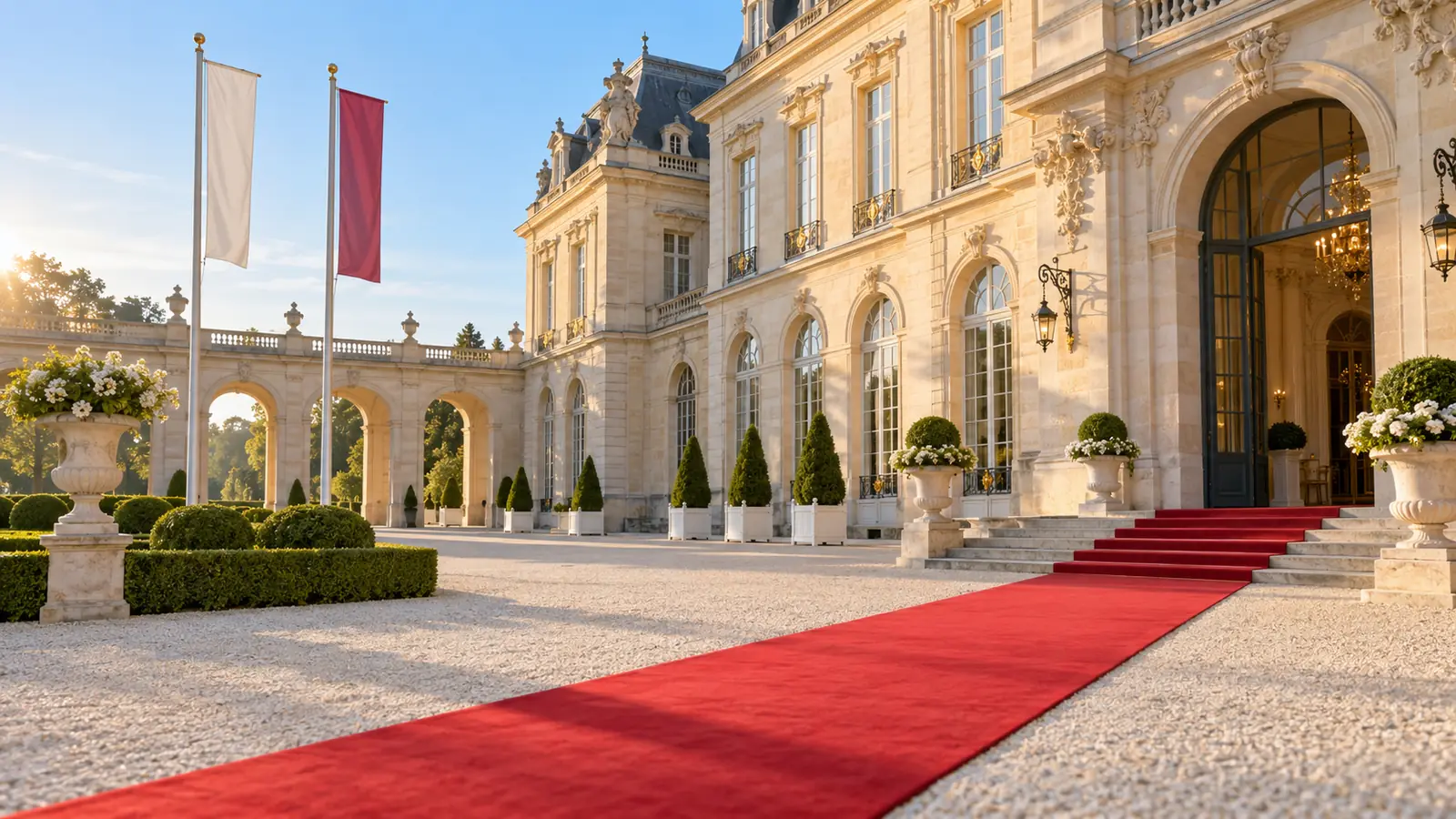
The three lines
- Schedule — September 8 in Paris: wreath and welcoming ceremony, then a one-on-one lunch at the Elysee, then expanded talks. The state visit runs September 6-9
- Agenda — security; AI, space, nuclear and biotech; joint entry into third-country nuclear markets; Korean content in Europe; and Hormuz
- Context — 140 years of relations. Lee attended the Lumiere Summit in Nice on September 7 before moving to Paris
Key questions
- When is the Korea-France summit and what is the schedule
- **September 8, 2026, local time, in Paris.** The state visit runs **September 6 to 9**, and the talks fall on day three. The order that day: **① a wreath at the Tomb of the Unknown Soldier** beneath the Arc de Triomphe — one of the most formalised honours France extends to a visiting head of state. **② An official welcoming ceremony.** **③ A one-on-one lunch at the Elysee Palace**, with attendance kept minimal. **④ Expanded talks**, with both delegations in the room. **The split between one-on-one and expanded exists because they handle different things.** The private session is for sensitive files and leader-level trust; the expanded session is where ministry- and company-level agreements are settled. After the talks come a **business roundtable, a state dinner and a meeting with the president of the National Assembly.** The two preceding days were in **Nice** — Lee arrived on September 6 and attended the **Lumiere Summit** on September 7, the film summit whose first agenda item was generative AI (「Lumiere Summit, September 7」).
- What is on the agenda
- **Five strands are published.** **① Security cooperation.** **② Advanced industry** — artificial intelligence, space, nuclear power, biotechnology. **③ Joint entry into third-country nuclear markets.** **④ Wider European distribution for Korean cultural content.** **⑤ Stability in the Strait of Hormuz.** **Three of the five have obvious logic, and one of them is the substance of this summit.** ② and ③ are areas where the two countries genuinely need each other. France is a long-established nuclear power exporter, and Korea has competed directly against French bids in recent years. **That two competitors are discussing how to enter third markets together is itself the concrete item on this agenda.** ④ connects to the Nice leg. **⑤ is the outlier.** Hormuz is a Gulf strait and neither Korea nor France is a party to the dispute. It appears because both depend on crude that passes through it, and because both sit in forums — the UN Security Council, the G20 — where they can affect outcomes (「The Strait of Hormuz: 34 kilometres carrying a fifth of the world's oil」). US-Iran fighting widened again in early September (「US strikes three Iranian tankers (September 5)」).
- What makes a state visit different
- **It is the highest of four grades of leader-level visit.** The descending order is state visit, official visit, working visit, private visit (「What a state visit is」). A state visit brings a bundle of protocol — official welcoming ceremony, state dinner, sometimes an address to the legislature — and host countries extend only a small number each year. **So the format is itself a message.** The stated occasion here is **140 years of Korea-France relations**. Before departing, Lee described the trip as **"a starting point for the next 140 years, built on the trust and friendship of the past 140."** **But the grade of ceremony and the content of agreement are separate things.** A state visit does not guarantee a binding accord, and working visits have produced large ones. **What to check after this summit is not the honours but whether items like joint third-country nuclear entry come out with countries and numbers attached, in a document.** Results become available after the talks conclude on September 8.
Four of the five agenda items belong to the two countries. One does not. The Strait of Hormuz is on the list for a Korea-France bilateral summit.
1. September 8 in Paris, in order
| Step | Item | Character |
|---|---|---|
| ① | Wreath at the Tomb of the Unknown Soldier | Formalised French honour for visiting heads of state |
| ② | Official welcoming ceremony | Standard state-visit protocol |
| ③ | One-on-one lunch at the Elysee | Minimal attendance, leader-level |
| ④ | Expanded talks | Both delegations; ministry and company items |
| ⑤ | Business roundtable · state dinner · National Assembly president | After the talks |
The one-on-one and expanded sessions exist because they carry different work. Sensitive files and trust in the first; documents in the second.
The preceding two days were in Nice — arrival September 6, then the Lumiere Summit on September 7, the film summit whose first agenda item was generative AI (「Lumiere Summit, September 7」).
2. Five agenda items
| Item | Why it is here |
|---|---|
| Security cooperation | Common ground |
| AI, space, nuclear, biotech | France is a nuclear exporter; Korea a recent rival bidder |
| Joint entry into third-country nuclear markets | Two competitors discussing how to go in together |
| Korean content in Europe | Connects to the Nice leg |
| Stability in the Strait of Hormuz | Neither country is a party |
The third is the substance. Korea and France have bid against each other on nuclear exports. Discussing a form of cooperation in third markets is a genuinely new item.
The fifth is the outlier. Hormuz is a Gulf strait and neither is a party. It appears because both depend on the crude that passes through it and both sit where they can affect outcomes (「The Strait of Hormuz: 34 kilometres carrying a fifth of the world's oil」). US-Iran fighting widened again in early September (「US strikes three Iranian tankers (September 5)」).
3. The format
Leader-level visits run in four grades — state, official, working, private (「What a state visit is」). A state visit brings protocol as a bundle, and host countries extend few each year.
The stated occasion is 140 years of Korea-France relations. Before departing, Lee called the trip "a starting point for the next 140 years, built on the trust and friendship of the past 140."
But ceremony and substance are separate. A state visit guarantees no binding accord; working visits have produced large ones.
4. What is left and what is unverified
- This was written before the summit. Agreements and any joint statement can only be confirmed afterwards.
- No target countries or contract form are disclosed for third-country nuclear cooperation. Whether names and numbers attach is what decides the substance here.
- It is unclear whether Hormuz enters a joint statement or stays in conversation.
- The full protocol list was not confirmed, including whether a legislative address is included.
- What to check is the document, not the honours. Results follow the September 8 talks.
Sources
- Etoday — President Lee begins French state visit; summit with Macron on the 8th
- Nocut News — President Lee on state visit to France, summit scheduled for the 8th
- Ilgan Today — President Lee's state visit to France, September 6-9, summit with Macron
- Kyeonggi News — President Lee to make state visit to France September 6-9, summit with Macron on the 8th
- Korea.kr — Government policy briefing