Two pulled alive from a Nepal flood tunnel on September 4, 2026 — voices were heard inside
Two Nepali workers were pulled alive from a tunnel at the Trishuli 3A hydropower plant in Bagmati province on September 4, 2026, nine days after the August 26 flood. They are Sanjay Sahi, a mechanical foreman, and Kabir Maharjan, a mechanical supervisor, and one of them told rescuers he had communicated by voice with other workers inside the tunnel — the first sign that more people may still be alive underground. The nine missing South Korean workers were at the Upper Trishuli-1 plant, about six kilometres upstream on the same river. Deaths across Nepal and Tibet reached 1,130, including 16 in Tibet, with 4,462 people recorded as missing. Korea's joint rapid response team searched with the Nepali army on September 4 using two helicopters alongside ground teams, and reported no new findings. Five Australians were separately confirmed alive
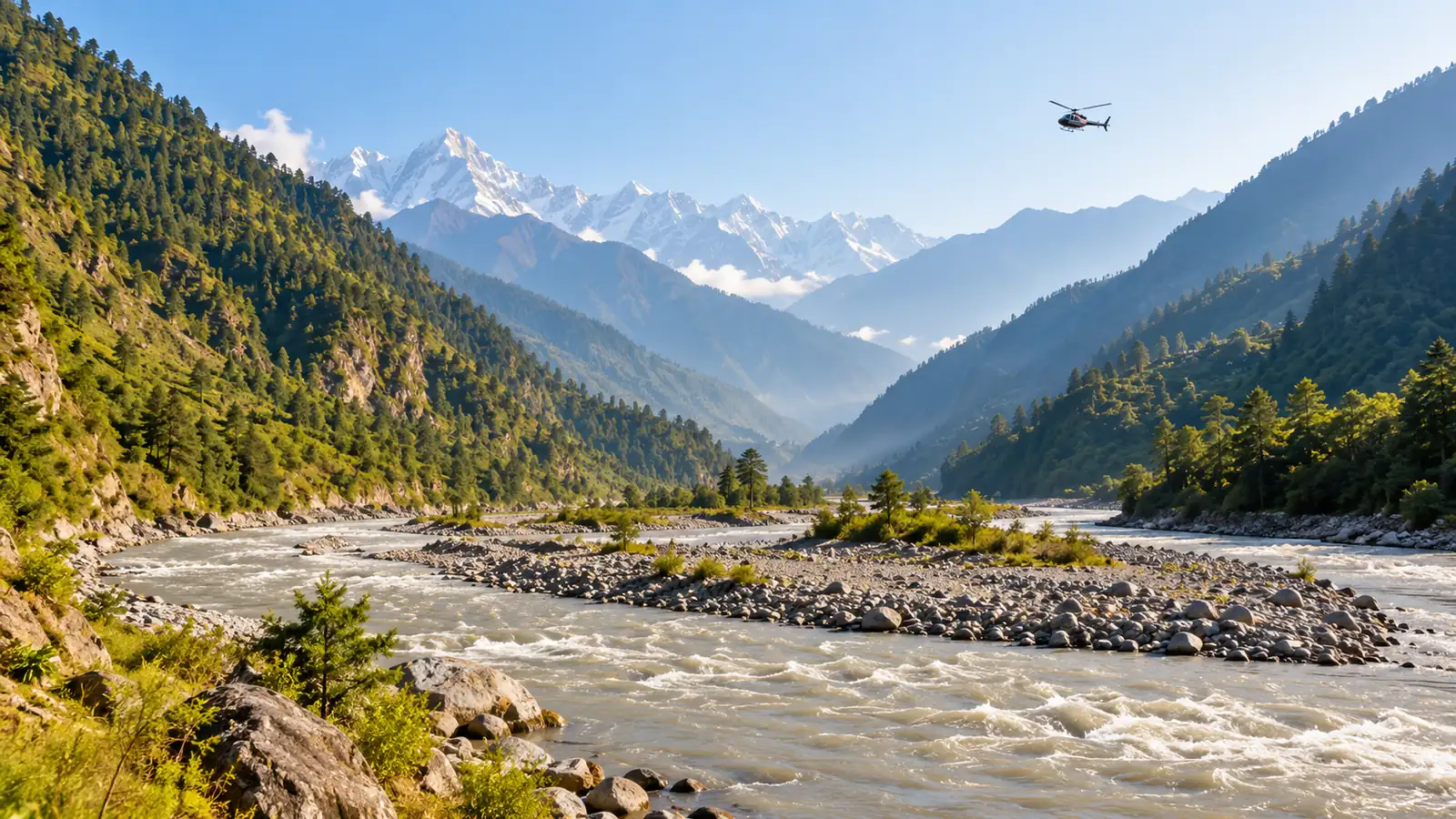
The three lines
- Rescue — two Nepali workers pulled alive from the Trishuli 3A tunnel nine days after the flood
- Signal — one survivor said he had spoken with other workers by voice inside the tunnel
- Koreans — the nine missing were at UT-1, six kilometres upstream; September 4 search found nothing
Key questions
- Is there any news of the nine missing South Koreans in Nepal?
- **Nothing new was confirmed as of September 4.** A joint search by Korea's rapid response team and the Nepali army produced no findings. What changed that day happened elsewhere: **survivors were found at another plant.** The nine missing Koreans were at the **Upper Trishuli-1 (UT-1)** hydropower plant. The **Trishuli 3A** plant where the two survivors were recovered sits roughly **six kilometres downstream on the same river**. Same river, same flood, comparable facility — and **someone was still alive there after nine days.** The search itself works like this: Korea's overseas emergency relief team (KDRT) is covering routes the missing might have taken if they moved or evacuated, using **two helicopters** provided by the Nepali army for aerial work alongside ground teams. **Korea South-East Power has added 25 local personnel** and **Doosan Enerbility a separate helicopter** to widen the area (see "What Korea's overseas emergency relief team is").
- How could anyone survive nine days down there?
- **Because pockets the water never reached appear to have remained inside the tunnel.** The two men came out of a **tunnel** at the Trishuli 3A plant. A hydropower headrace tunnel is an underground channel carrying river water to the turbines; its height varies along its length and it rises in places. When a flood surges into one, **higher sections can retain air that the water does not fill.** One statement makes this concrete. One of the rescued men said he had **communicated by voice with other workers inside the tunnel.** That implies two things. First, **more people may still be alive underground.** Second, if voices carried, **connected air space exists.** Time runs the other way, though — water, body heat and air reach their limits in that order. This rescue came on day nine, and **no additional survivors have been confirmed.**
- What is the current death toll from the Nepal flood?
- **1,130 dead and 4,462 missing.** The figure covers Nepal and Tibet combined, and the death toll includes **16 in Tibet**. When we first covered this event on August 27 the count was 472 dead and 1,535 missing. The sequence since: **August 26** — 472 dead, 1,535 missing; **August 29** — 626 dead; **August 30** — 804 dead, 3,048 missing; **August 31** — 919 dead; **September 2** — 1,114 dead; **September 4** — **1,130 dead, 4,462 missing.** **The number to watch is the missing.** Deaths have slowed in recent days, but the missing rose from 3,048 to 4,462 — an increase of more than 1,400. That pattern indicates reports from areas that were unreachable in the first days are still entering the tally, which means **the eventual death toll may be far above the current figure.** Separately, **five Australians were confirmed alive** the same day.
On September 4 local time, two Nepali workers were pulled alive from a tunnel at the Trishuli 3A hydropower plant in Bagmati province, north-central Nepal. Nine days after the flood of August 26.
They are Sanjay Sahi, a mechanical foreman, and Kabir Maharjan, a mechanical supervisor.
One sentence from the rescue is the substance of the day's news.
1. "Voices carried inside the tunnel"
One of the two men told rescuers that he had communicated by voice with other workers inside the tunnel.
That means two things.
First, more people may still be alive underground. A rescue on day nine is remarkable on its own, but if voices were exchanged, other people were in that space.
Second, connected air space exists. A hydropower headrace tunnel is an underground channel that carries river water to the turbines. Its height varies along its length and it rises in sections, so when a flood surges in, higher stretches can hold air the water never reaches. The place the two men came from was probably one of those.
Time works against this. Water, body heat and air reach their limits in that order. No additional survivors have been confirmed.
2. The nine Koreans are six kilometres upstream
The nine missing South Korean workers were at the Upper Trishuli-1 (UT-1) hydropower plant.
Trishuli 3A, where the survivors emerged, is roughly six kilometres downstream on the same Trishuli river. Same river, same flood, comparable facility. People were alive there after nine days — that is what September 4 established.
The search itself found nothing. Korea's joint rapid response team conducted a combined search with the Nepali army and reported no new findings.
Current deployment:
| Party | Committed | Method |
|---|---|---|
| Overseas emergency relief team (KDRT) | 44 personnel (arrived Kathmandu September 2) | Aerial search with two Nepali army helicopters plus ground teams |
| Korea South-East Power | 25 local personnel | Ground search |
| Doosan Enerbility | One helicopter | Separate aerial search |
| Nepali army | — | Joint search support |
The search is focused on routes the missing might have taken if they moved or evacuated, covering both the possibility that they are trapped inside and that they got out and became stranded (see "What Korea's overseas emergency relief team is").
3. The missing count keeps rising
The overall toll: 1,130 dead, 4,462 missing — a combined Nepal and Tibet figure, with 16 of the deaths in Tibet.
Laid out over ten days, one line stands out.
| Date | Dead | Missing |
|---|---|---|
| August 26 (first count) | 472 | 1,535 |
| August 29 | 626 | — |
| August 30 | 804 | 3,048 |
| August 31 | 919 | — |
| September 2 | 1,114 | — |
| September 4 | 1,130 | 4,462 |
Deaths have slowed in recent days while the missing rose sharply — from 3,048 on August 30 to 4,462 on September 4, an increase of more than 1,400.
That is not new damage. It is reports from areas unreachable in the first days still entering the tally. And while that count keeps climbing, the eventual death toll may be far above the current figure.
Five Australians were confirmed alive the same day.
4. What is still open
- No additional survivors have been confirmed. The account of voices inside the tunnel comes from one rescued worker; whether those people are still alive is unknown.
- Check the basis of the tally. The 1,130 and 4,462 figures were reported as combined Nepal and Tibet counts. We did not separately verify the country-level numbers.
- No official explanation for the jump in the missing. Late reporting from cut-off areas is the presumption, not a statement from authorities.
- Tunnel geometry differs by plant. There is no basis yet for assuming the conditions that made survival possible at Trishuli 3A apply at UT-1. How similar the two tunnels are in cross-section and gradient has not been established.
- The cause was a glacial lake outburst, which began in the Himalayan border region on August 26 and left three landslide-dammed lakes behind, sustaining a secondary flood risk (see "What a glacial lake outburst flood is").
Sources
- Financial News — Two rescued from tunnel nine days after Nepal flood; search for nine Koreans continues
- MBC — Nepal flood: 1,130 dead and 4,462 missing; five Australians confirmed alive
- MBC — Korean team conducts joint search with Nepali army; nine Koreans not found
- Democracy Now! — Headlines for September 4, 2026
- Just Security — Early Edition: September 4, 2026
- Kyunghyang Shinmun — CNN reports four Koreans rescued; missing Koreans still unaccounted for