Another survivor pulled from a Nepal flood tunnel (September 5, 2026) — at the plant where nine Koreans worked
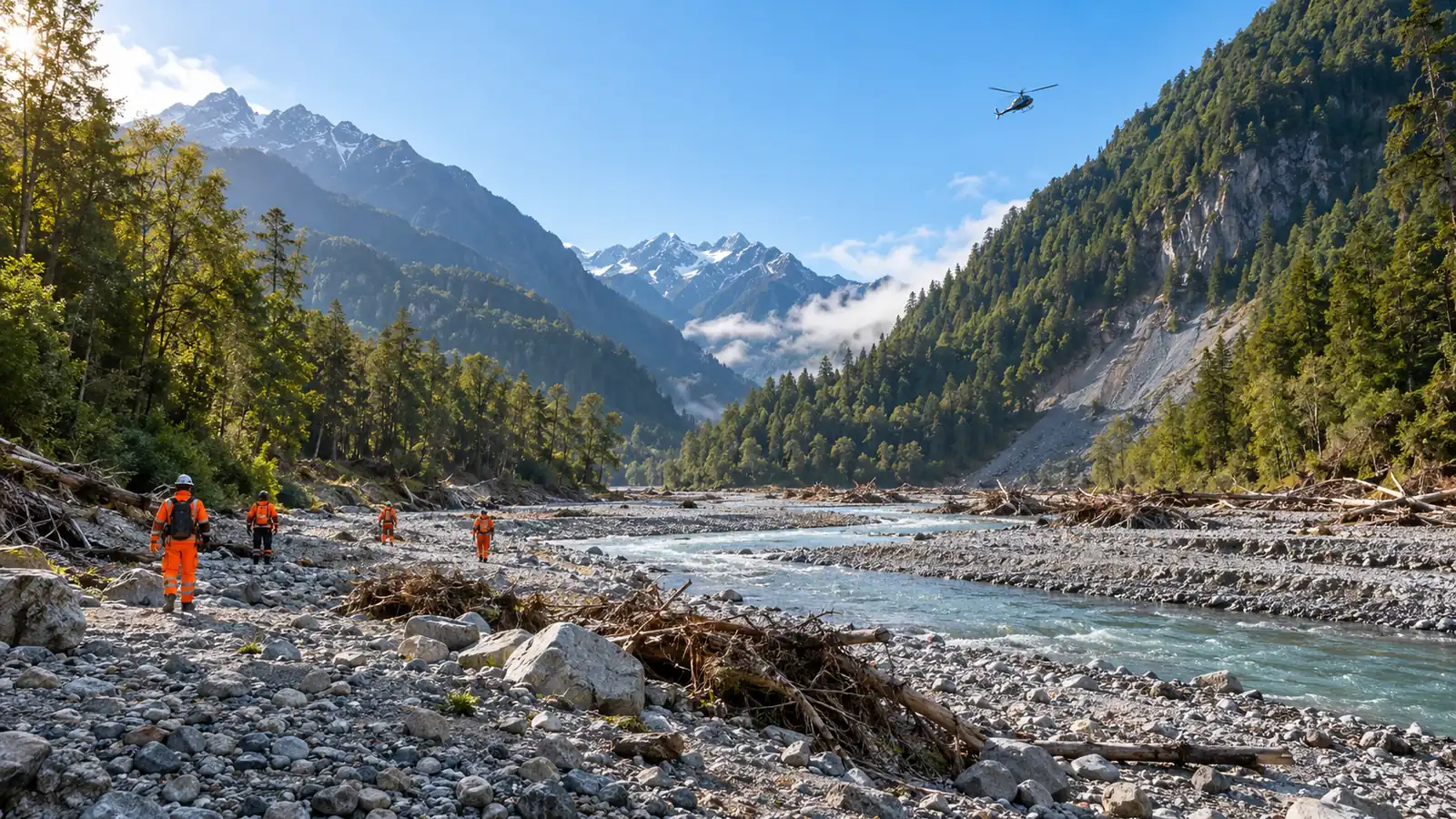
A Chinese worker was rescued alive on September 5, 2026 from a tunnel at the Upper Trishuli-1 hydroelectric station in Rasuwa district, Bagmati province, Nepal, ten days after flooding began on August 26 when a glacier collapsed on the Nepal-China border. The rescue was carried out by a joint team of the Nepali army and the Korea Disaster Relief Team working in a tunnel reported at 225 metres, and the Korean team recorded it as its ninth rescue since being established in 2007. The location is significant for Korea because this is the same power station where nine missing Korean workers were employed. Six bodies whose identities have not been confirmed were recovered from the station, and the Korean team found one further body of unknown nationality. Nepal's confirmed death toll passed 1,100 in early September and the National Disaster Management Authority recorded 3,916 people missing, with more than 21,000 police, army and armed police personnel searching
The three lines
- Rescue — a Chinese worker pulled alive from a 225m tunnel on September 5 by a joint Nepali army and Korean team
- Site — the same Upper Trishuli-1 station where nine missing Korean workers were employed; six unidentified bodies recovered
- Scale — over 1,100 dead in Nepal, 3,916 recorded missing by the NDMA, more than 21,000 personnel searching
Key questions
- What happened to the nine missing Korean workers
- **As of September 5 they had not been found.** What changed on that day is the location of the search. The Chinese worker rescued alive was recovered from the **Upper Trishuli-1 hydroelectric station**, which is where the nine Korean workers were employed. Around twenty Korean staff were normally based at the site, and roughly **60 people in total**, including the nine Koreans, went missing there when the flood arrived. **Six bodies whose identities have not been confirmed** were recovered from the station, and the Korea Disaster Relief Team found **one further body of unknown nationality.** No identification results have been released. A survivor emerging on the tenth day establishes that **air pockets and intact space still exist inside those tunnels**, which is a reason to continue searching — but it does not translate into a probability for any specific person. Two survivors had been pulled from a tunnel in the same area the previous day, September 4.
- How does someone survive ten days in a tunnel
- **The structure of a hydroelectric headrace tunnel is doing the work.** These are concrete-lined bores driven through rock to carry water to the turbines. The tunnel in this rescue was reported at **225 metres.** Three conditions have to coincide for such a structure to keep someone alive. **It must not collapse** — the lining has to hold its shape so that space remains. **Air has to be trapped** — even if debris and water seal the entrance, pockets of air further in buy time. **Water has to be reachable** — hydro tunnels often hold standing or flowing water, which removes dehydration as the first limit. That combination is why survivors are emerging from tunnels in areas where every surface structure was swept away. **Time still runs the other way**, though: oxygen depletion, hypothermia and injury accumulate. This pattern recurs in Himalayan flood disasters, where tunnel workers at run-of-river hydro projects are both the most exposed group and the most likely to be found alive.
- What is the current death toll in Nepal
- **The tallies differ between sources, and that difference should be read before the numbers.** In early September Nepal's confirmed death toll passed **1,100**, and the **National Disaster Management Authority put the missing at 3,916.** Other compilations have carried a missing figure of 4,858, including 590 foreign nationals. The spread has two ordinary causes: **missing-person counts are report-based**, so duplicate filings and withdrawals keep revising them, and this is a **cross-border disaster**, with Nepal and the Tibetan side of China tallying separately. The figures that are firm: more than **21,000 police, army and armed police personnel** are searching, and the US State Department said it was still tracking around **75 Americans** unaccounted for across the border region. The trigger was a **glacier collapse and landslide on the Nepal-China border on August 26**, followed by the risk of secondary flooding as landslide-dammed lakes formed downstream and threatened to breach.
A Chinese worker was pulled alive from a tunnel at the Upper Trishuli-1 hydroelectric station in Nepal's Rasuwa district on September 5 — the tenth day since flooding began on August 26.
The reason this lands differently in Korea is the address. It is the same power station where nine missing Korean workers were employed.
1. What is confirmed
| Item | Detail |
|---|---|
| Date | September 5 (local), day ten of the disaster |
| Location | Upper Trishuli-1 hydroelectric station, Rasuwa district, Bagmati province |
| Tunnel length | 225 m |
| Conducted by | Nepali army + Korea Disaster Relief Team (KDRT), joint |
| Rescued | One Chinese worker, alive |
| Also recovered at the site | 6 unidentified bodies + 1 found by the Korean team (nationality unknown) |
| Korean nationals | 9 still missing |
Around twenty Korean staff were normally based at the site. When the flood arrived, roughly 60 people in total, including the nine Koreans, went missing there.
For the Korea Disaster Relief Team this was its ninth rescue since the unit was established in 2007.
2. Why the survivors are all coming out of tunnels
Every confirmed rescue in this disaster has come from a hydroelectric tunnel rather than a surface building. That is a fact about the structures, not about luck.
A headrace tunnel is a concrete-lined bore driven through rock to carry water to the turbines. Surviving inside one for ten days requires three conditions to coincide.
- It has to hold. If the lining keeps its shape, the space survives even when the valley outside does not.
- Air has to be trapped. Debris and water can seal the entrance while pockets deeper in remain breathable.
- Water has to be reachable. Hydro tunnels commonly hold standing or flowing water, which removes dehydration as the first constraint.
Two survivors were recovered from a tunnel in the same area on September 4, one day earlier.
Time still moves against them. Oxygen depletion, hypothermia and untreated injury accumulate. A survivor on day ten justifies continuing the search; it does not raise the odds for any named person.
3. The tallies do not agree
| Item | Figure | Source type |
|---|---|---|
| Nepal deaths | over 1,100 (early September) | Multiple international outlets |
| Missing | 3,916 | Nepal National Disaster Management Authority |
| Missing (other compilations) | 4,858, incl. 590 foreign nationals | Secondary summaries |
| Search personnel | over 21,000 | Police, army, armed police |
| US nationals unaccounted for | about 75 | US State Department |
Two ordinary reasons produce the spread. Missing-person counts are report-based, so duplicates and withdrawals keep revising them. And this is a cross-border disaster, so Nepal and the Tibetan side of China count separately.
The trigger was a glacier collapse and landslide on the Nepal-China border on August 26, followed by landslide-dammed lakes forming downstream and threatening secondary floods.
4. What is still open
- The nine Korean workers remain unaccounted for. No identification results have been released for the seven bodies recovered at the station.
- The 225-metre figure is ambiguous. Reporting does not distinguish whether it describes the full headrace tunnel or the section worked during the rescue.
- There is no settled missing-person figure. 3,916 and 4,858 are both circulating, and they refer to different cut-off points.
- The secondary flood risk has not passed. Landslide-dammed lakes can breach again as water accumulates, which makes the search itself conditional on upstream conditions.
Sources
- Kyunghyang Shinmun — Nepali and Korean relief teams rescue a Chinese man; found at the plant where the missing Koreans worked
- Financial News — Two rescued from a tunnel nine days after the Nepal flood; search for nine Koreans continues
- MBC — Government conducts joint search with the Nepali army; the nine Koreans have not been found
- ABC News — Nepal-Tibet flood death toll tops 1,100 as tens of thousands search for missing
- Al Jazeera — Nepal-Tibet floods updates: rescue efforts under way, death toll past 1,000
- Korea Police News — Survivors found nine days after the Nepal flood; search for missing Koreans continues